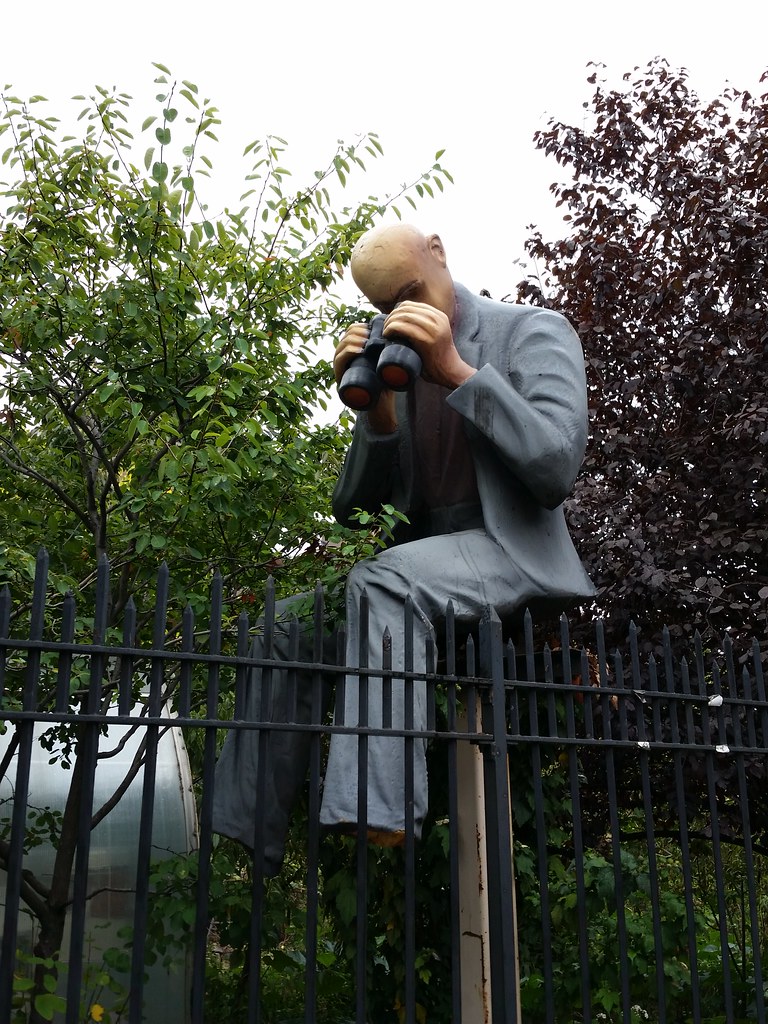
(The name seems to have come from a previous occupant of the building.)


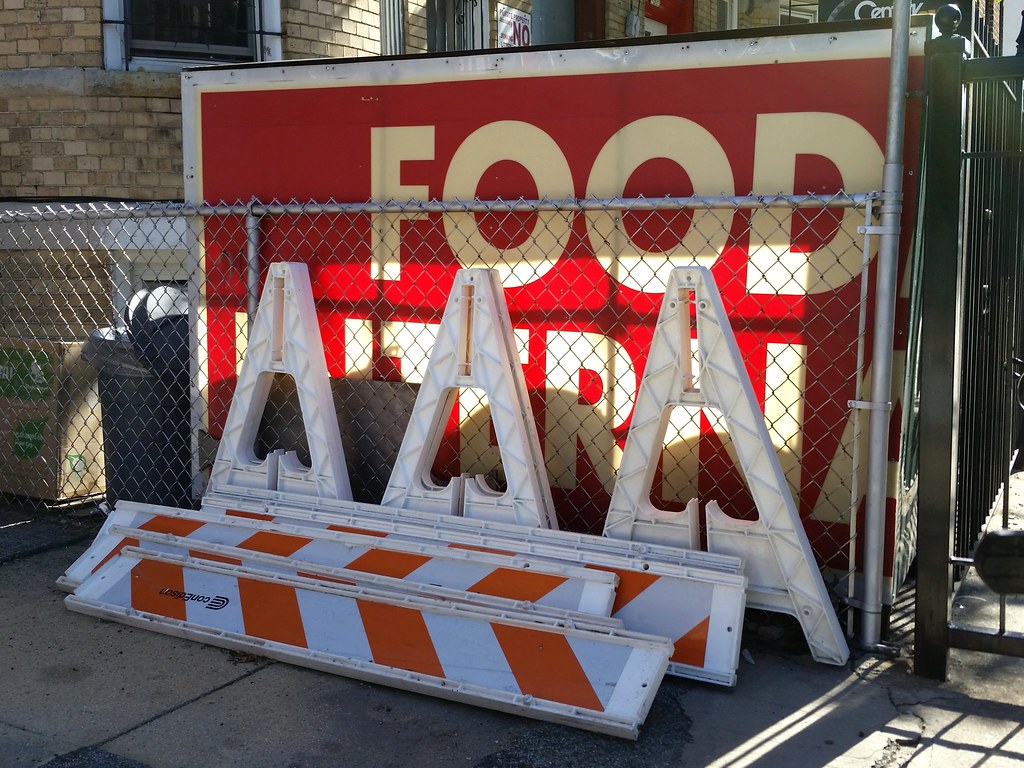
This is the back of a homemade trash/recycling bin shelter. (Here's the front.)

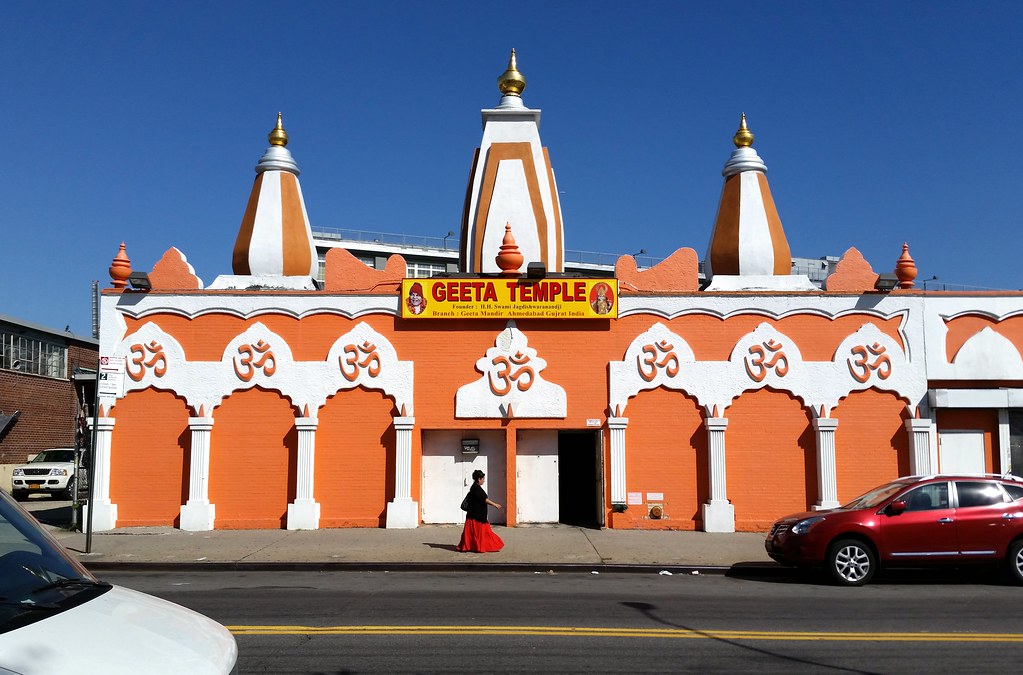
This is the largest Jain temple in the New York area, and also an "excellent place for matchmaking".


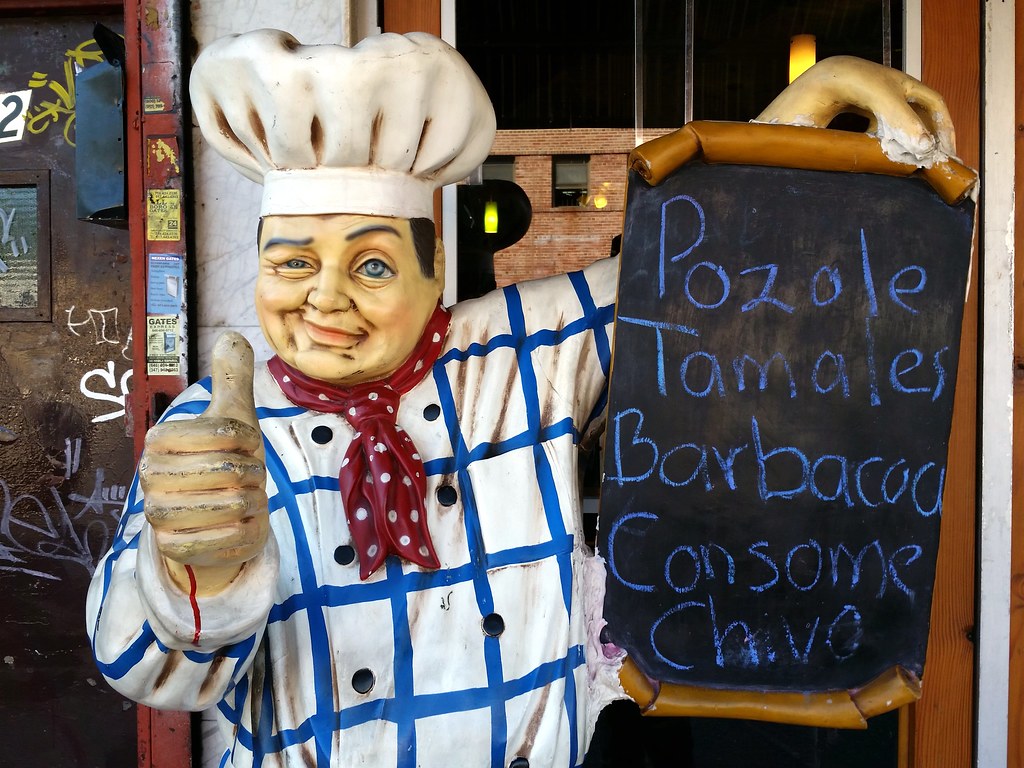
This well-worn chef now hawks Mexican food at Tradiciones el Tejano (which also appears to serve pizza).

Most of NYC's sewers are combined sewers, meaning they collect both sewage from buildings and stormwater runoff from the streets in a single pipe and carry it all to a wastewater treatment plant. During times of significant rainfall or snowmelt, however, the increased volume of runoff entering the sewer can exceed the capacity of the system. In order to prevent a backup, the excess (including untreated sewage) is dumped directly into area waterways.
To help mitigate this problem, the city recently embarked on a plan to build $2.4 billion worth of "green infrastructure" that will "use or mimic natural systems" to collect stormwater runoff before it reaches the sewer. Right-of-way bioswales, like the one above, capture water flowing down the gutter and allow it to seep into the ground through the soil, keeping it out of the sewer system altogether.

The fire hydrant trio, from left to right: Puerto Rico, Colombia/Ecuador/Venezuela, and the Dominican Republic. Further from the camera are two types of Tibetan Buddhist prayer flags: a darchor flag hanging from the pole at the back of the sidewalk and a couple of strings of lungta flags festooning the third-floor window in the background.
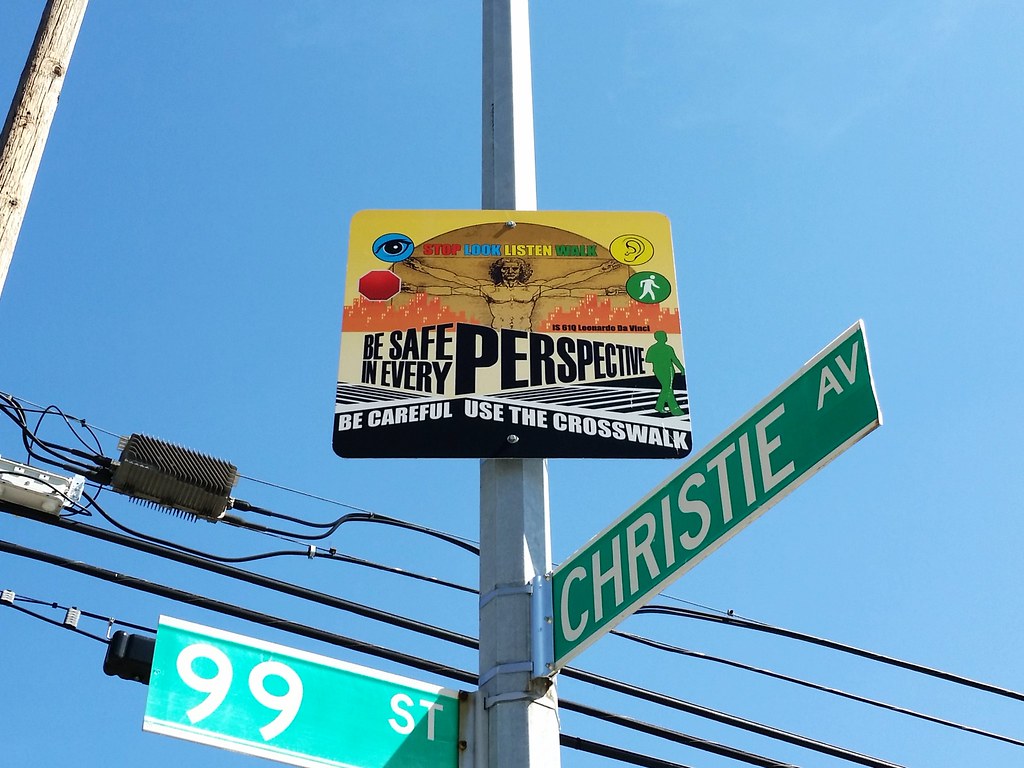
Another unique school crossing sign, this one at Leonardo da Vinci Intermediate School 61

Currently home to the Terrace on the Park banquet hall in Flushing Meadows-Corona Park, this building originally served as a heliport for the 1964-65 World’s Fair. It stood in the Transportation Area of the fair, with each side of the structure forming a big T, for "transportation". During the fair in 1965, the Beatles landed here en route to their legendary concert at Shea Stadium.
(In the background at right, peeking over the trees, you can see the tallest observation tower of the World's Fair's New York State Pavilion.)
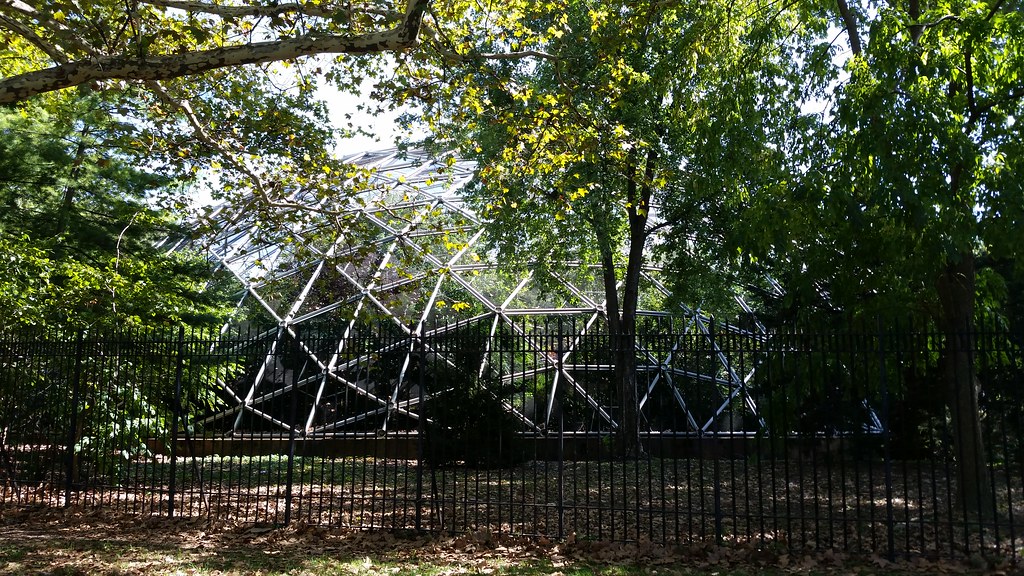
This geodesic dome was built in 1964 to enclose the World's Fair Pavilion at the 1964-65 World's Fair. After Winston Churchill passed away in early 1965, the pavilion was transformed into the Churchill Center for the fair's 1965 season. Within a few years of the fair's closing, the dome was reassembled at another site within Flushing Meadows-Corona Park, where it has served as the Queens Zoo's aviary ever since the zoo opened in 1968. (You can see more photos of the aviary here, and you can check out an aerial view of the structure here.)
"The Entertainer" is a common ice cream truck song, but this is the first time I've ever heard a Mister Softee truck playing something other than the Mister Softee jingle. I tried asking the driver about it, but he wouldn't give me a straight answer.
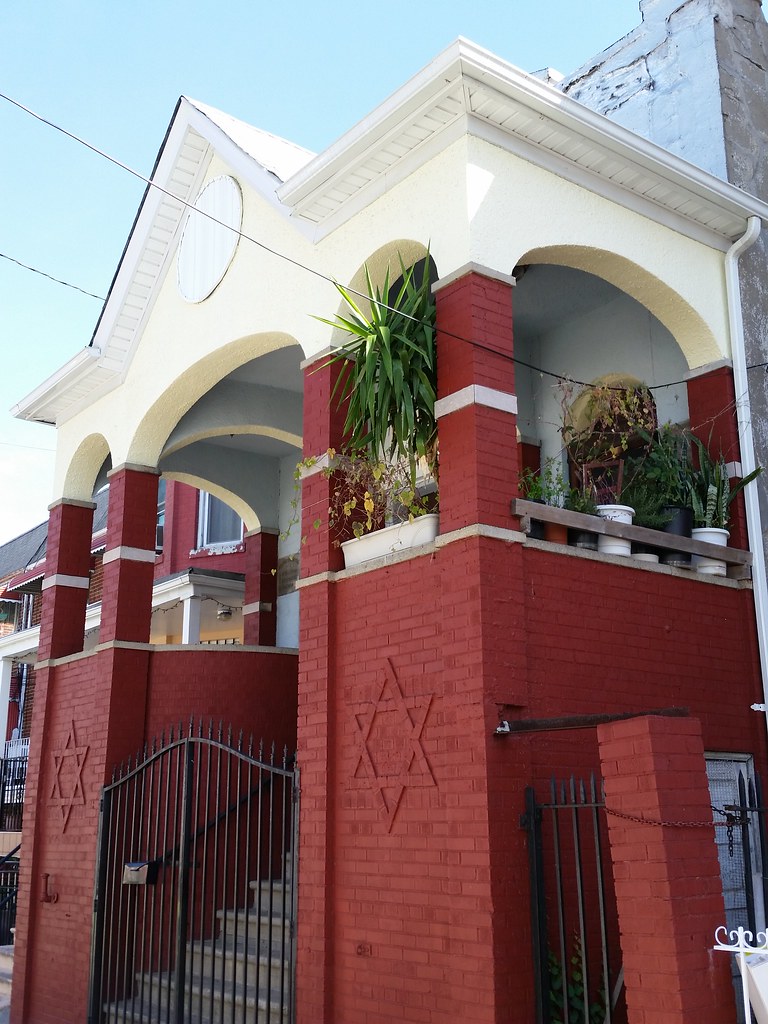
This was once a yeshiva affiliated with Congregation Tifereth Israel. The yeshiva closed in the 1970s and the building was converted into a residence and music studio that was occupied by the musicians Dan and Ed Gilroy beginning in the mid-1970s. Madonna lived here with the Gilroy brothers for about a year in 1979-80, and it was in this building that she played her first guitar chord, learned the drums, and worked on her budding songwriting. During her time here, she and the Gilroys also started a band — her first — called the Breakfast Club.


These massive* winter melons are being held in place by an odd assortment of household items: an old onion sack, what looks to be a dish drying rack, and the front half of a desk fan cage.
* Massive? Pshhh. Compare these puny specimens to ones from Vietnam!

One nice feature that's hard to see in this photo: the sliding bathroom door lock on the trunk.
This hunk of junk is apparently at least somewhat mobile. According to a Street View image from October, it managed to move about one car length up the block since my visit.
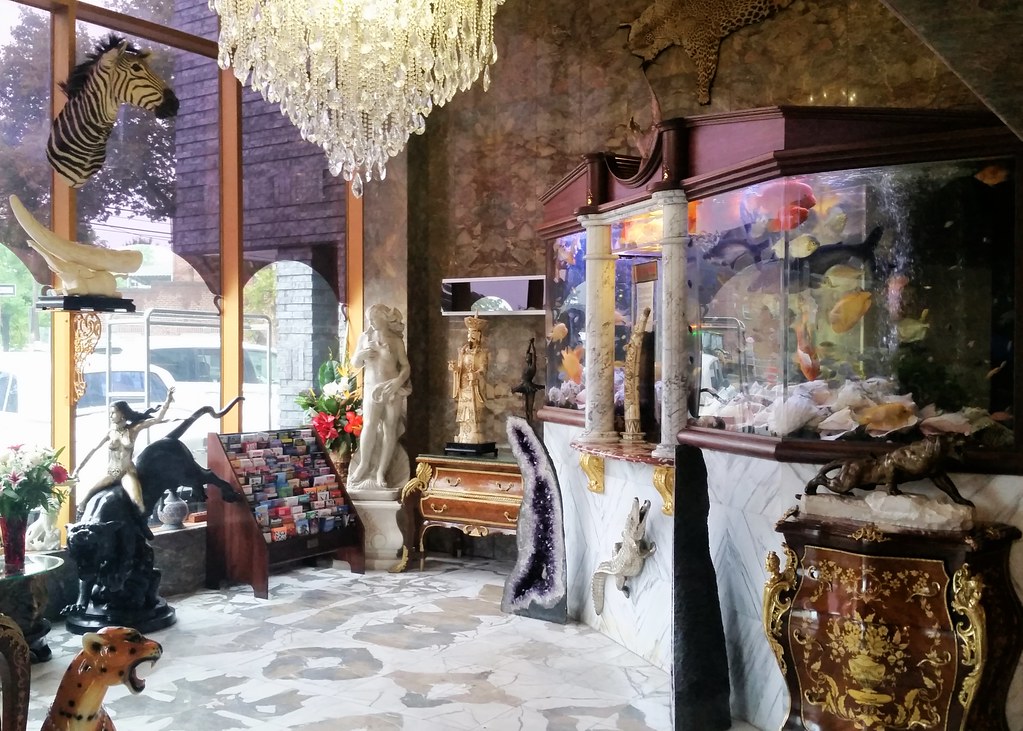
The rooftop Eiffel Tower is a Long Island Expressway landmark, but the real star of the show is the hotel's amazingly ostentatious lobby, which you can now explore in Street View! (Perhaps you recall early on in this walk, when I was startled by the talking fish tank at right.)


The Queens Museum in Flushing Meadows Park was originally the New York City Building at the 1939-40 World's Fair. From 1946 to 1950, before the United Nations moved to its current headquarters in Manhattan, the U.N. General Assembly met here. The building reprised its World's Fair role in 1964-65, featuring an amazing exhibit that's still on view today: the Panorama of the City of New York, a 9,335-square-foot three-dimensional scale model of the five boroughs that includes some 895,000 individual buildings — "the world’s largest architectural model of a city". (The Panorama is supposedly up-to-date as of 1992, but at least one building was missing when I last visited in 2011: the Bronx's circa-1963 Executive Towers.)
At left is the old New York State Pavilion from the 1964-65 World's Fair. You can see the observation towers as well as part of the Tent of Tomorrow. Just out of frame is the third part of the pavilion: the Theaterama, which is now the Queens Theatre. (As we learned a couple of years ago, the Theaterama was the site of Andy Warhol's Thirteen Most Wanted Men, an ultimately nixed artwork with a fascinating story.)
Before the World's Fairs, Flushing Meadows wasn't a park at all, but rather a vast ash dump run by a Tammany crony named Fishhooks McCarthy. This befouled landscape was immortalized in the pages of The Great Gatsby:
About half way between West Egg and New York the motor road hastily joins the railroad and runs beside it for a quarter of a mile, so as to shrink away from a certain desolate area of land. This is a valley of ashes — a fantastic farm where ashes grow like wheat into ridges and hills and grotesque gardens, where ashes take the forms of houses and chimneys and rising smoke and finally, with a transcendent effort, of men who move dimly and already crumbling through the powdery air. Occasionally, a line of gray cars crawls along an invisible track, gives out a ghastly creak, and comes to rest, and immediately the ash-gray men swarm up with leaden spades and stir up an impenetrable cloud, which screens their obscure operations from your sight.Realizing that a tremendous amount of money would be required to convert the old dump into parkland, Robert Moses seized on the idea of holding a World's Fair here in 1939, using the financial resources available for the fair to level the ash mounds, dig out lakes, and lay down topsoil, turning what Moses described as "a cloud of smoke by day and a pillar of fire by night" into one of the largest parks in New York City.

On July 4, 1940, as Britain battled Nazi Germany overseas, a ticking canvas bag was found in the British Pavilion at the New York World's Fair. Detectives Joseph Lynch and Ferdinand Socha of the NYPD bomb squad were called in to examine it; shortly after they determined it was a real bomb, it exploded and killed them. The identity and motivation of the bomber(s) remain a mystery to this day. (Here's a closer look at the plaque.)
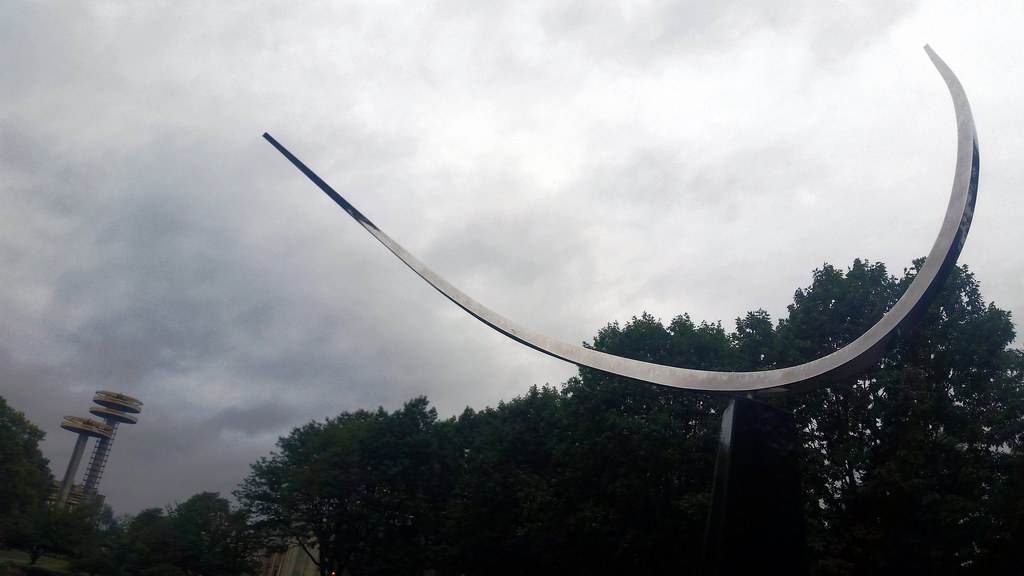
This formerly kinetic sculpture was created by Jose de Rivera for the 1964-65 World’s Fair here in Flushing Meadows Park. It originally rotated about its pedestal, providing viewers with an ever-changing perspective on the piece. According to the Parks Department, its motor was replaced in 1992-93, but I don't know when it was last operational.
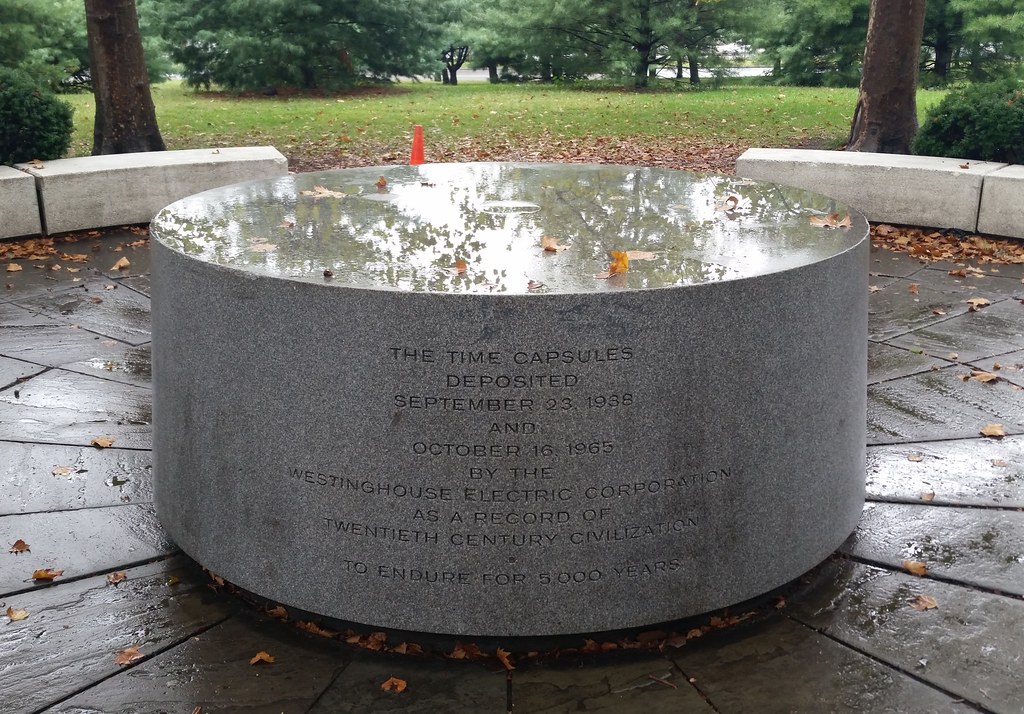
Two time capsules, one from each World's Fair held here in Flushing Meadows, are buried deep beneath this marker, to be opened after 5,000 years. 5,000 years! That's like two and a half Jesuses from now. How on earth is anyone at that time going to know where these things are and that they're due for an opening? According to a brochure from the 1964-65 fair:
Some day 5000 years hence in a monastery in Tibet, or perhaps in a library in Manhattan, a book will provide the key. The "Book of Record," printed on permanent paper with special ink, describes in exact terms the latitude and longitude of the burying place of the capsules. Some 3,000 copies of the "Book of Record" are in libraries, museums, monasteries and other safe repositories around the world. . . .Here's a great booklet about the first capsule from the 1939-40 fair. Here (1939-40 fair) and here (1964-65 fair) are lists of the capsules' contents.
In a message to posterity, the book requests that its contents be translated into new languages as they supersede the old. Instructions for making and using instruments to locate the capsules electromagnetically are included in the "Book of Record." It also contains an ingenious key to the English language to aid archeologists of the future should knowledge of our present language be lost. . . .
No matter to what great heights we ascend or to what great depths we descend, we of the Twentieth Century bequeath to the Seventieth Century proof that man not only endures, but he also prevails.

The first time I saw Shido, he was standing on this bench. When I passed by him a couple of minutes later, he was still standing on the bench. His owner, who was killing time on his smartphone in what seemed like a daily ritual, said Shido just loves standing on benches.
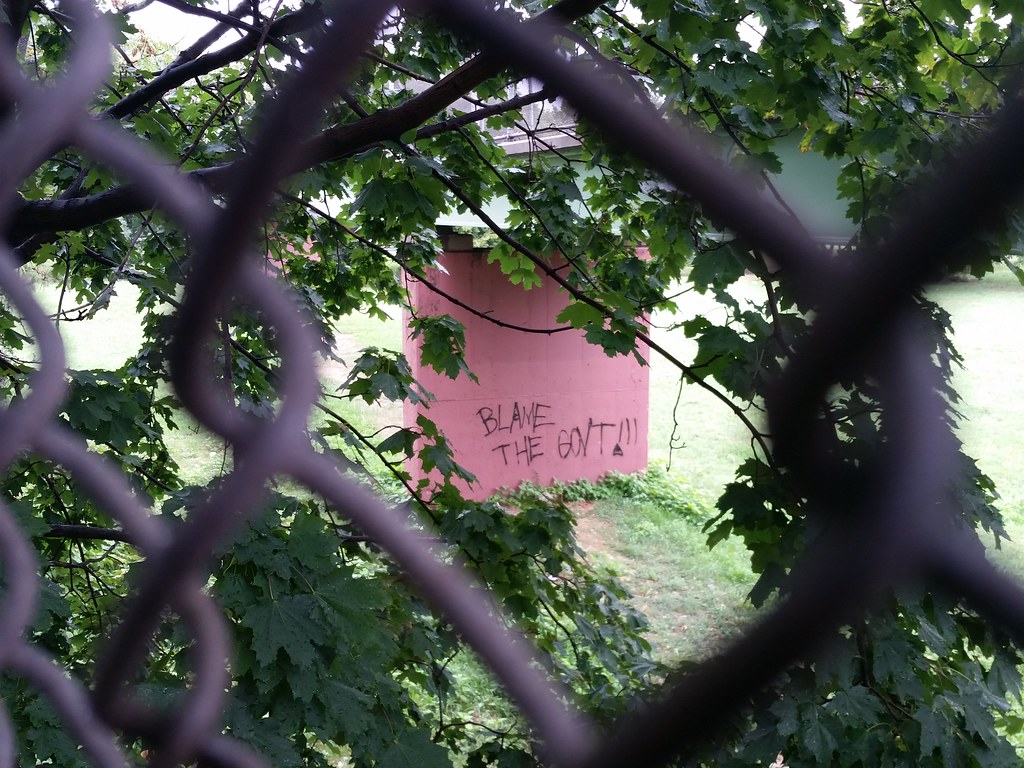


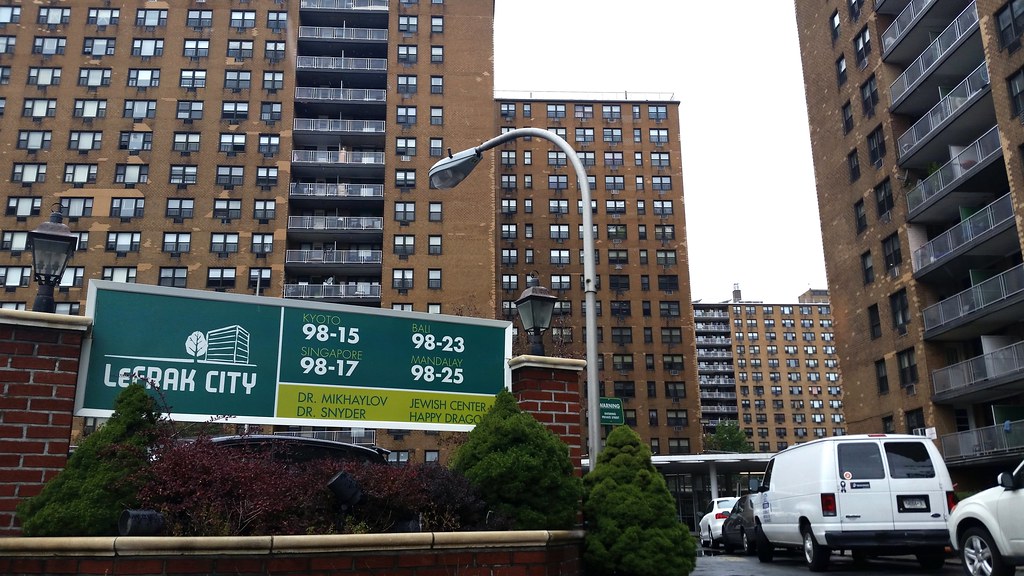
You're looking at four of the 20 buildings (each named after a city/country/island) that make up the residential core of LeFrak City, a massive mixed-use development that was built in the 1960s as the largest privately financed apartment complex in the US. Its population is often said to be around 25,000, but 2010 census figures put it at about half that.
The man behind LeFrak City was the late Sam LeFrak, one of New York's most prolific real estate developers and a bombastic, hyperbolic character who must have been a lot of fun to interview:
Q. What is the significance of that (a bronze plaque of Romulus and Remus, the mythological wolf cubs who built Rome, nursing from their mother)?
A. Everybody is feeding off me. I am feeding Romulus and Remus.
Q. You don't see yourself as either Romulus or Remus?
A. No, I am the guy who brings jobs to people. I am the guy who brings housing, affordable housing. I am the guy who does the impossible and makes it possible. I am the guy that invented new math - one plus one equals three - and says nothing is impossible. This (the bronze) is something I bought many years ago in Italy right after the war. And this represents my contractors, my tenants and the people I do business with, and I am the guy that is bringing this to the world. And the buildings I have built.
Q. What kind of influence and relationship do you have with people in government?
A. It's the respect that they have. Look, I have title. (Mr. LeFrak was knighted by the King of Norway.) I also am a doctor. (He has received a number of honorary degrees.) And I'm also a guy who has done some very exciting things in my life, and life isn't over at 65. I will give you a perfect example. I am getting a Social Security check. It's ridiculous. I give it away to charity. My life, the great stuff is coming. I have some great plans. Read some of the things I have written. I have a school, the Lefrak Brick and Mortar College, and if you go to Oxford University St. Cross College (in England), you will see a big plaque at a library I donated there. I am a person that is very well known. That is why I am being invited to talk before the Parliament in Finland. I am asked to come to China to build cities. In Egypt they call me Ramses III. The point is, don't compare me to these little builders. Not that I have any criticism - you know a long march starts with the first step - but I have been up to the top of the mountain. I have tremendous years of experience. Do you know what is sitting in the memory bank of my computer? Do you realize the work that I have done? Do you realize how many impossible things I made possible?
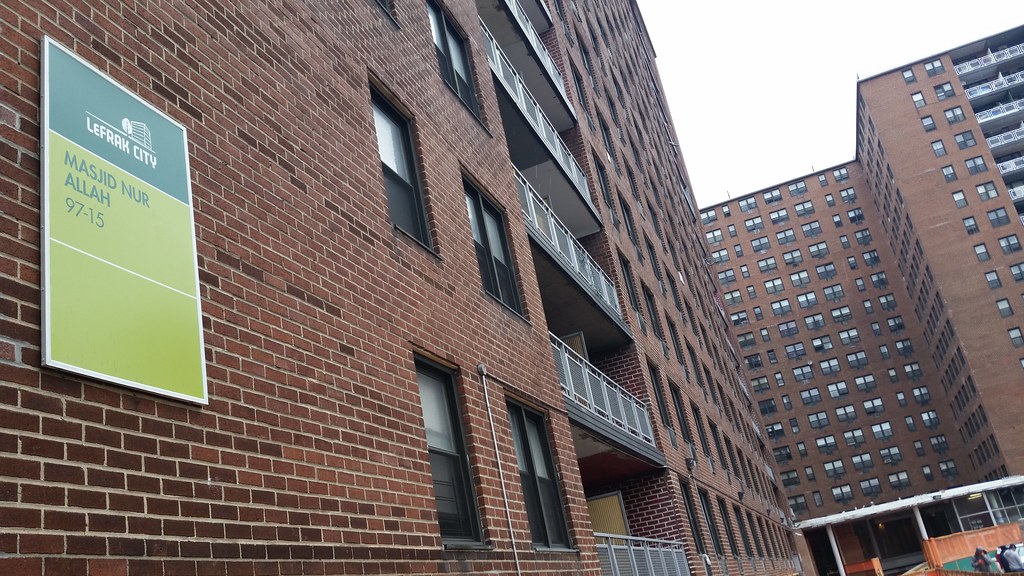
Masjid Nur Allah, one of three houses of worship in LeFrak City, was established in a converted apartment in 1993, at a time when "an unlikely combination of newcomers [had] helped bring new life to Lefrak City: Jewish refugees from the former Soviet republics of Uzbekistan and Tajikistan, and Muslim immigrants from Africa."
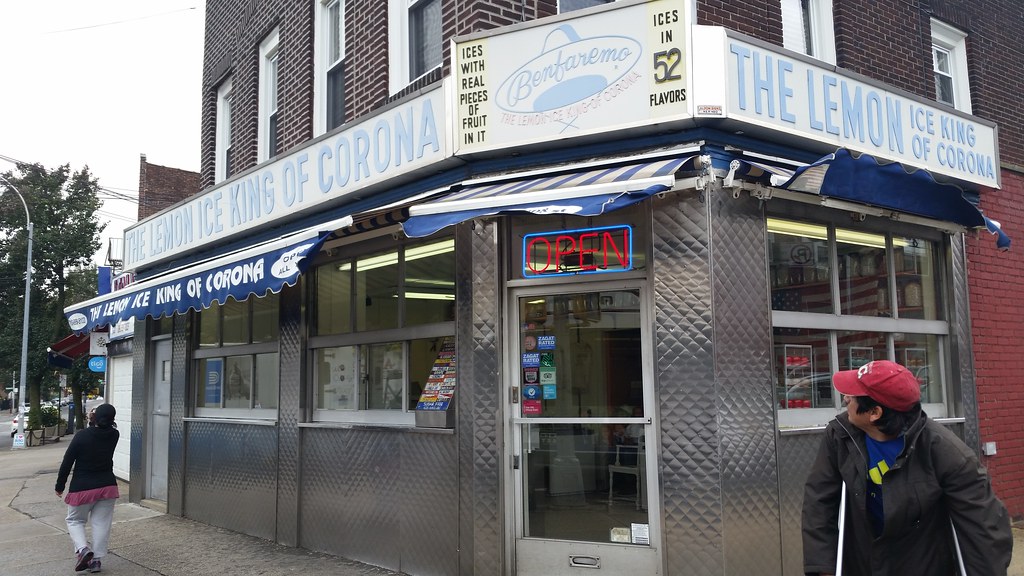
This neighborhood institution, open even in winter, was run for decades by the late Pete Benfaremo, who passed down his secret water ice recipe to the current owners. Check out the list of flavors, most of which feature little chunks of the main ingredient mixed in with the ice.
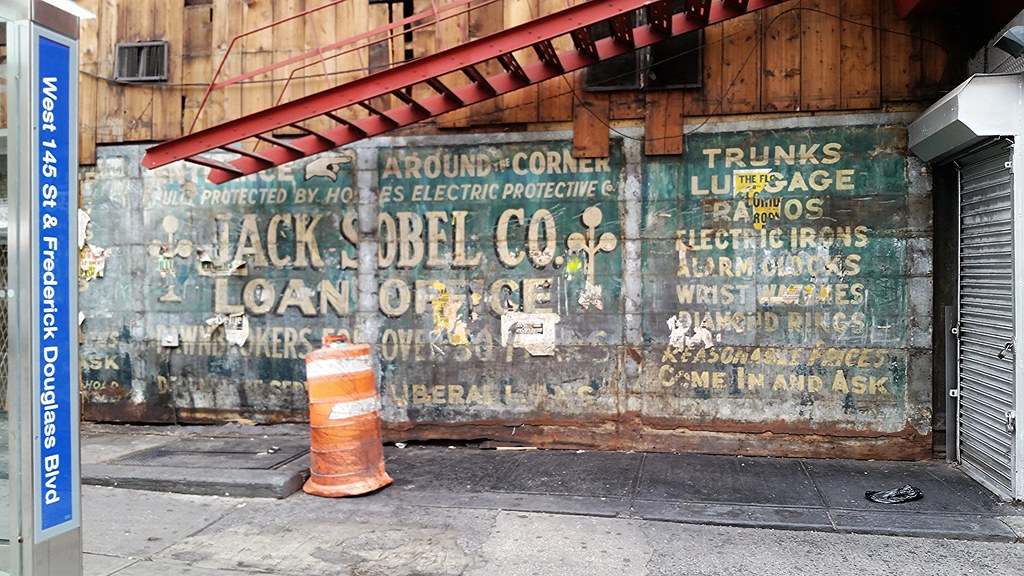
This recently uncovered wall advertising a long-gone pawnbroker also features the remnants of some poster ads that were put up around 1965, presumably just before the wall was covered over.

Not to be confused with The Famous Jimbo's Hamburger Palace.
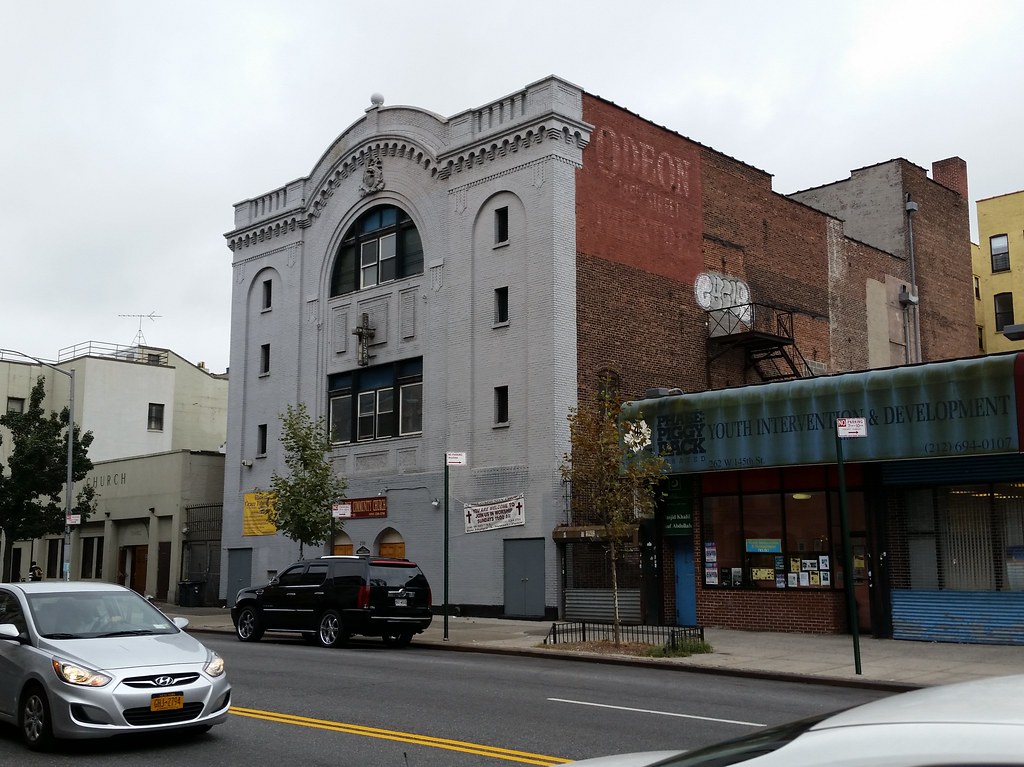
Formerly the Odeon Theatre (old sketch of the building here)
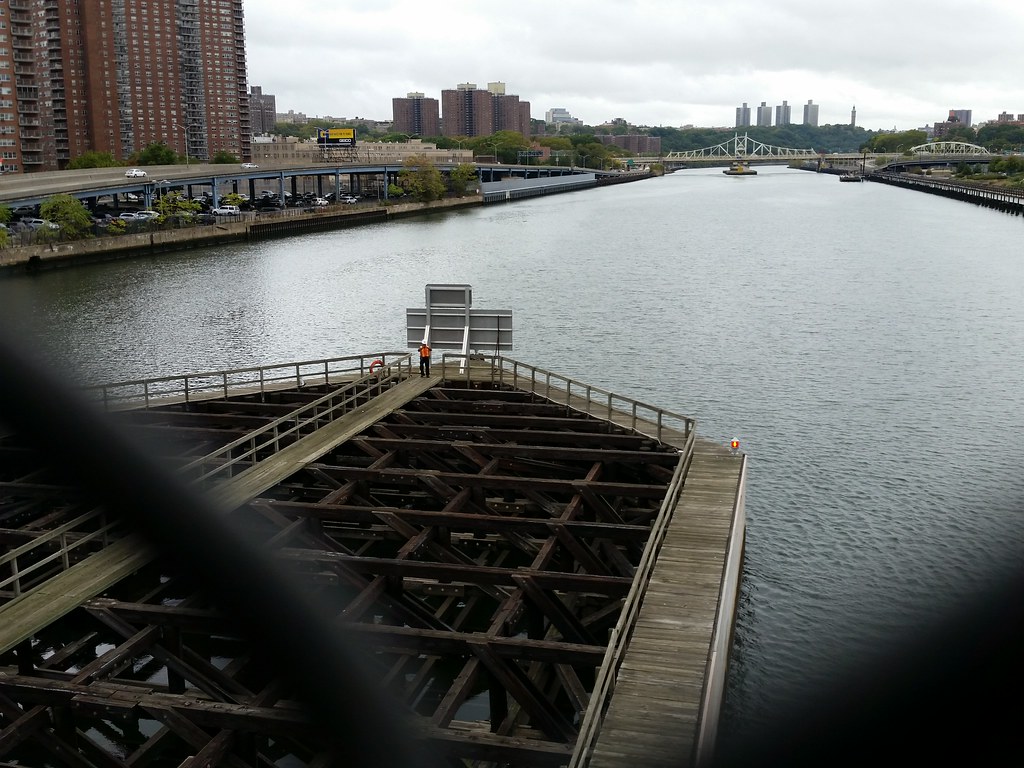
from the 145th Street Bridge over the Harlem River toward the Macombs Dam Bridge, the Four Sisters, and the High Bridge Water Tower. The wooden structure below, running parallel to the river, lines up with the center span of the bridge when the bridge rotates open to let river traffic through. This sort of feature is common to swing bridges; according to Wikipedia, it protects the center span from being struck by a passing ship while in the open position. It seems like it would also allow for easy access to the underside of the span for repair work. (That's a worker in an orange safety vest snapping a photo near the end of the structure.)
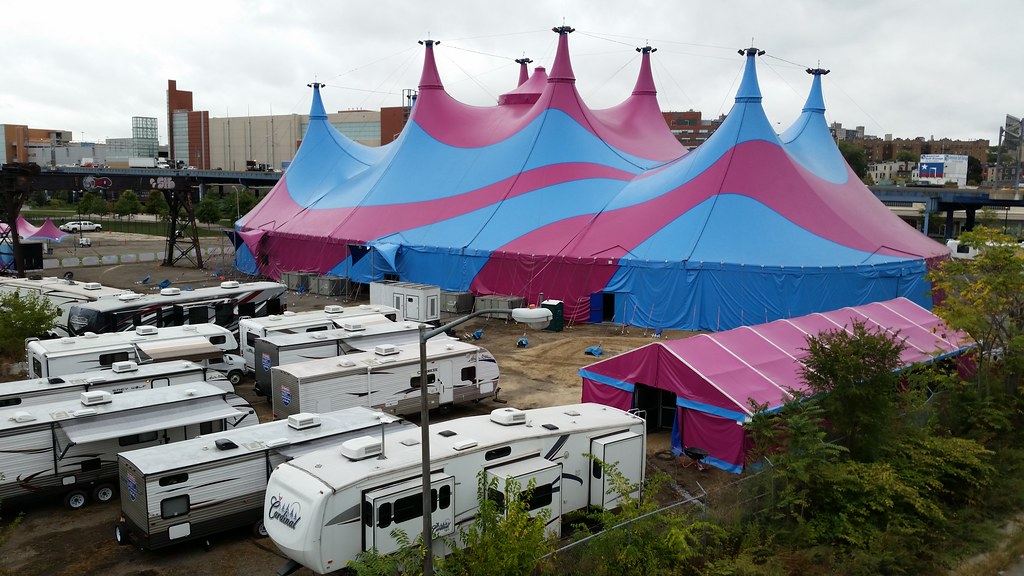
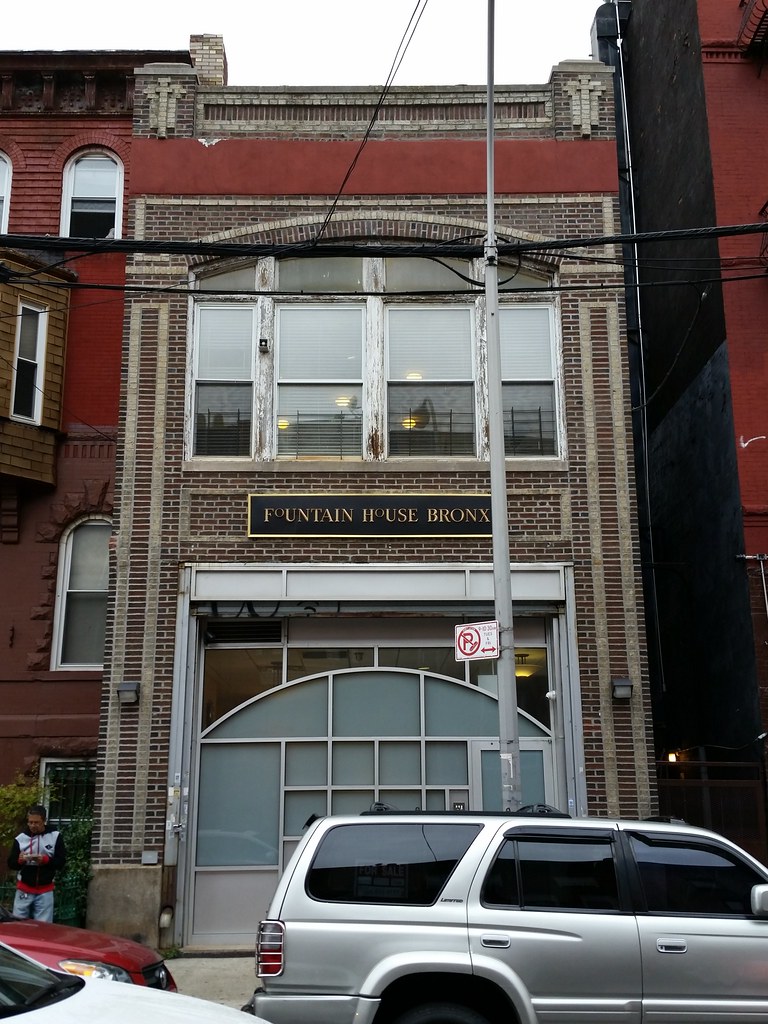
A new Bronx outpost of the mental health organization that pioneered the clubhouse model of psychiatric rehabilitation
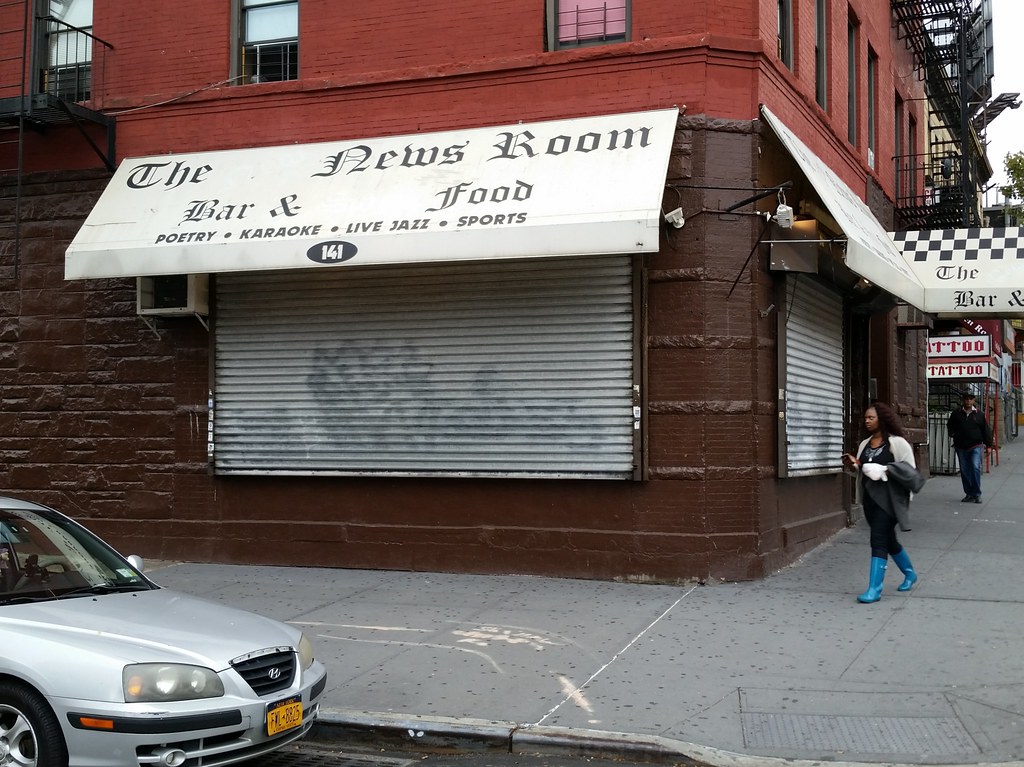
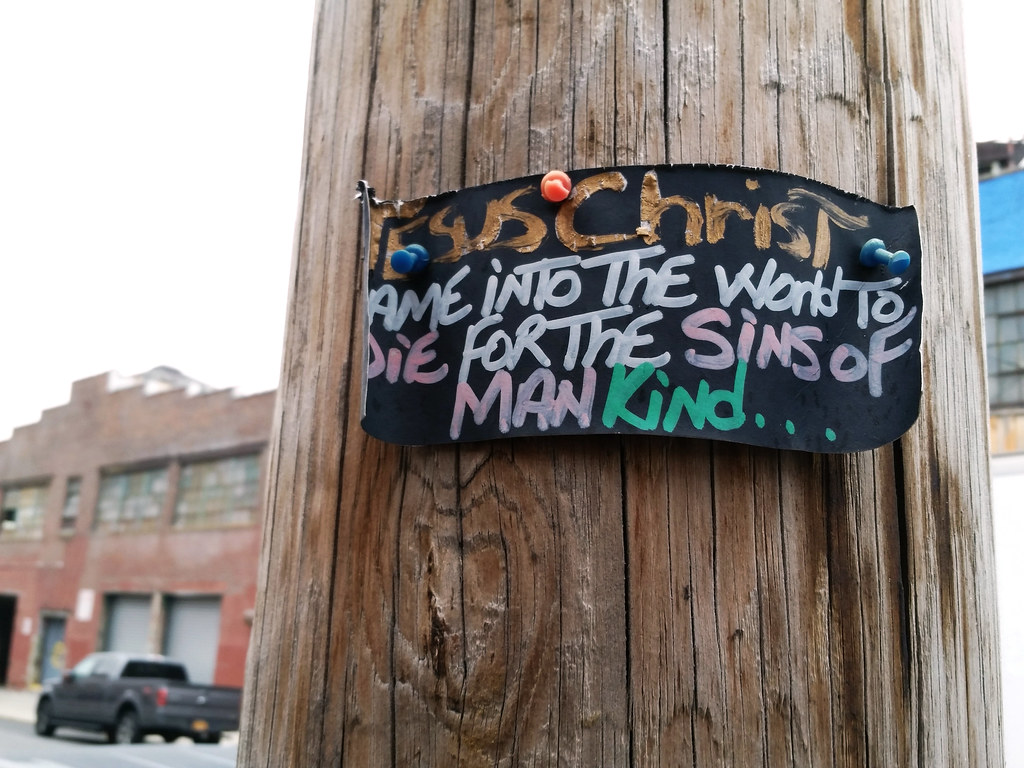
that there are hundreds of these homemade signs posted all over much of the Bronx (and Harlem too). Given how little of those areas I have left to walk, this could potentially be the last one I see, although I'll probably come across more when I do my final day in the southern Bronx, in the Clason Point area.
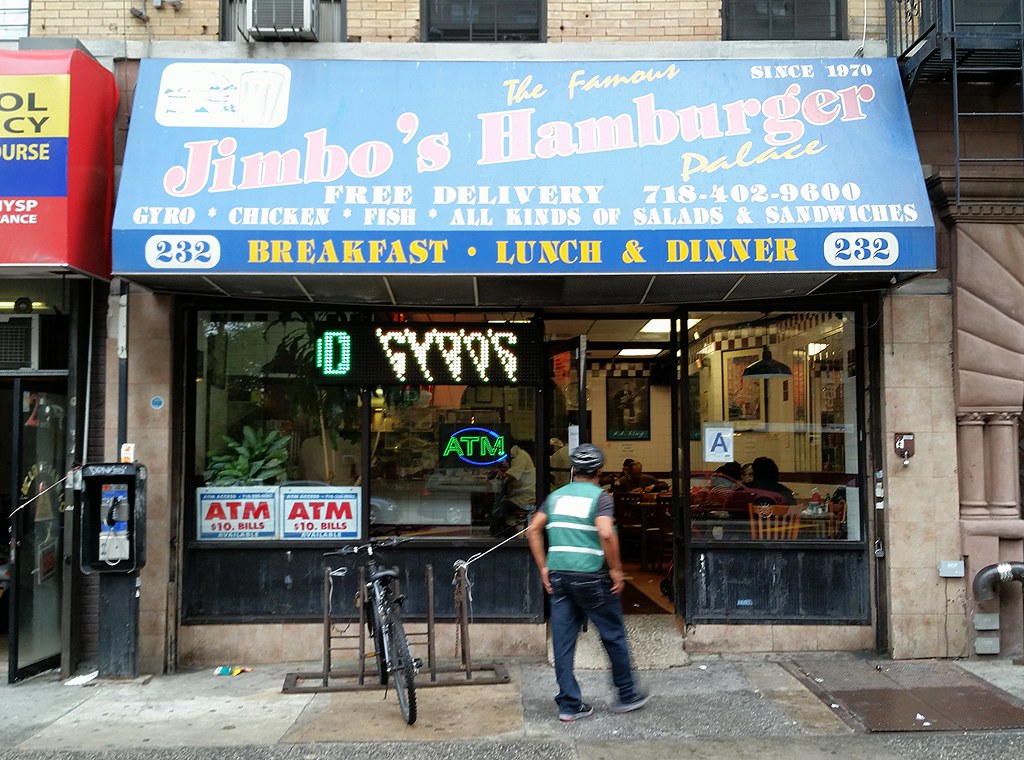
Compare to The Original Jumbo Hamburgers Palace. The similarities are striking. With a dozen or more restaurants in Upper Manhattan and the Bronx, Jimbo's is by far the more prolific of the two mini-chains; as far as I can tell, Jumbo has only two locations, both in Harlem. But Jumbo seems to be the original, both in name (Original vs. Famous) and date (1968 vs. 1970). There's also a "famous" Jimbo's Hamburger Place in Midtown East that supposedly has been around since the 1950s but bears no visual resemblance to the two Palaces in question.
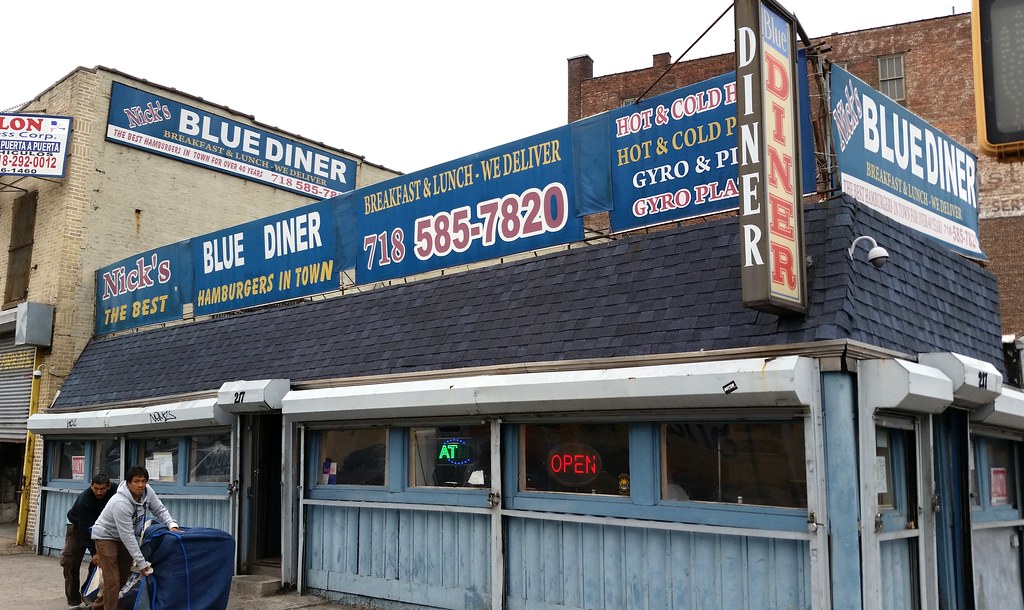
At "over 40 years" old, Nick's would seem to have been established around the same time as the burger palaces of Jumbo and Jimbo. But its signage, which bears some noticeable similarities to that of the other two places, is relatively new; it had a more spartan look back in 2007. Are the similarities just a coincidence, or is Nick ripping off the style of his patty-flipping rivals?
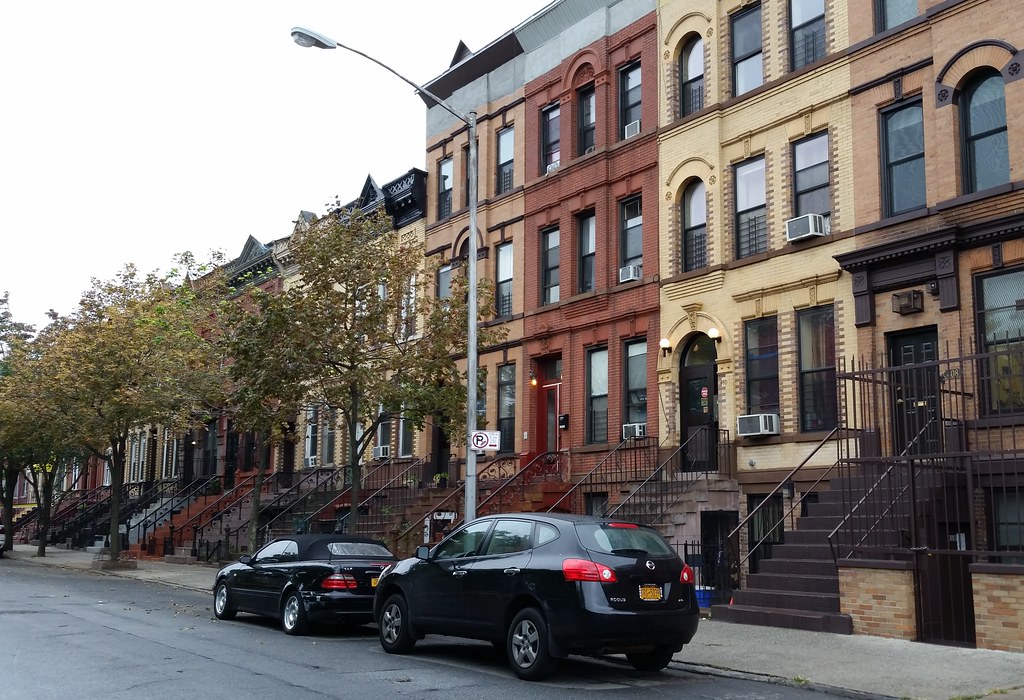
Handsome dwellings across the street from the Major Deegan Expressway

Painted on the side of the Engine 83/Ladder 29 firehouse (the former home of Kerry the Fire-Engine Dog). Here's an unobstructed view of the mural.