
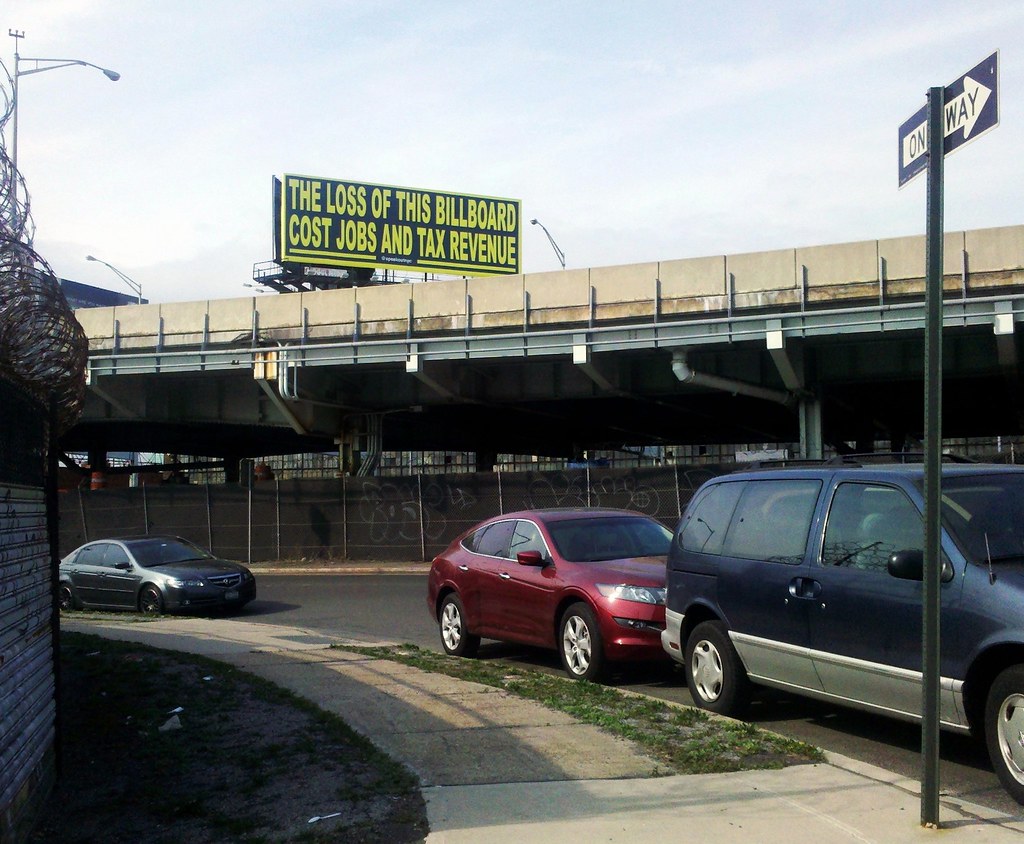
Over the years, outdoor advertising companies have been raking in the money by flouting Buildings Department restrictions concerning billboards: erecting signs that are too large, too close to highways, and/or located on third-party property without a permit. This sign is protesting the city's recent enforcement of those regulations. In essence, it's complaining that jobs in an illegal industry have been lost because laws are being enforced. It's analogous to bemoaning a raid on a brothel because it puts prostitutes out of work. We all feel for those generally innocent workers who've lost their livelihoods, but that's not a justification for allowing the illegal business to continue operating.
To be fair, the city's extremely lax enforcement of these rules in the past has created an environment in which such violations are tacitly permitted. Nevertheless, when you base your business on an illegal activity, you're playing with fire, and you can't expect too much sympathy when you get burned.
If you think billboards in all their forms are crucial to economic vitality, consider the case of São Paulo, the largest city in the Americas, which outlawed all outdoor advertising five years ago. Many businesses were up in arms at the time, claiming that this would cause them irreparable harm. The ban was pushed through anyway, and no one seems worse for the wear today. The new legislation is quite popular with the citizens of Sao Paulo (70% favor it, according to a recent poll), and now it's even supported by many advertisers, who were forced to find more innovative and effective ways to make people aware of their products (guerrilla marketing and internet/social media campaigns). The fact that these subtler marketing tactics can be much more insidious than simple signs is an issue, in my anti-consumerist opinion, but it's an issue that exists whether or not billboards are polluting a city's streetscapes.
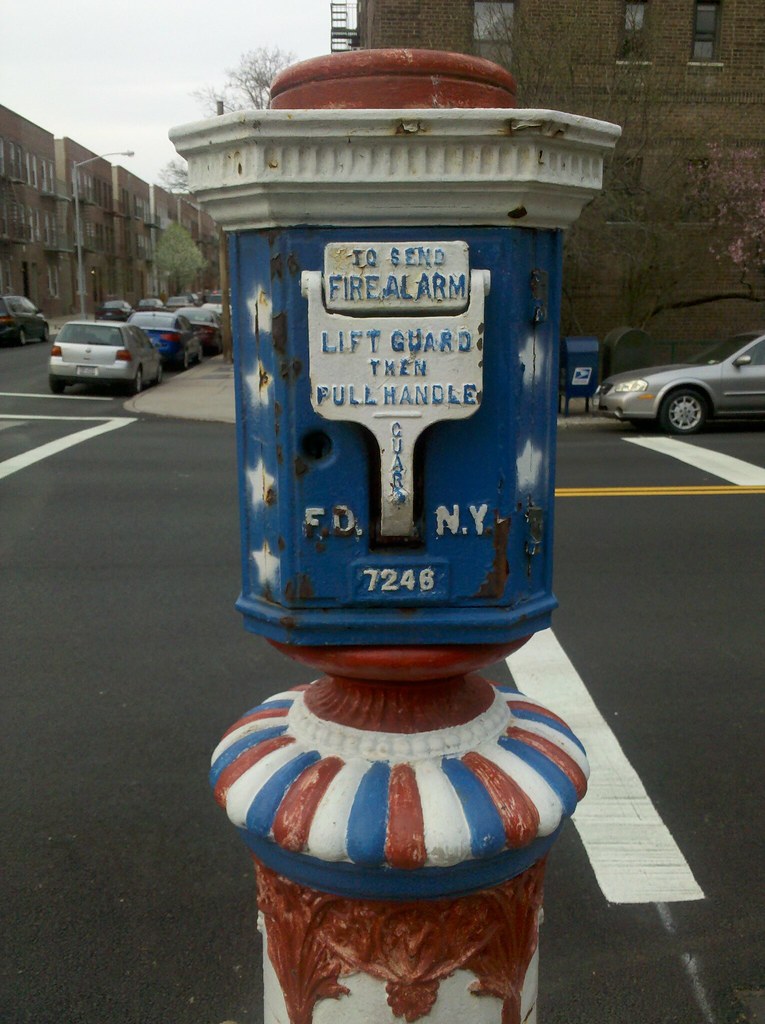
We've seen red, white, and blue fire hydrants before, but this is the first such call box I've come across.

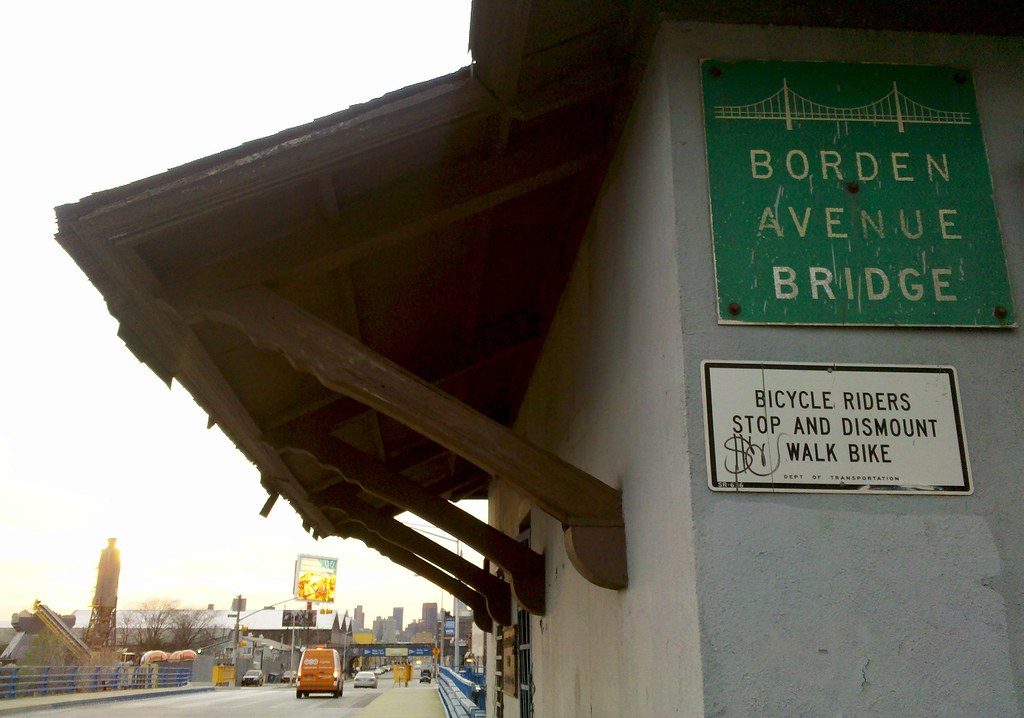
It looks like a pretty run-of-the-mill structure from here, but cross over to the south side and take a gander at what's underneath...

Harnessing the power of the trapezoid, the retractile bridge design has been around for quite a while, although it's considered obsolete these days. (I made a rudimentary sketch to help explain how it works — see below.) In fact, there are only four such spans left in the US, including the Borden Avenue Bridge here (which, as I understand it, hasn't actually been opened since 2005). And, not to brag — or, rather, to very obviously brag, while at the same time realizing no one cares — I've walked all of them!
Oh, and I would be remiss not to point out the gargantuan FreshDirect billboard off in the distance. Let's revisit our first encounter with it — here and here.

In this schematic drawing, the movable portion of the bridge slides along the rails to make way for the passing boat. You can clearly see the rails and the movable bridge section in these aerial photos of the Borden Avenue Bridge.

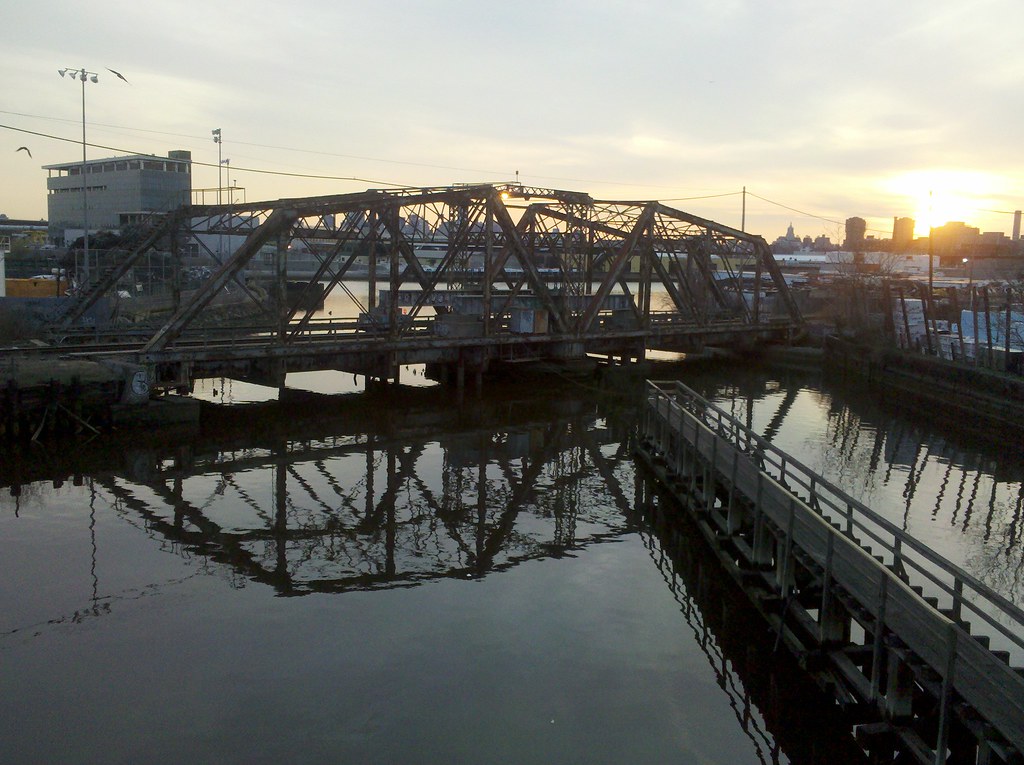
Opened in 1915, this Dutch Kills crossing is part of the lightly used Lower Montauk Branch.

As far as I can tell, this bridge is no longer in use (although someone has fairly recently replaced part of the railing on the pier). Does anyone know the story?

Despite the damaged reputation of its eponymous tenant, the Citicorp Building continues to proudly point skyward.

Must be some kind of math thing — that woman's body is a near-perfect sine wave!
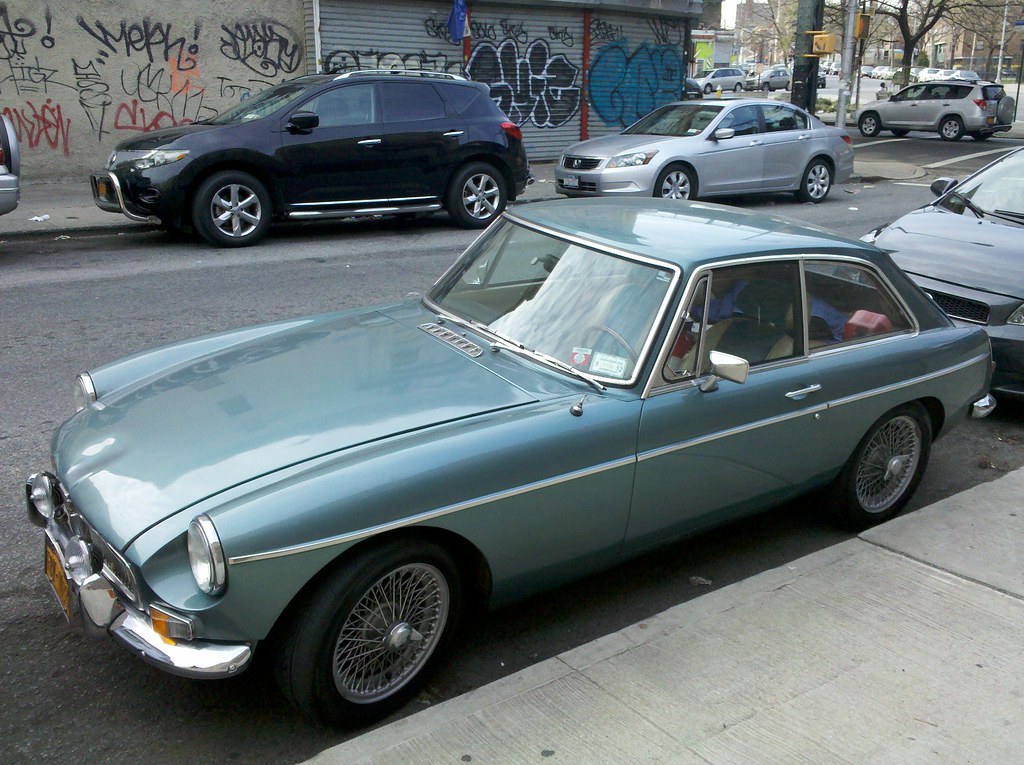
It looks like a cat walked across the keyboard, but that's actually the name of this model from the late '60s or early '70s.
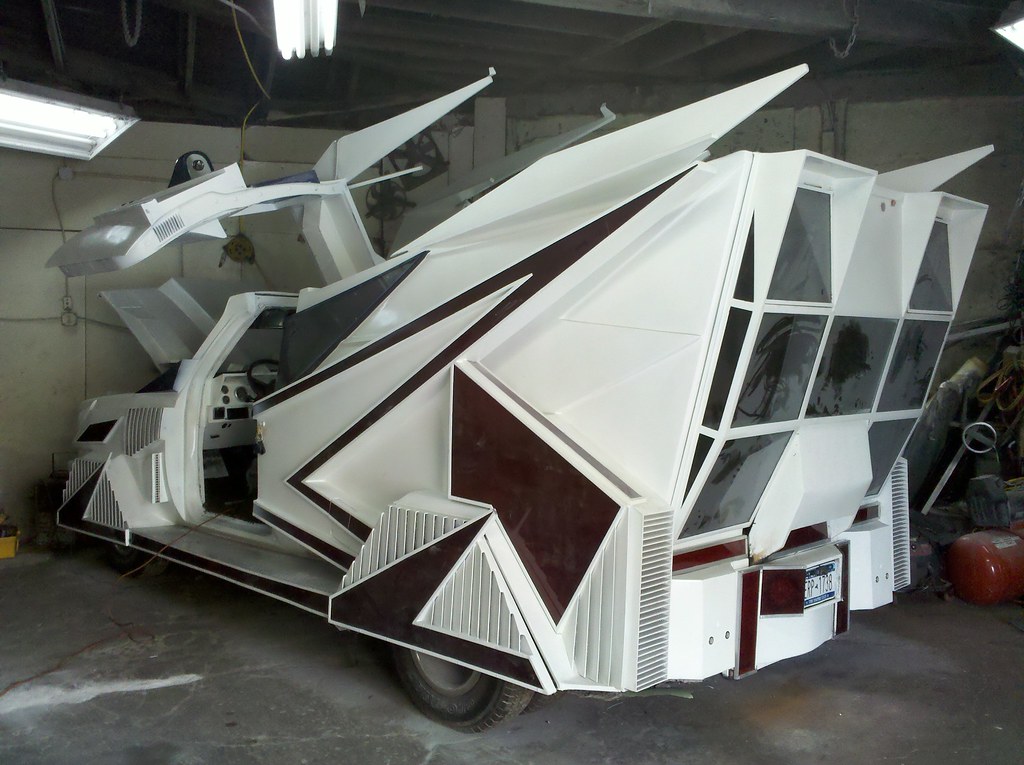
Underneath all this is a 1981 Chevy truck. I asked the owner if this has a practical function, or if it just looks cool. He said it's practical. I guess it keeps the truck bed covered, at least.

The FDNY had apparently just departed when I got there. The guy driving it escaped uninjured, according to a bystander.
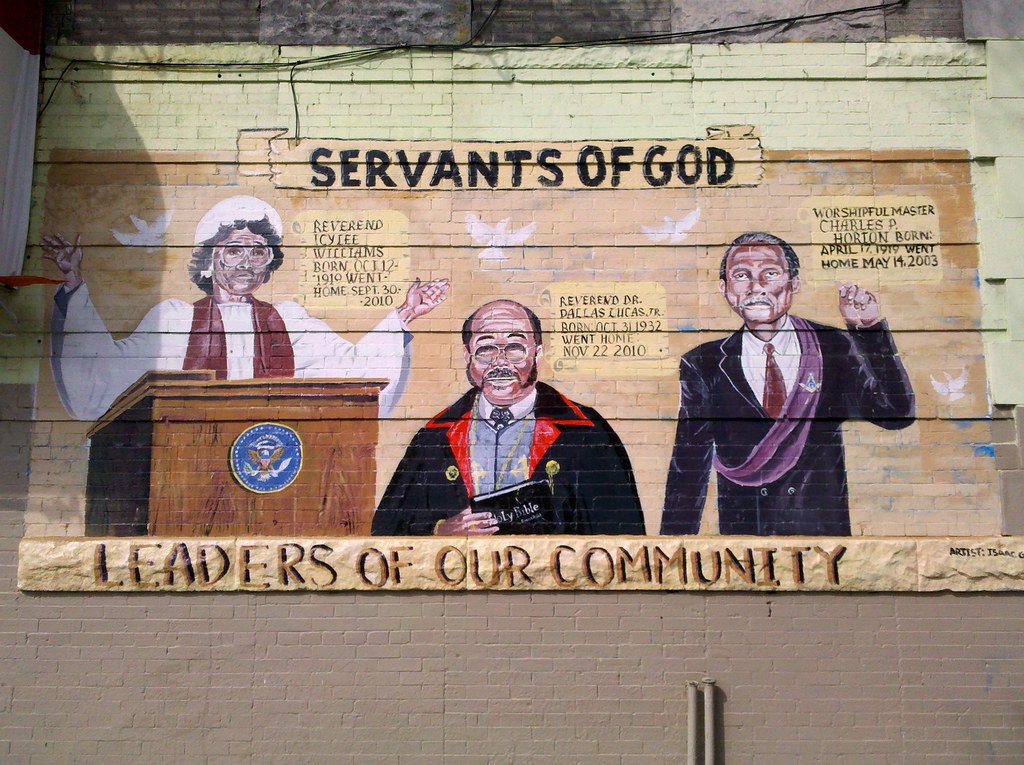

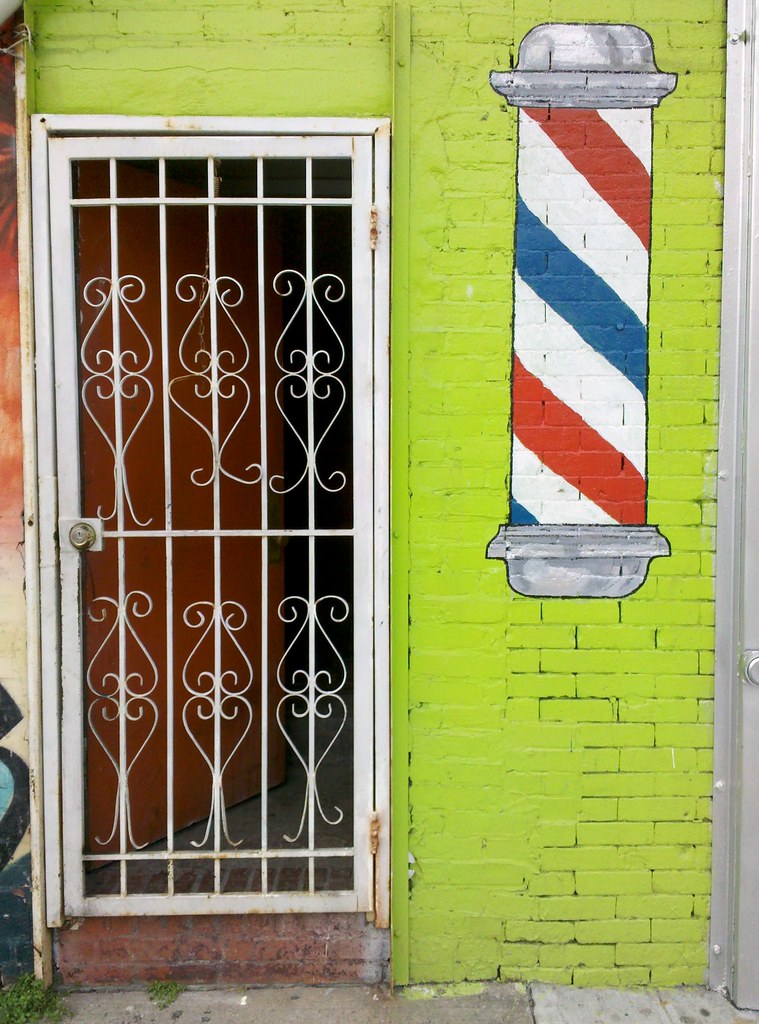
I've been keeping track of all the barbershops I've noticed that substitute z's for s's in their names. I don't think this one counts, but it's hard to say.

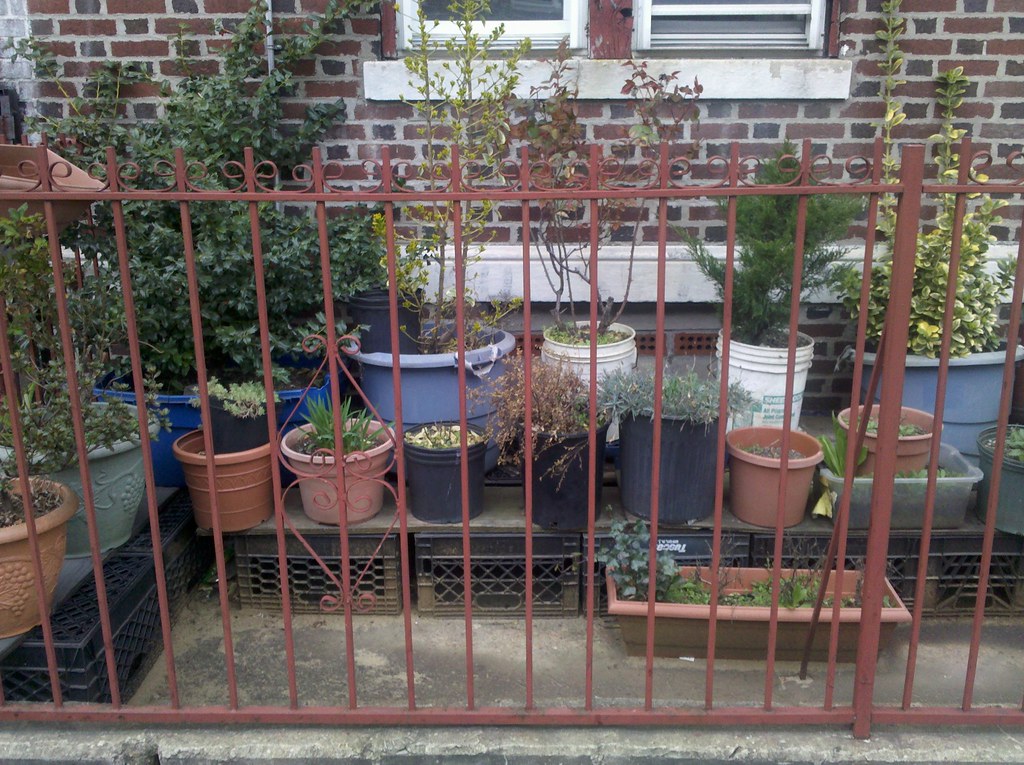


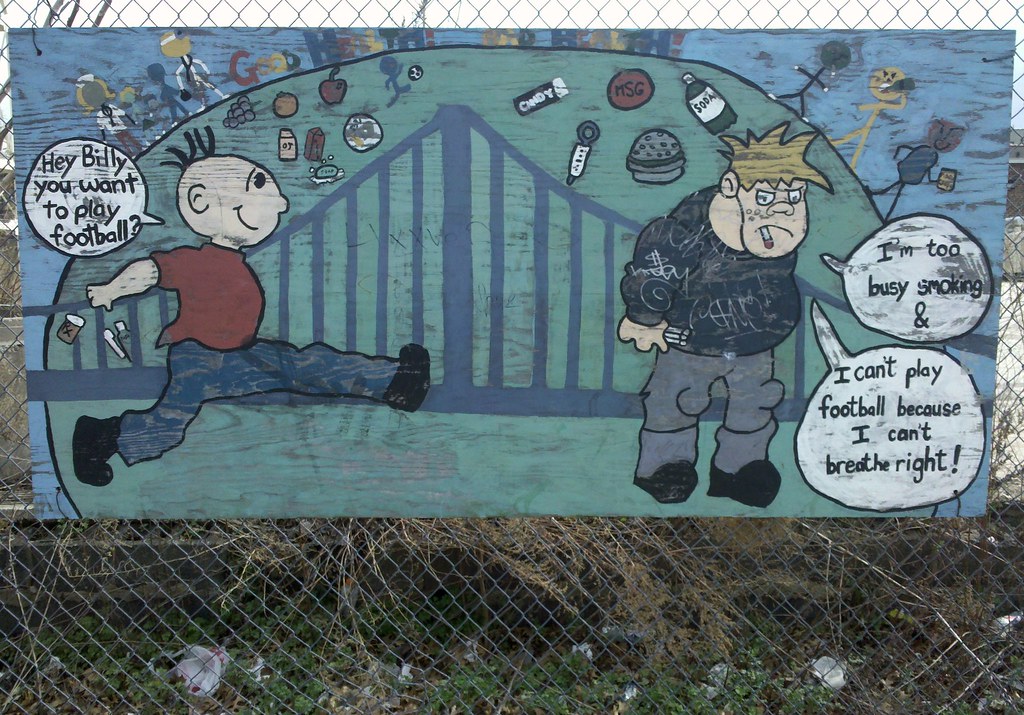
Finally, someone breaks it down for me!
Also, I think Billy's knees may be the real factor limiting his football playing.


Day 86
While you’re waiting…
March 25th, 2012I'm currently a bit behind in getting my photos online. In the meantime, if you're new to the site, you may be interested in reading the (very long) final post I wrote about my walk across the US — my thoughts one year after the completion of that trip.
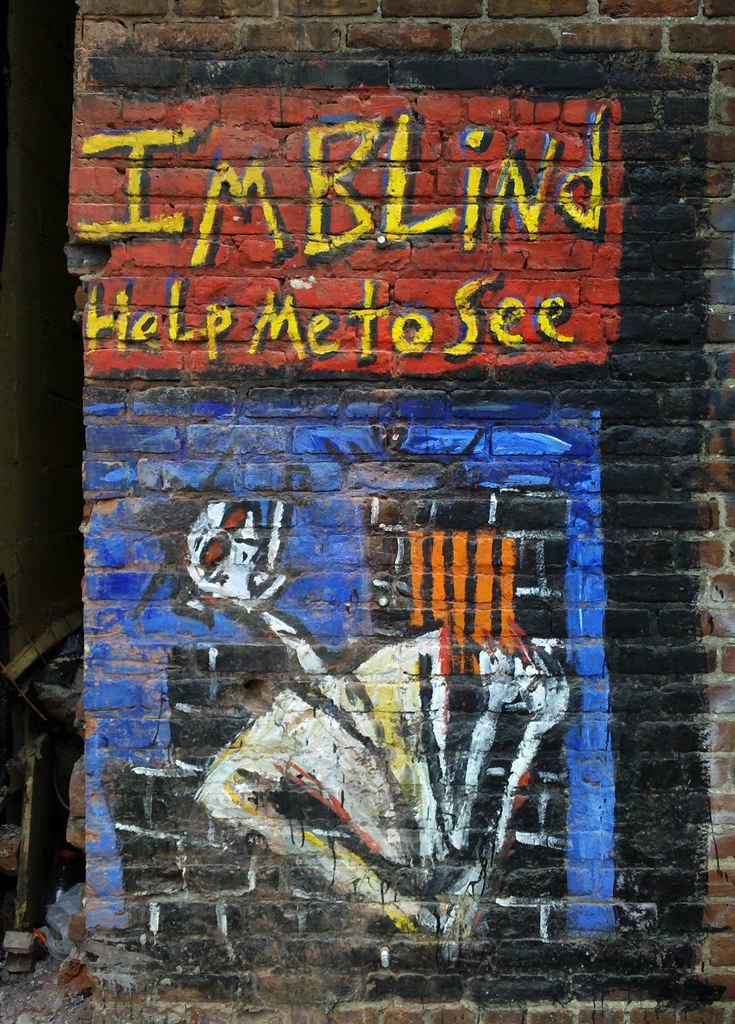
The so-called "Veteran Master of Gothic Angst" is promoting his new eBook for the iPad. Because nothing says "Gothic Angst" like Apple's line of sleek consumer electronics. Just pop in your earbuds, crank out a few emails, and brood over the wretched darkness and despair of the human soul. (FYI, this painting is similar to the one in the video, but it's in a different location.)


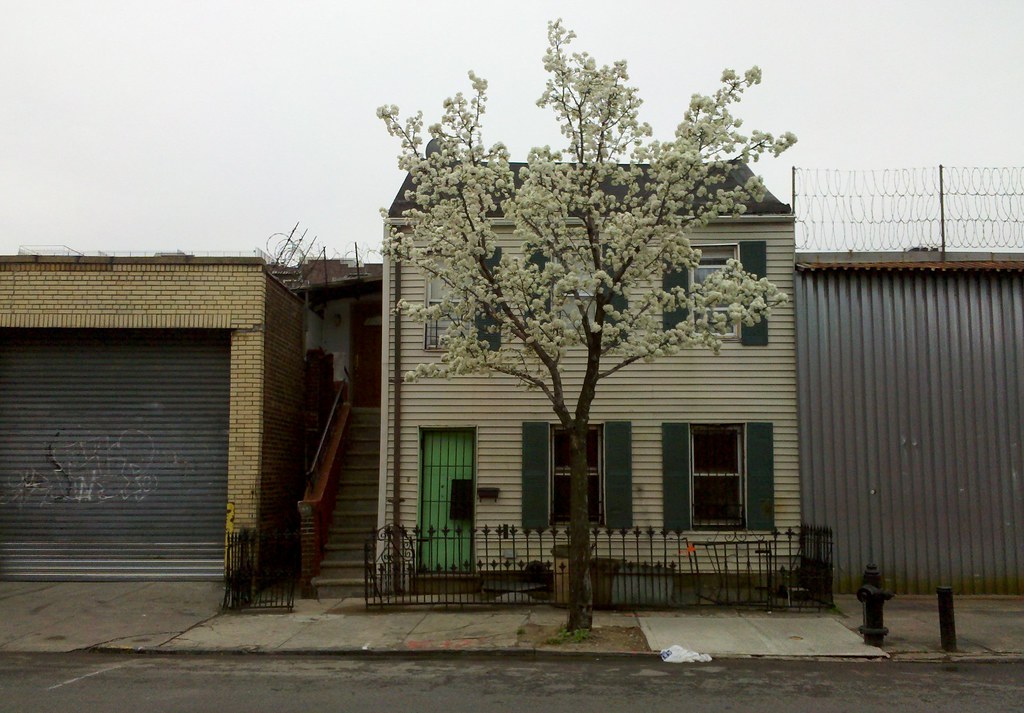
A little residential enclave on this dreary industrial strip
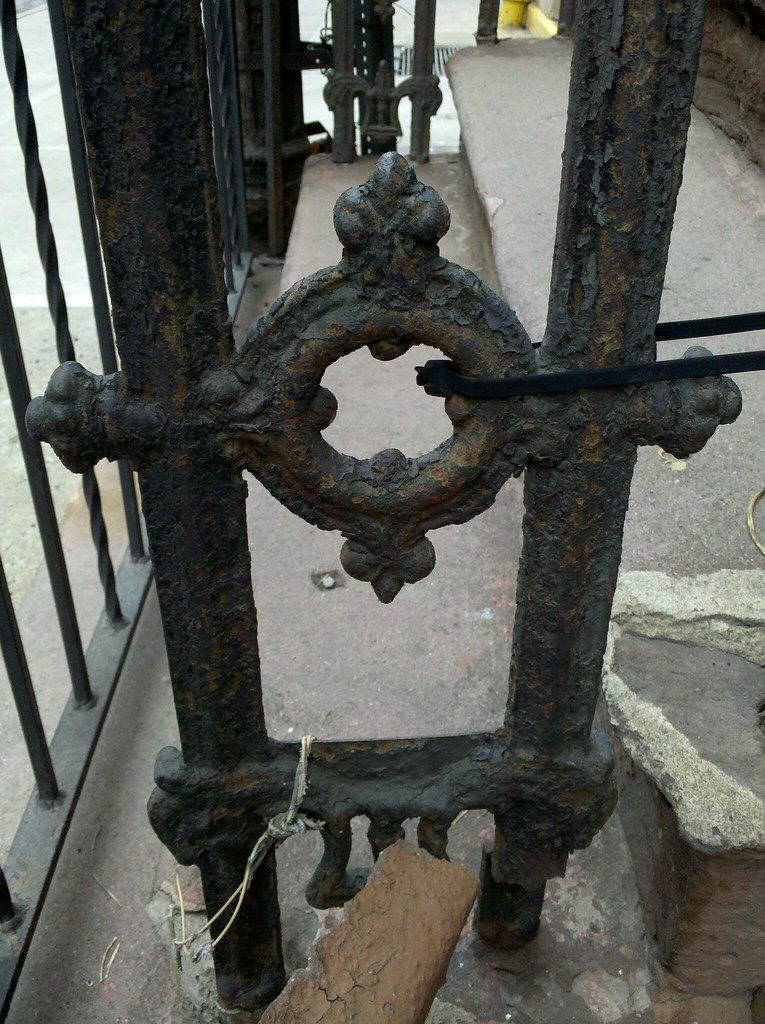
Boot scrapers are quite scarce 'round these here parts.

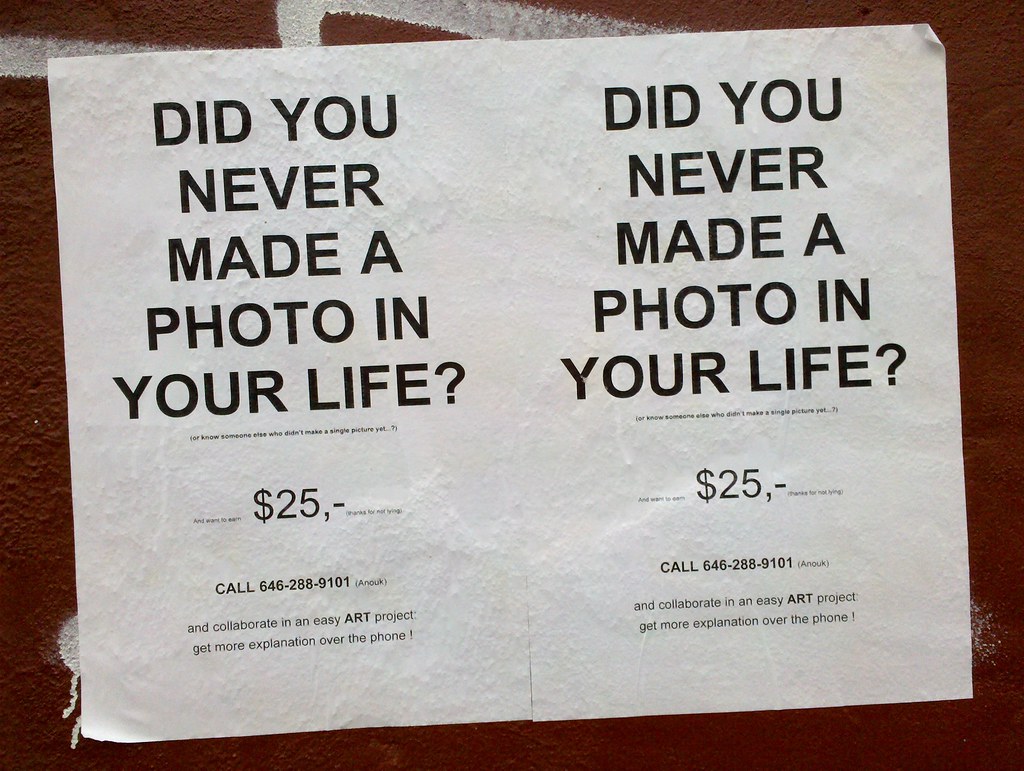
Just text "ENDofDAYZ" to 18018!
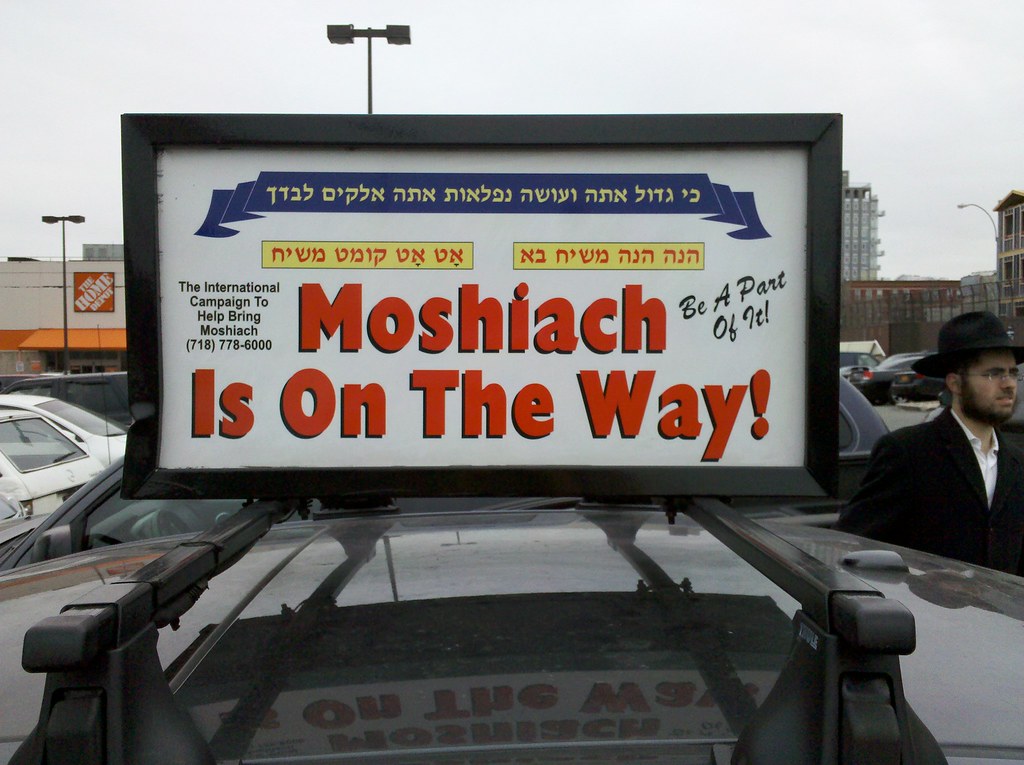
But seriously folks, here's a primer, written from an Orthodox perspective, on the concept of the messiah in Judaism. The sign above is part of a campaign within the Chabad-Lubavitch movement.
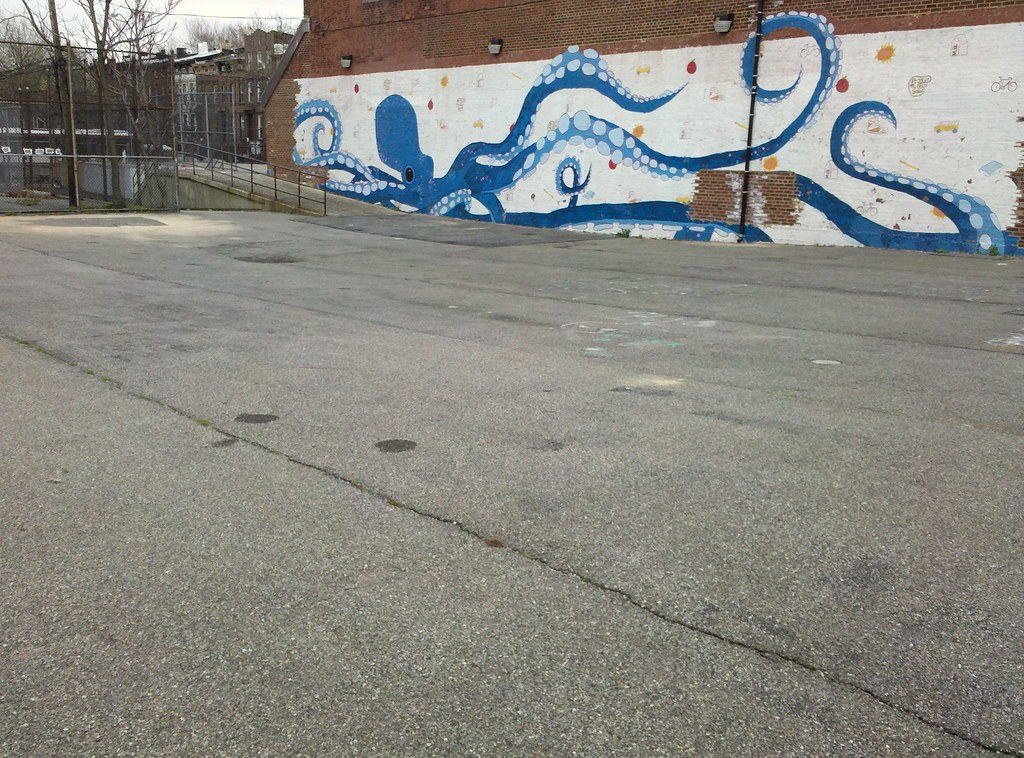
I'm sure this octopus has crept into the nightmares of many little children over the years.

This would have been better.
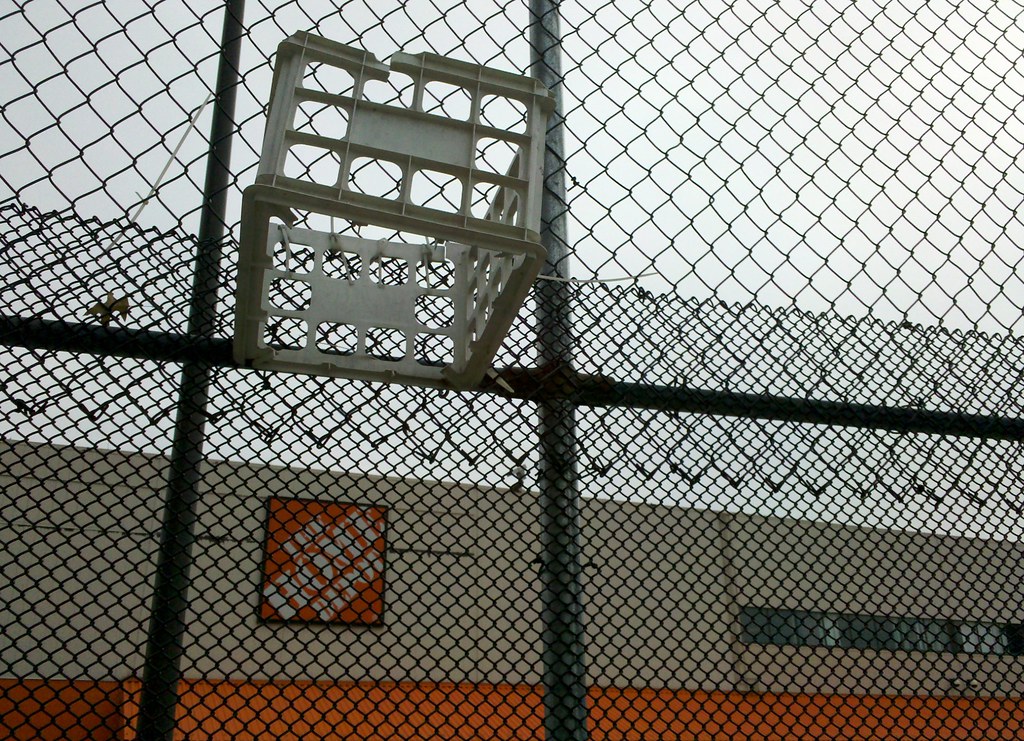

Prohibited during Passover, chametz is traditionally removed from one's possession, and often destroyed, before the start of the holiday. Passover doesn't begin for almost two weeks, but perhaps this gentleman is about to leave town for a while and won't have an opportunity to do this later.

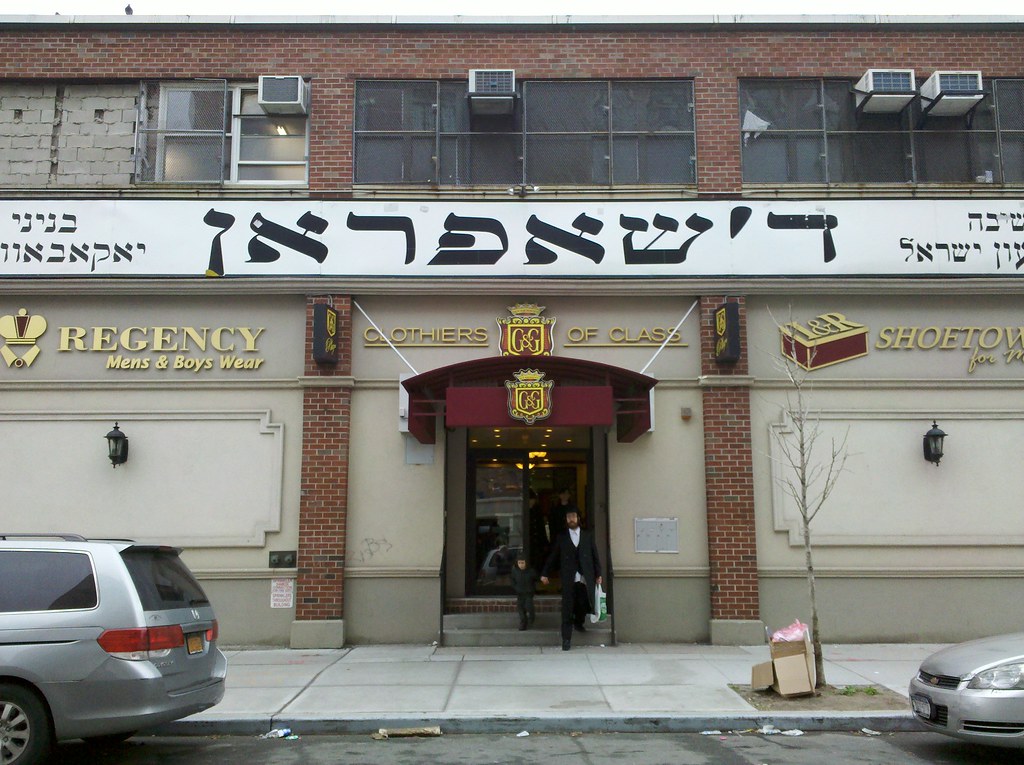
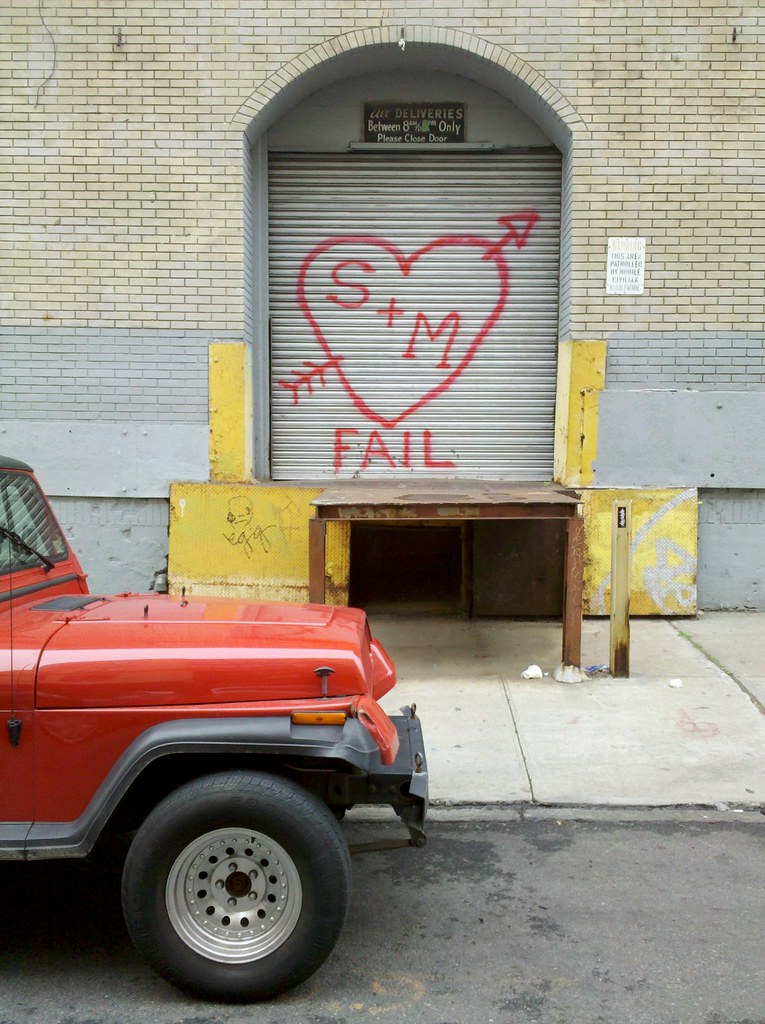
I think all relationship graffiti should be kept up to date. If you're going to tell the world you love someone, it's your responsibility to let people know when things change.

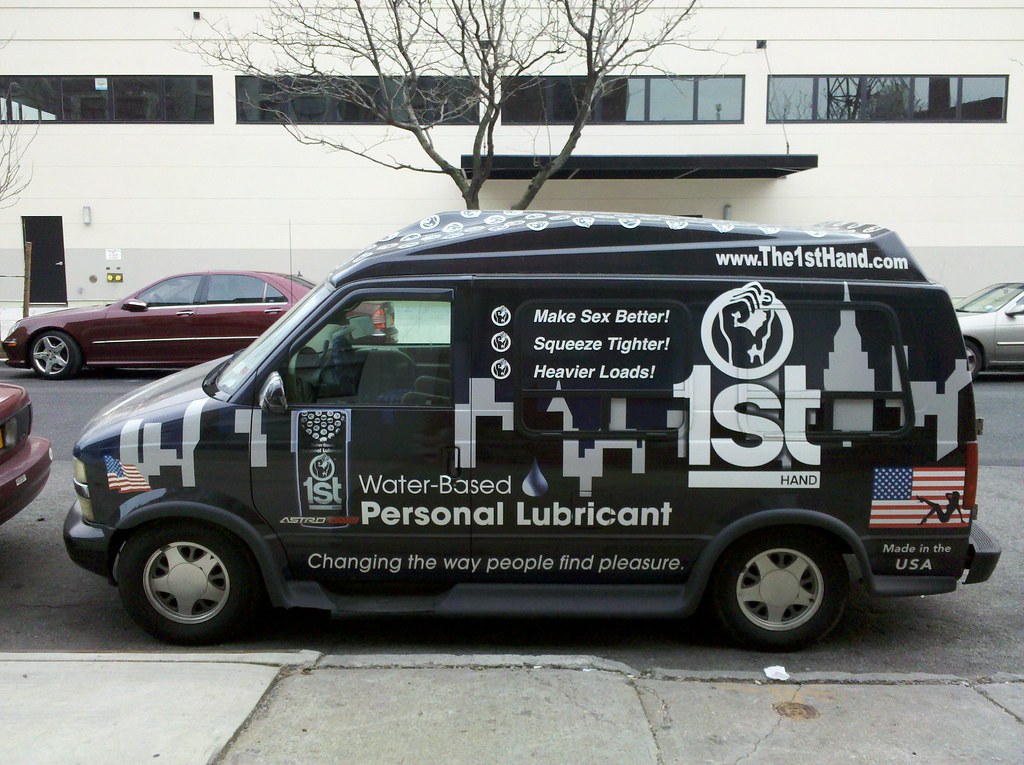
That's what their website claims. It's certainly a brazen van, at any rate.
Also, their logo closely resembles that of Stand With Wisconsin, although, in a geographic reversal, it's a right hand instead of a left.


