

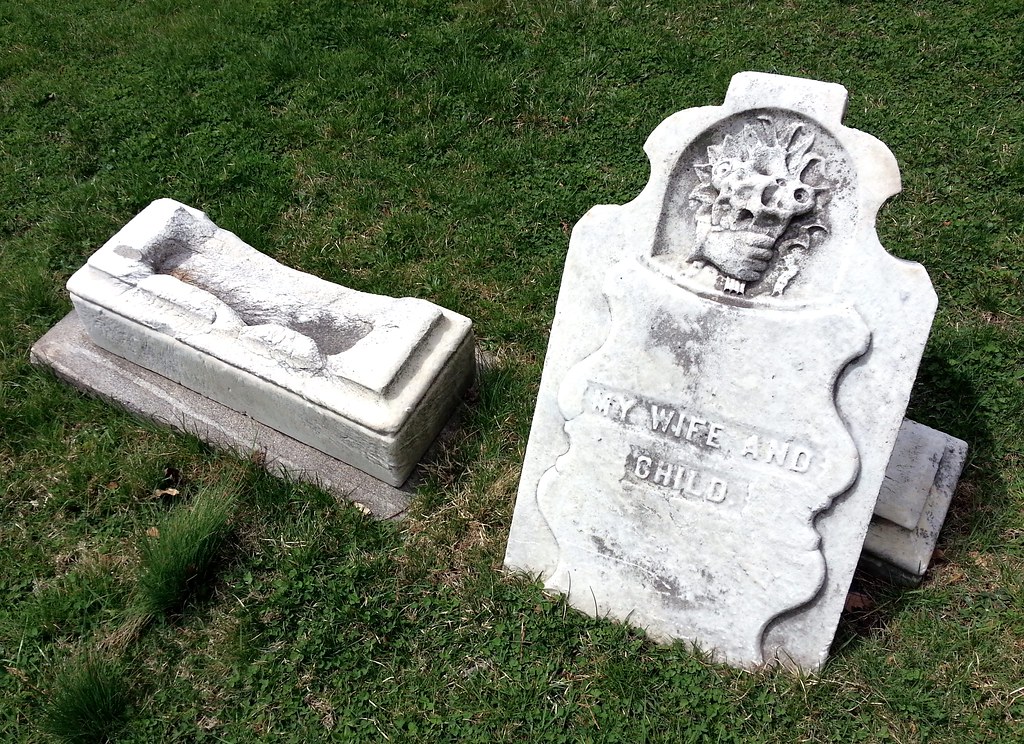
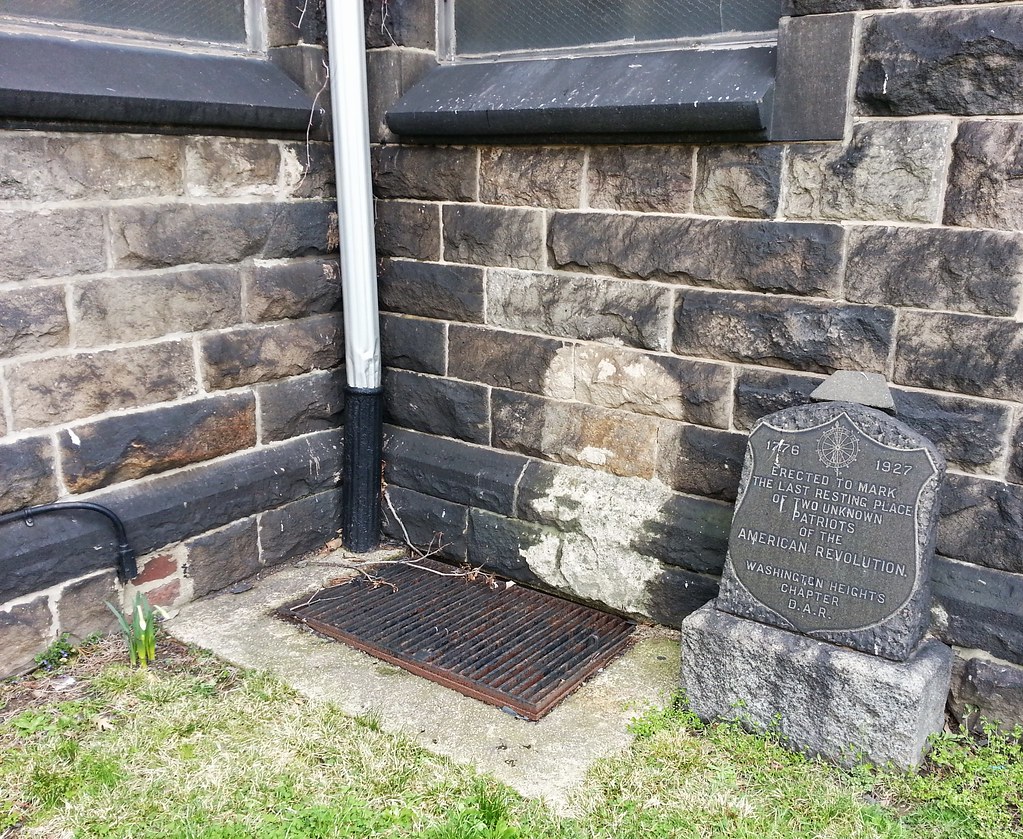
Their skeletons were discovered in 1926 near the former site of Fort Independence.

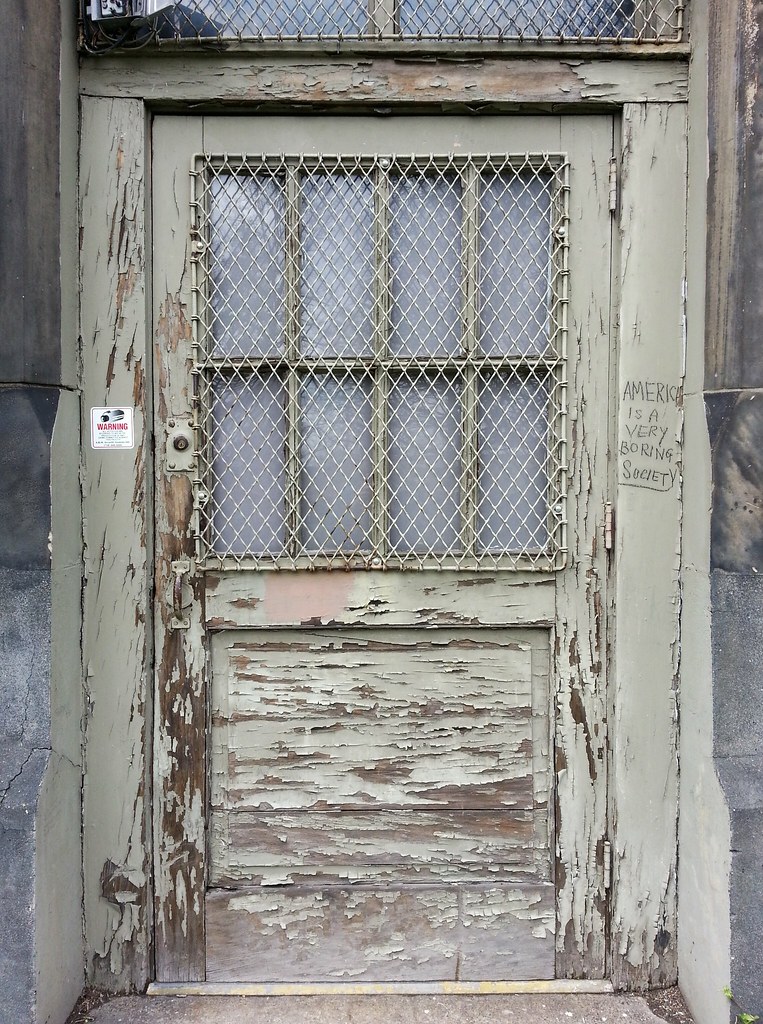
It's kind of hard to see (here's a close-up), but those are book-filled plastic crates wedged in beneath the mail slot.

Here is a sampling of the objects, in addition to the stuffed creatures and the "Mommie Where's Daddy" ad seen above, that can be found nailed to the utility poles of Lyon Avenue between Glebe and Castle Hill Avenues: teddy bears, Smurf with Santa hat, Shrek figurine, embroidered wolf, plastic flowers, fake $20 bill, stretched-out Planet Fitness t-shirts, laminated New York Post photo of David Bowie, defaced Connecticut license plate, heart-shaped neck pillow, shell-shaped serving dish, Justin Bieber tabloid photo in an "I ♥ MY DADDY" picture frame, and posters of a leopard, Rihanna, and the Virgin Mary.
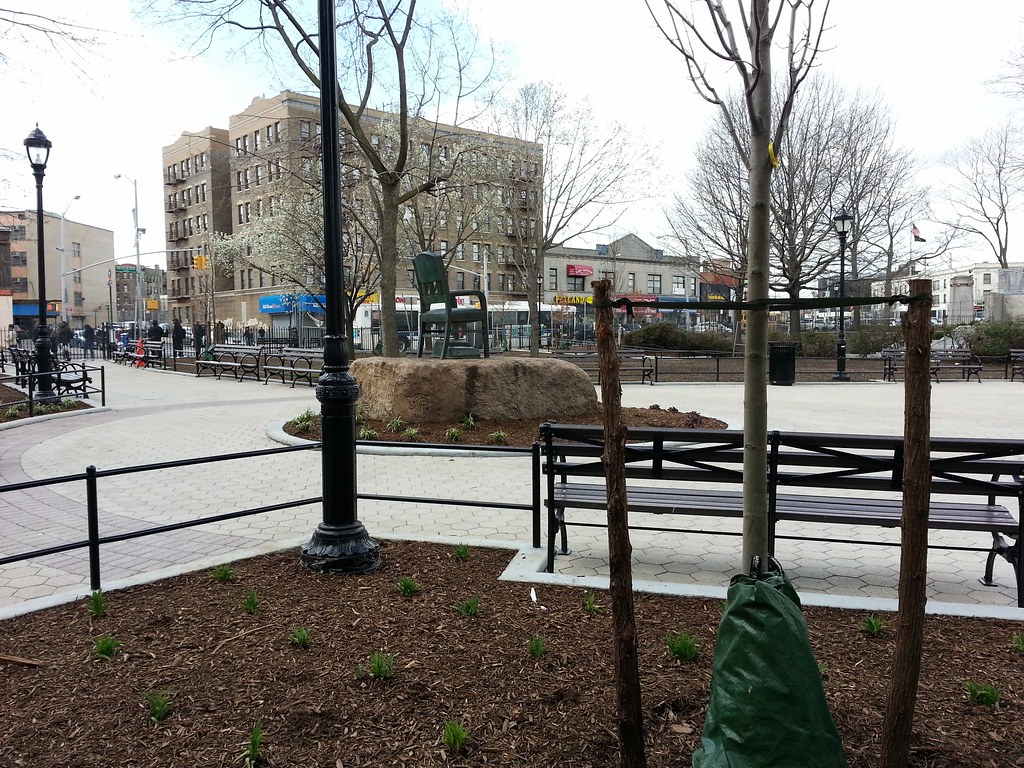
Owen Dolen Park in Westchester Square is currently closed for reconstruction, but you can still catch a glimpse of this unusual monument inside it. According to the Parks Department:
This bronze piece by New York City artist David Saunders (b. 1954) depicts an armchair and open dictionary set on a granite boulder. The four-foot-high bronze armchair is decorated with a laurel wreath and stars and stripes while the boulder is engraved with wild boars.
The images of the wild boars are reminiscent of prehistoric cave paintings found in Lascaux, France. These are meant to suggest the emotional side of human nature, and contrast with the color plate of “Common Birds of America” that is depicted on the open page in the dictionary underneath the seat, symbolizing human objectivity. The motif of the chair is borrowed from 19th century monuments to figures of stature, who are often depicted seated and surrounded by symbols of learnedness. When the piece was unveiled the artist explained that the empty chair allows the viewer to picture him or herself in the chair; in this way Saunders creates a monument to everyone. In fact, Saunders’ piece is a homage to many works of art; the granite is from the same quarry that supplied the pedestal for the Statue of Liberty (1886) and the artist’s inspiration for the boulder comes from Frederick George Richard Roth’s (1872–1944) Balto (1925) in Central Park.
Older than the New York Public Library system, this private library was opened in 1891 in the town of Westchester (now part of the Bronx) by the railroad baron Collis P. Huntington. It fell on hard times financially after the Smithsonian Institution unsuccessfully attempted to seize its extensive American Indian collection in the 1990s; the library prevailed in court, but ended up having to sell off the collection anyway (to Cornell University) after the legal fees and other expenses had depleted its coffers.
(The candle and leprechaun in the foreground are a memorial to a library worker of Irish descent who recently passed away.)
Electric light bulbs are now mounted on the old gas-lamp piping.
A playground on St. Peter's Avenue named — obviously — by Henry Stern
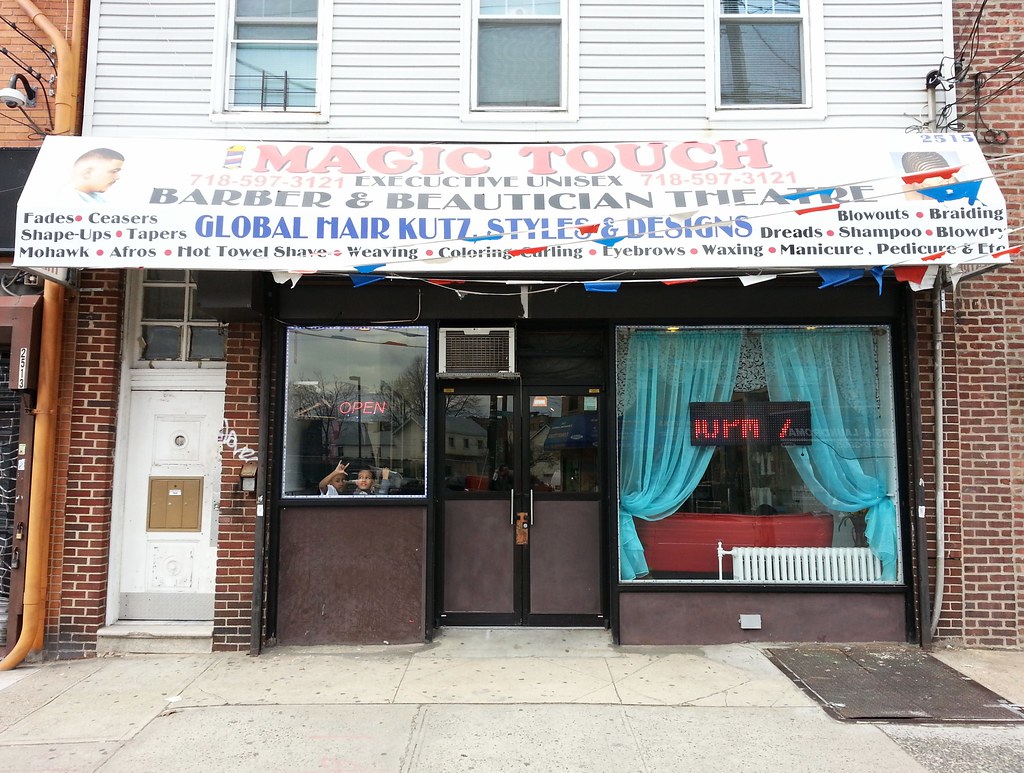
Mr. Kleens iz gone! Fortunately, the place is still execuctive.
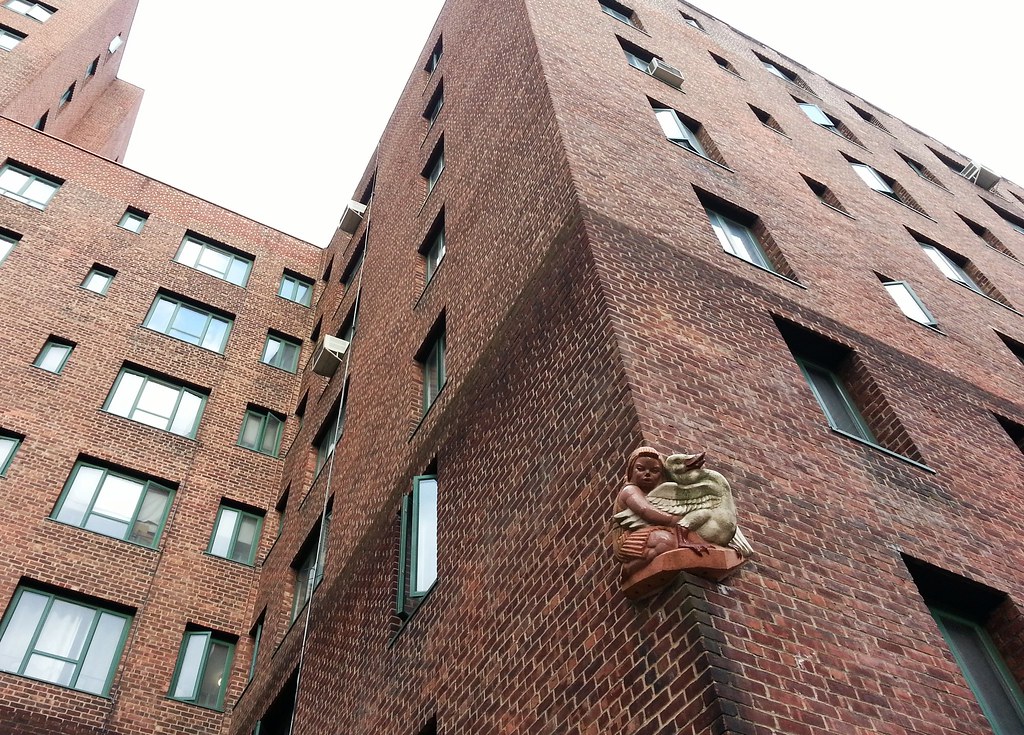
Parkchester, although largely forgotten today in the ever-changing whirl of New York real estate, was something of a planning phenomenon when the Metropolitan Life Insurance Company put it up in 1938 to 1942 on the 129-acre site of a Catholic home for wayward boys in the east Bronx. A six-by-seven-foot architectural model was on display at the company's exhibit at the 1939 World's Fair.
It provided rental housing for a community of 42,000 working people in 171 buildings arranged around a central oval and two broad avenues. It had playgrounds and landscaped pathways, its own shopping complex and movie theater. The sameness of the red brick buildings was broken up by 500 terra-cotta statues built into the corners of buildings and small decorative plaques with nature scenes above many building entrances.
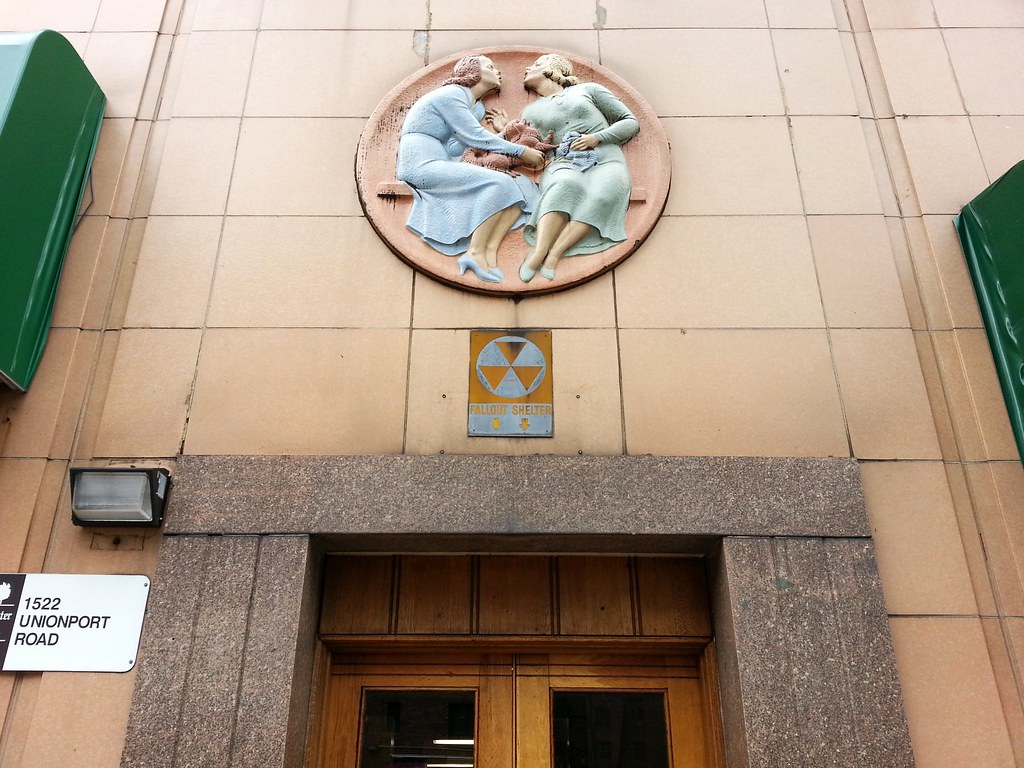
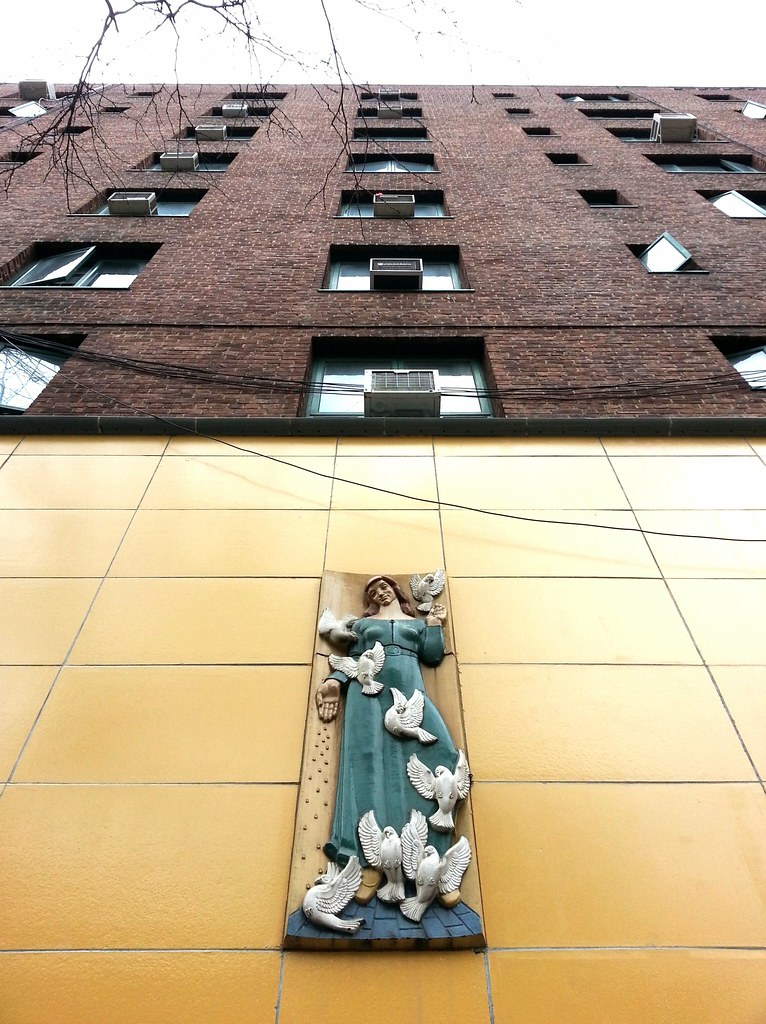

Several colorful figures can be found on the back wall of Parkchester's movie theater. You can see more of them, and many other Parkchester sculptures, over at Forgotten New York.
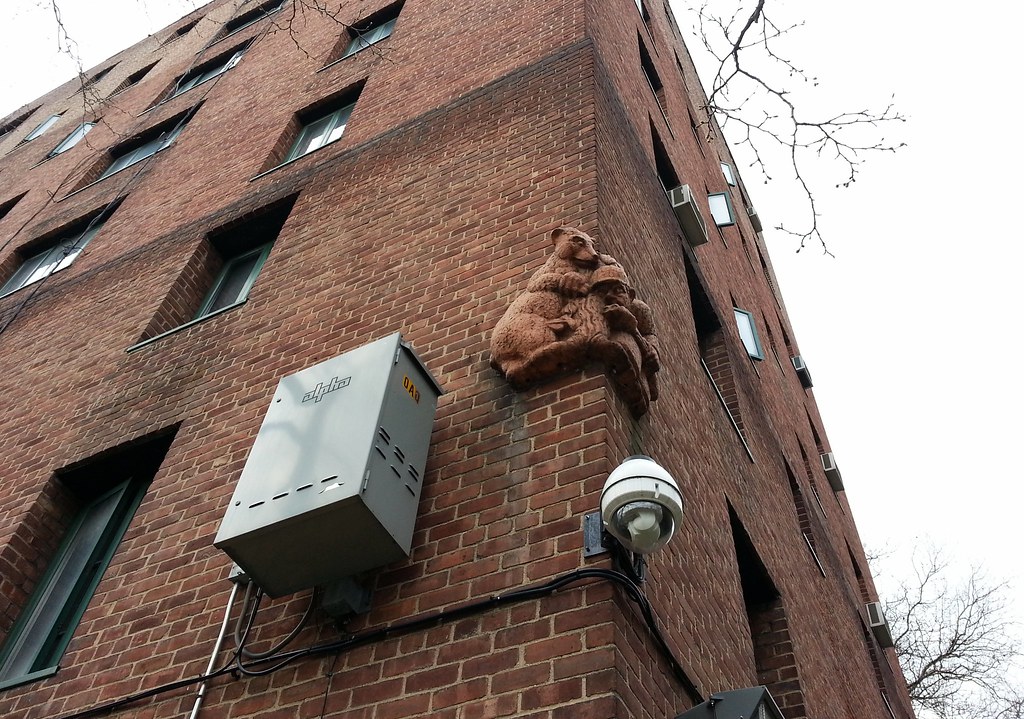
It's a little tough to see (take a closer look), but here we have a gun-toting hunter about to get clobbered by a bear waiting for him on the other side of the tree trunk.
According to Forgotten New York:
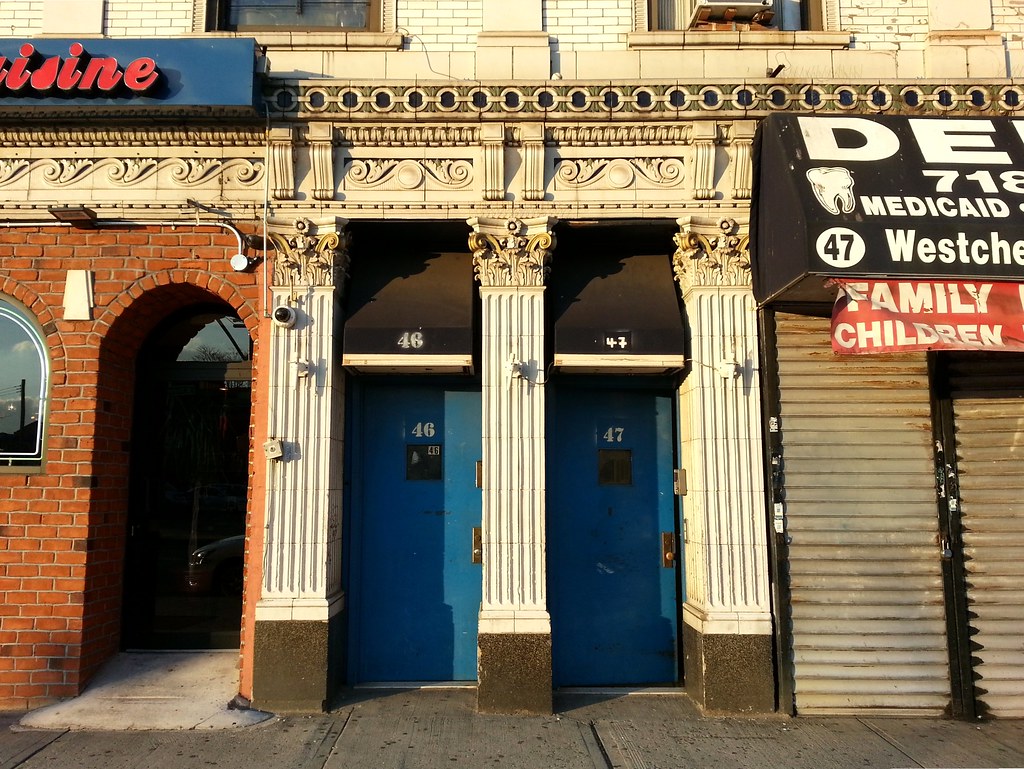
The story goes, though, that a magnificently apportioned building between Ponton and Roberts Avenues on East Tremont was built as a theater, but never got to fulfill its builders' ambitions. It features glazed white brick that glistens in the afternoon sun, and time hasn't dulled its rich terra cotta figures like the lyre and . . . mask over its front entrance. Locals call it "the white elephant."


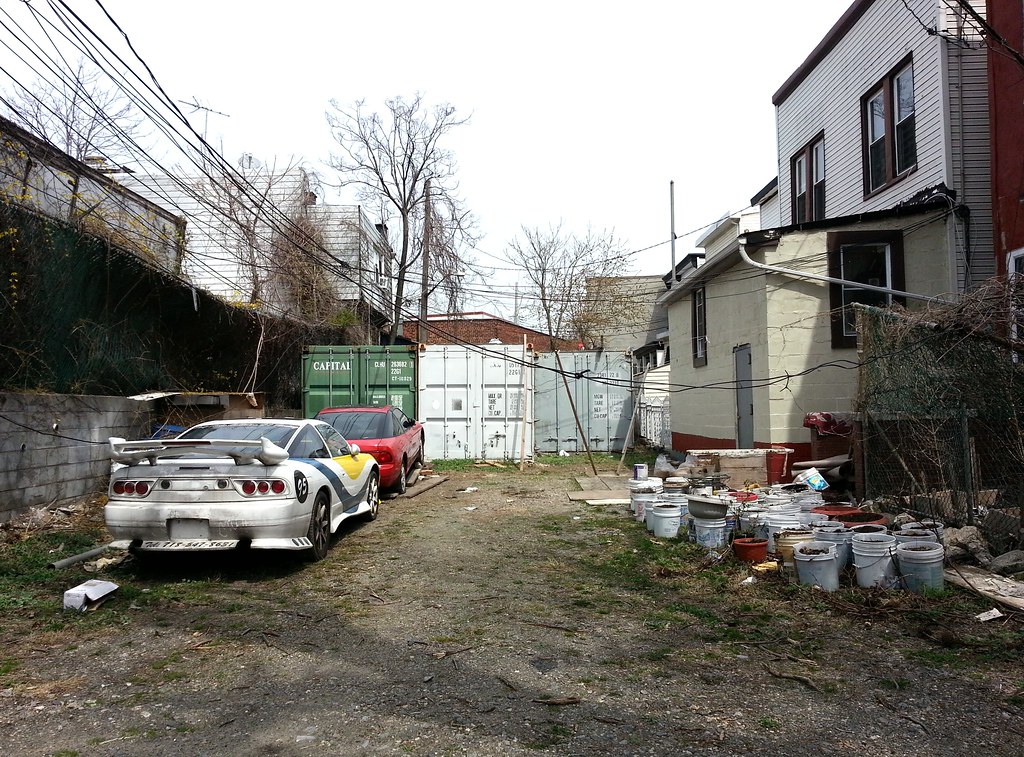
A tiny private street, blocked by shipping containers, that just barely lives up to its name — thanks to that bucket garden over there.


A fading Bronx ad for a long-gone Yonkers bowling alley


This "hidden sliver of woodland" along the Bronx River is rife with lesser celandine, the national flower of the Bronx. There is supposedly a 9/11 memorial grove somewhere in the park, but I didn't notice it.

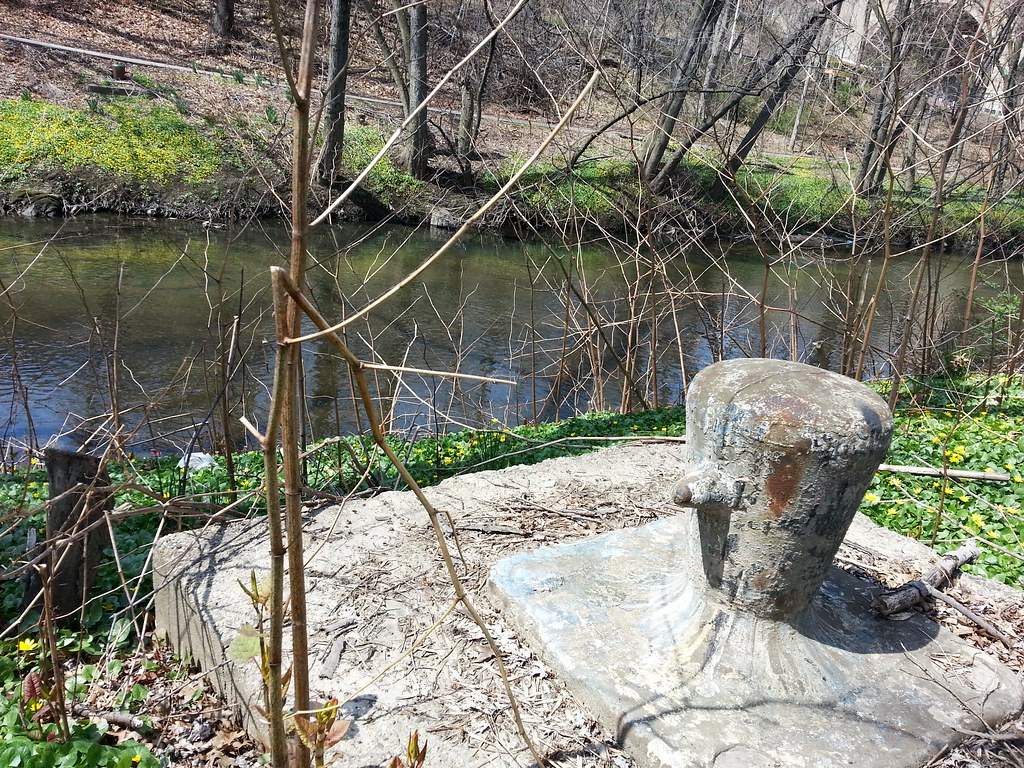
From the Bronx River Alliance: "Look on the streambanks for the presence of bollards used to tie up barges that held back the [Bronx River] while it was straightened during the modernization of the [Bronx River Parkway]." You can actually spot two more bollards on the far side of the river if you look closely.

The plaque at the base of this flagpole reads:
TO
RECORD
THE FACT THAT
WILLIAM WHITE NILES
WAS THE FOUNDER
OF THE
BRONX RIVER PARKWAY
THIS MEMORIAL
HAS BEEN ERECTED
BY HIS FRIENDS



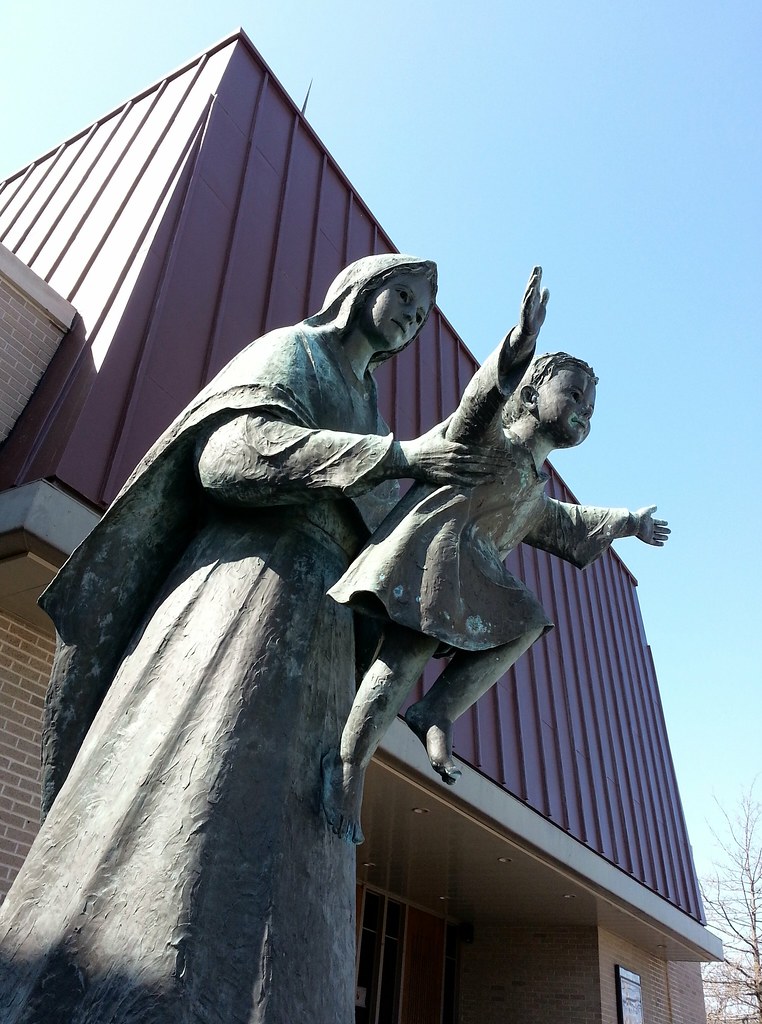
After a couple of decades at Our Lady of Mercy Medical Center, this statue has made the move over to the Church of Our Lady of Grace.


Here's where this photo was taken.
UPDATE: LB thinks it's a goat face.


