
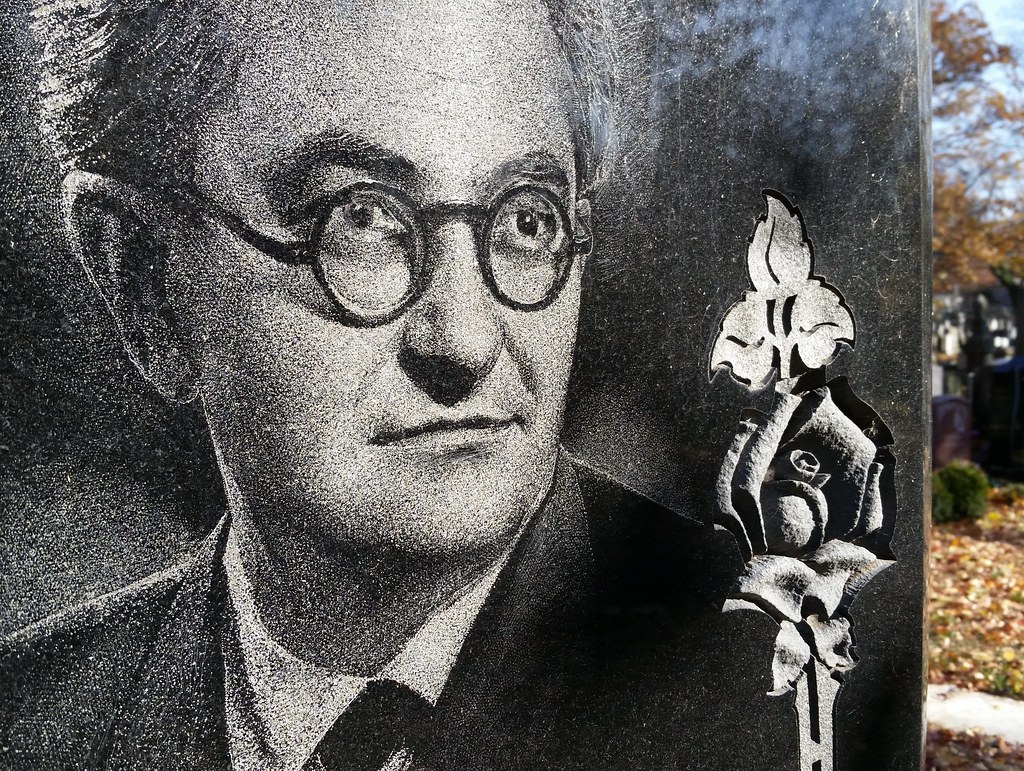
We're now in Beth-El Cemetery (apparently once known as New Union Fields Cemetery), which, like Salem Fields Cemetery, is owned by Temple Emanu-El. It previously belonged to Temple Beth-El, which merged with Emanu-El in 1927.
The headstone above stands in a section of the cemetery largely populated by the laser-etched portrait stones that, as we've seen, are in vogue among Jews from the former Soviet Union.

We've now moved on to Machpelah Cemetery (where, coincidentally, Joseph Banzer of Banzer's Cypress Hills Park was for years the superintendent). The "daunting, abandoned building that was once the cemetery office", seen in this video, was demolished in August 2013.
Harry Houdini, the legendary illusionist and escape artist, was buried here in 1926 following his death at the age of 52 from a ruptured appendix that may or (more likely) may not have been caused by a young man punching him in his stomach to test his abdominal strength. While Jewish custom dictates that the dead be interred in plain wooden coffins, Houdini was reportedly laid to rest in a metal-and-glass casket he had specially ordered for use in one of his stunts. Buried with him, as a pillow for his head, was a collection of letters that his late, dearly beloved mother had sent him over the years.
In case you're wondering, the colorful circular mosaic above depicts the logo of the Society of American Magicians, which Houdini presided over from 1917 to until his death. Every year, magicians from the Society hold a "broken wand ceremony" here to commemorate his death. The ceremony used to be held on Halloween, the anniversary of Houdini's death (on the Gregorian calendar), but around 1994 Machpelah's manager decided to start closing the cemetery on Halloween in an attempt to ward off vandals. The magicians now hold the ceremony on the anniversary of Houdini's death on the lunisolar Hebrew calendar — the 23rd of Cheshvan (which was November 16th this year) — except when that date happens to coincide with Halloween.
The bust of Houdini on the pedestal above is the latest of several to grace the monument; the others were all stolen or destroyed. From 1993 on, for almost two decades, the pedestal stood empty except during the annual broken wand ceremony, when the attending magicians would show up with a portable bust. The bust above has been in place since 2011, when a trio of "Houdini commandos" from the Houdini Museum in Scranton, Pennsylvania swooped in and installed it in an (initially) unsanctioned operation.
One other grave-related note: one of the smaller gravestones in front of the monument bears the names of both Houdini and his widow Bess. However, Bess is actually buried in Gate of Heaven Cemetery, a Catholic cemetery, in Westchester County. It's not entirely clear why the plans were changed and she didn't end up here in Machpelah, but I found one article that said her sister, "upset because Bess had given up her Catholicism to marry the Jewish showman", was the one who decided to bury her in Gate of Heaven instead.

According to historian Robert Rockaway:
Best known, perhaps, as the man who allegedly "fixed" the 1919 World Series between the Chicago White Sox and Cincinnati Reds, Rothstein is recognized as the pioneer big businessman of organized crime in the United States. A man of prodigious energy, imagination and intellect, he transformed American crime from petty larceny into big business. One social historian described him as "the J.P. Morgan of the underworld; its banker and master of strategy." . . .
During the 1920s, Rothstein put together the largest gambling and bookmaking empire in the nation, masterminded a million-dollar stolen bond business, and controlled most of New York's gangs, as well as that city's traffic in narcotics, bootlegging and gambling. . . .
With the coming of Prohibition, Rothstein's business empire developed another dimension — bootlegging. Rothstein laid the foundation for the enormous profits of Prohibition by creating an organization to buy high quality liquor by the shipload in England and distribute it to buyers in the United States. This idea caught on and soon others were engaged in the same enterprise. . . .
He next turned his talents to narcotics smuggling which, until he became involved, had been unorganized. Rothstein converted the racket into a businesslike machine by sending buyers overseas to Europe and the Far East, and by controlling the purchasing operation in the United States. . . . By 1926, Rothstein was allegedly the financial overlord of the foreign narcotics traffic in America.
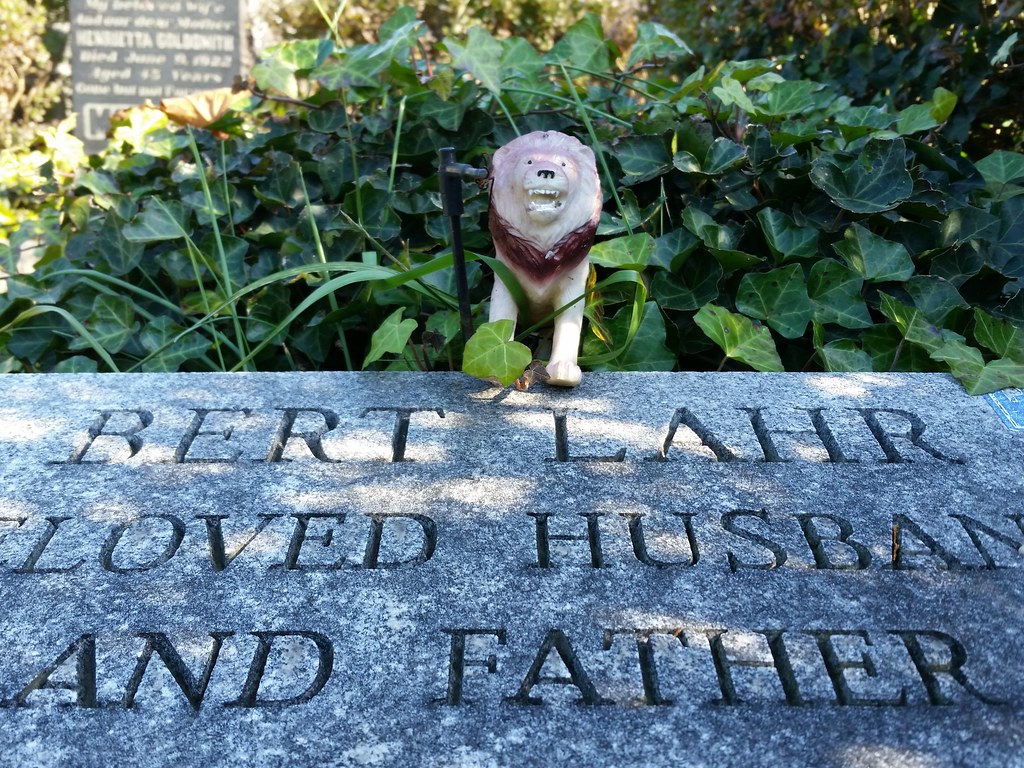
Bert Lahr is best known for playing the Cowardly Lion (video) in The Wizard of Oz, but he was also associated with another big cat: Hanna-Barbera's Snagglepuss, a seeming rip-off of Lahr whose famous catch phrase — "Heavens to Murgatroyd!" (video) — was first spoken by Lahr in the 1944 movie Meet the People.

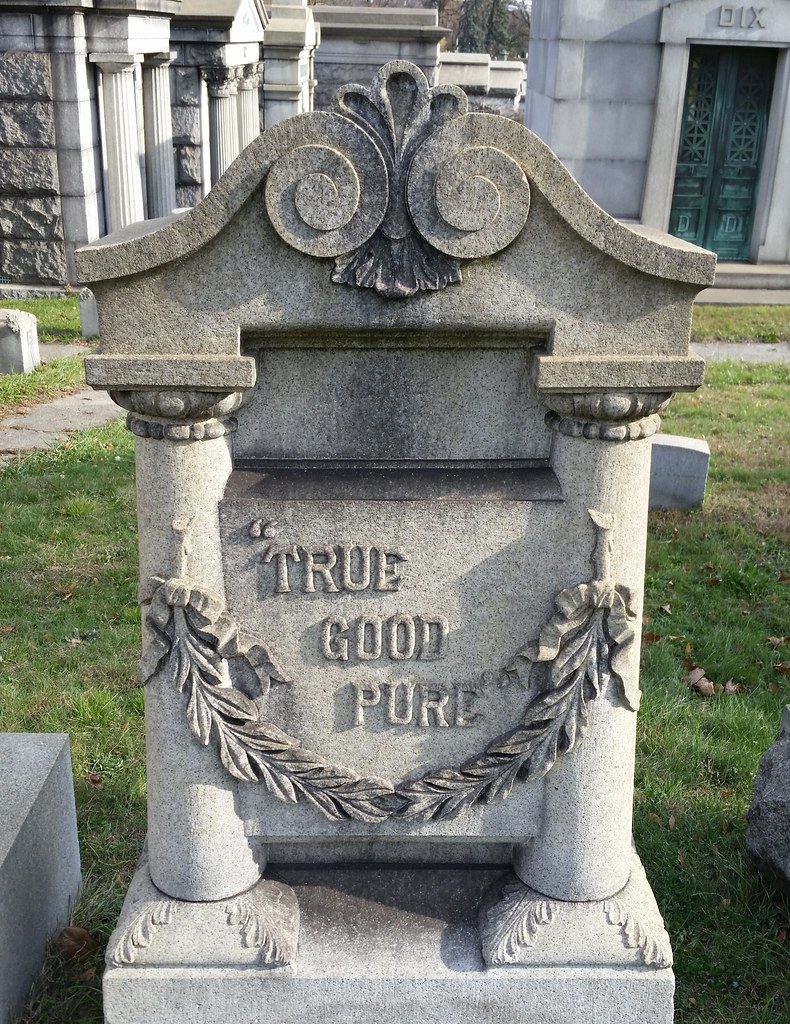
The quotation on this gravestone comes from Mark Antony's tribute to Brutus at the end of Shakespeare's Julius Caesar.
(Now we're in Union Field Cemetery, another of the 17 cemeteries clustered together near the middle of the Brooklyn-Queens border.)

We've left Beth Olom Cemetery, crossed the Jackie Robinson Parkway, and entered Hungarian Union Field Cemetery, which is now part of Mount Carmel Cemetery.
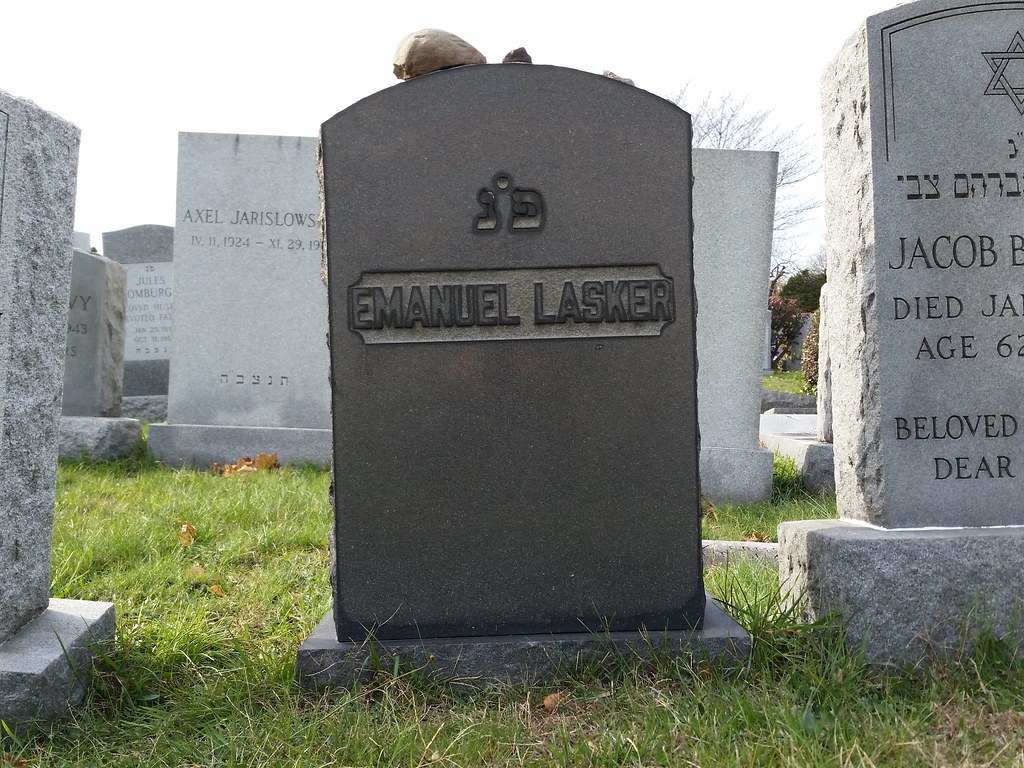
Emanuel Lasker was one of the greatest chess players of all time, winning the world chess championship from William Steinitz in 1894 and holding onto it until 1921.
(As we learned when we saw Steinitz's grave in the Evergreens Cemetery, his 1894 loss to Lasker was the beginning of his mental troubles, at least according to the narrative of his 1900 NY Times obituary, and his defeat in a rematch a couple of years later triggered his rapid decline into insanity.)
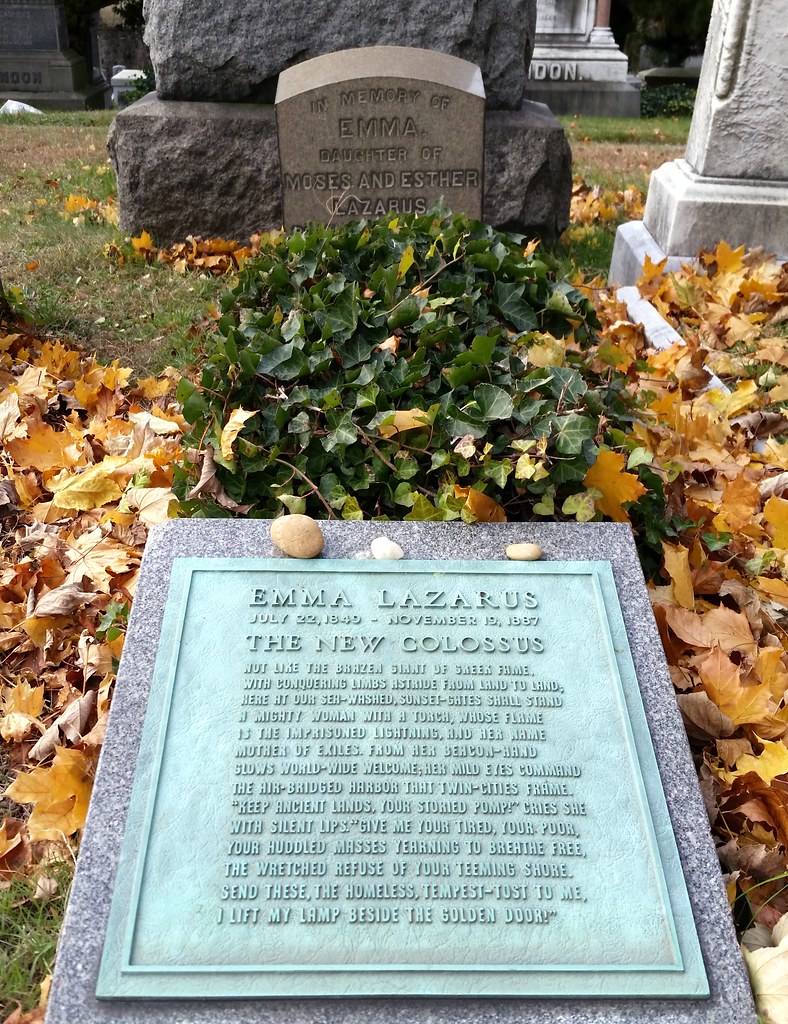
Emma Lazarus (a first cousin of Benjamin Cardozo) was the author of "The New Colossus", the famous poem found inside the pedestal of the Statue of Liberty, which reads in part:
"Keep, ancient lands, your storied pomp!" cries she(The comma after "Keep" is missing from the versions of the poem on Liberty Island and at Ms. Lazarus's grave.)
With silent lips. "Give me your tired, your poor,
Your huddled masses yearning to breathe free,
The wretched refuse of your teeming shore.
Send these, the homeless, tempest-tost to me,
I lift my lamp beside the golden door!"
The statue originally had nothing to do with immigration, however. It was the verses penned by Ms. Lazarus that eventually fixed it in the popular imagination as a beacon welcoming the tired and the poor of foreign lands to New York Harbor.
From the NY Times:
When the Goddess of Liberty was given to the United States, its donor's agenda was to burnish France's republican roots after the oppressive reign of Napoleon III and to celebrate the two nations' commitment to the principles of liberty.
The only immigrants mentioned at the dedication in 1886 were the "illustrious descendants of the French nobility" who fought on behalf of the United States against Britain during the American Revolution.
But it was the words of a fourth-generation American whose father was a wealthy sugar refiner and whose great-great-uncle welcomed George Washington to Newport, R.I., that almost single-handedly transformed the monumental statue in New York Harbor into the "Mother of Exiles" that would symbolically beckon generations of immigrants. . . .
Lazarus's "New Colossus," with its memorable appeal to "give me your tired, your poor," was commissioned for a fund-raising campaign by artists and writers to pay for the statue's pedestal.
But while the poem was critically acclaimed — the poet James Russell Lowell wrote that he liked it "much better than I like the Statue itself" because it "gives its subject a raison d'être which it wanted before quite as much as it wants a pedestal" — it was not even mentioned at the dedication ceremony.
Finally in 1903, after relentless lobbying by a friend of Lazarus who was descended from Alexander Hamilton, himself an immigrant, it was "affixed to the pedestal as an ex post facto inscription," the art historian Marvin Trachtenberg wrote.
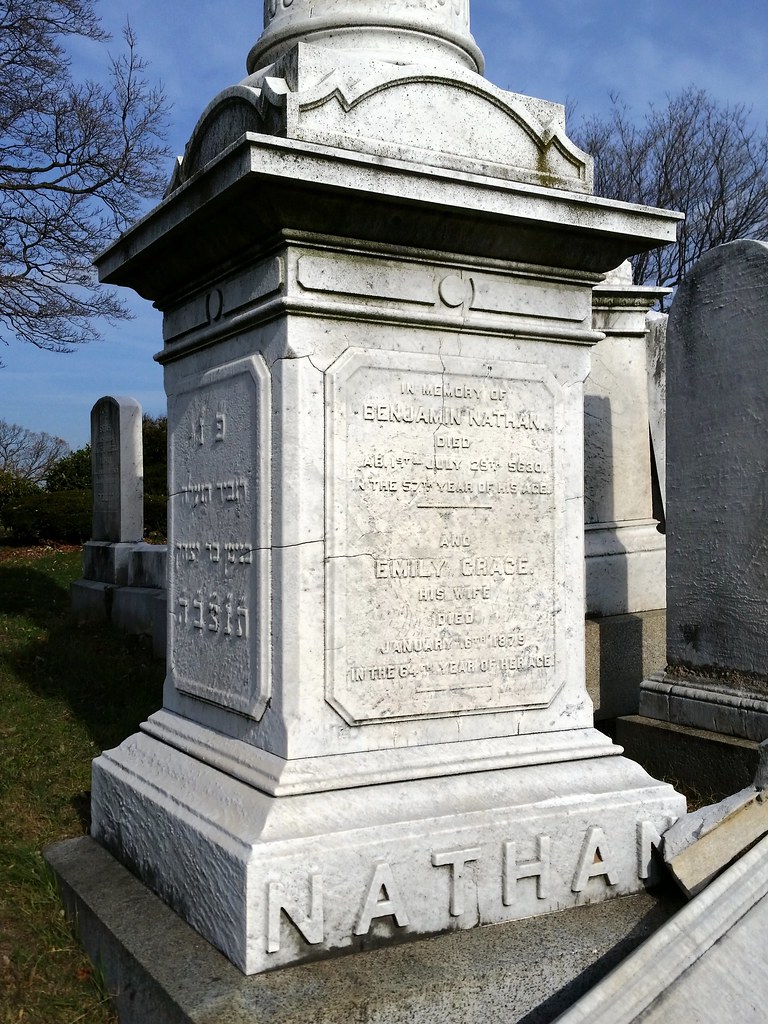
The eponymous uncle of Benjamin Nathan Cardozo was the victim of a sensational, and still unsolved, murder — an assault that was "more atrocious and more shocking than any recent crime" and that left him "marred and mutilated out of semblance to his kind", according to an NY Times article from July 30, 1870, the day after he was killed.
I'm walking every street in New York City.
This is the counterpoint to my walk across the US. Instead of seeing a million places for just a minute each, I'm going to spend a million minutes exploring just one place. By the time I finish walking every block of every street in all five boroughs, I'll have traveled more than 8,000 miles on foot — all within a single city. Details!
Email me at matt@imjustwalkin.com
Subscribe to my email list
Maps: Progress | Photos

~9,954 miles walked
Your donations allow me to keep walking full-time. If you think what I'm doing is valuable and you'd like to offer some support, I would be very grateful. On the other hand, if you think I'm a worthless bum, feel free to email me and tell me to get a job, bozo. Both are excellent options!
