
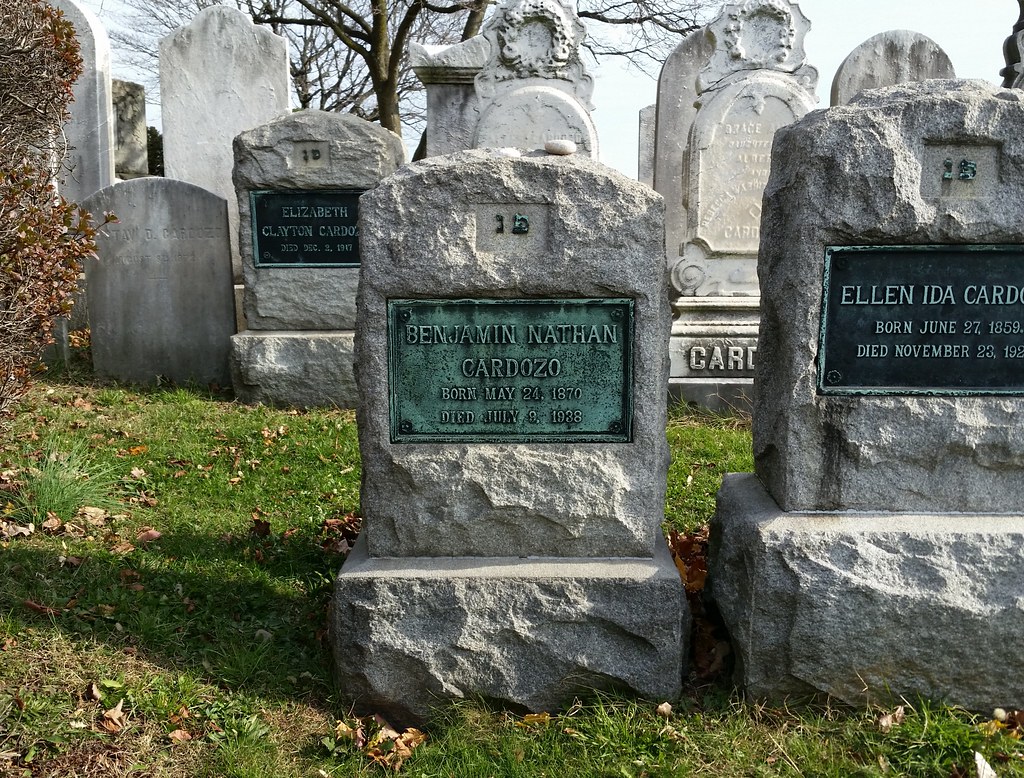
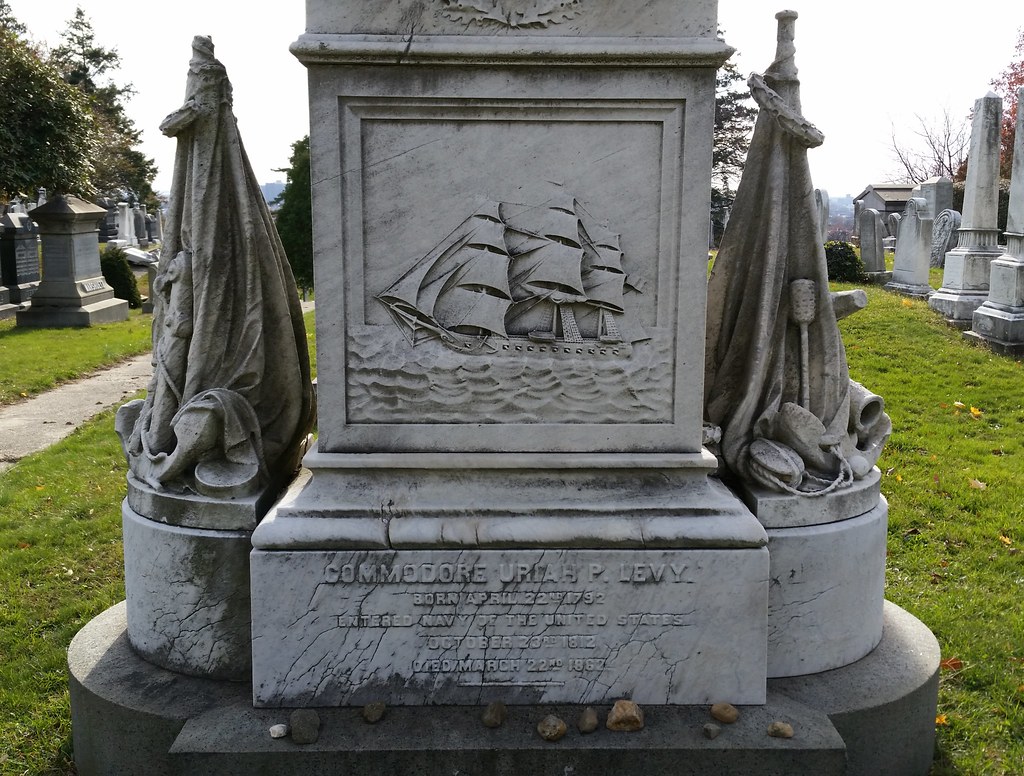
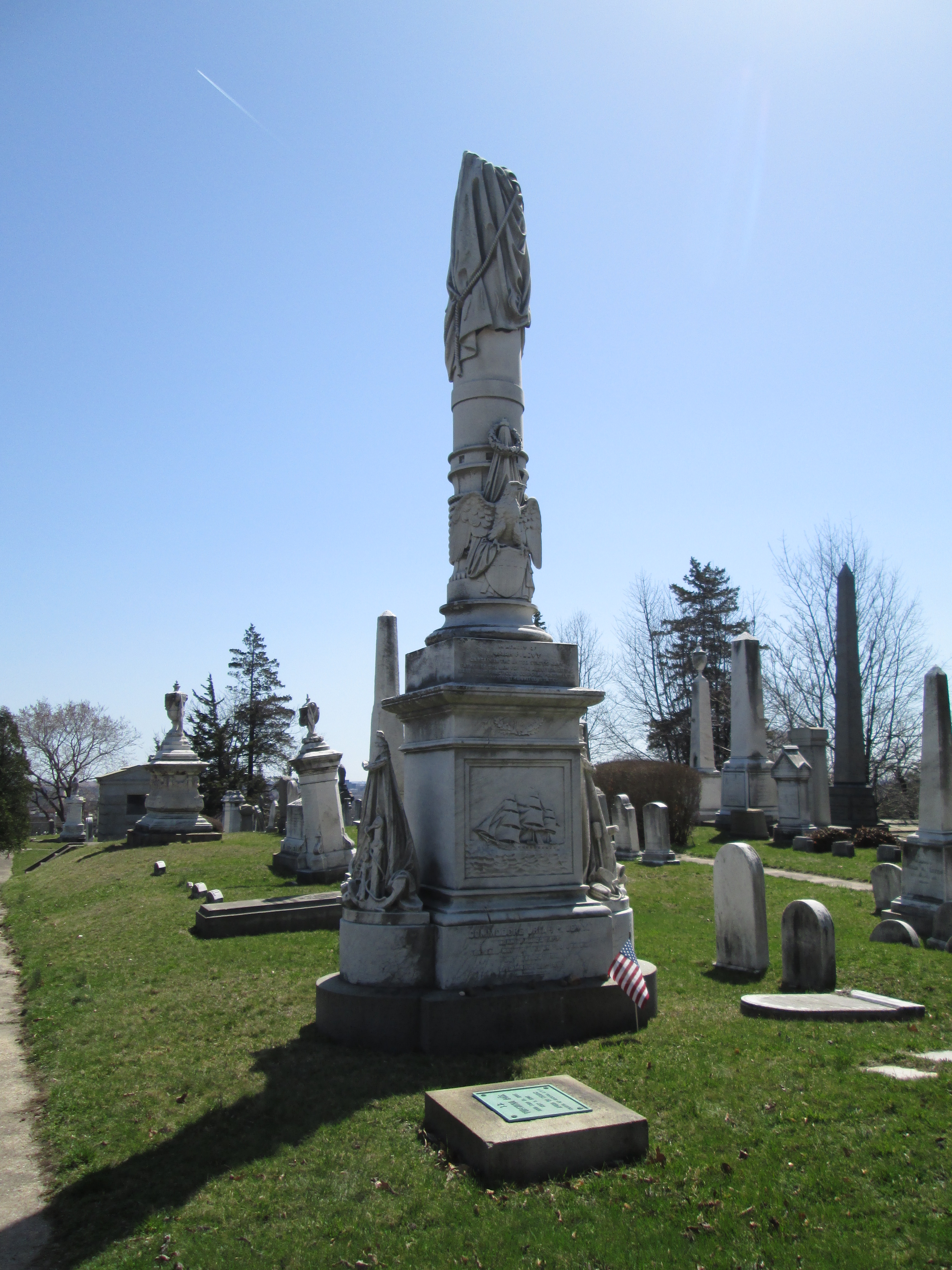
The first Jewish commodore in the US Navy, Uriah Phillips Levy was a key figure in the push to abolish flogging — or "the barbarous practice of corporal punishment", as his grave monument puts it — in the Navy. (He was, however, once court-martialed for "scandalous and cruel conduct" for his implementation of an alternative punishment for a teenage boy on his ship who "was charged with mimicking an officer of the ship. Unwilling to flog the boy, Levy ordered him tied to a gun with his trousers lowered. A small quantity of tar, variously described as the size of a silver dollar to the size of a man's head, was applied with oakum to his buttocks along with some parrot feathers.")
Levy is best remembered for his role in saving Thomas Jefferson's Monticello. When he arranged to purchase the property from James Turner Barclay in 1834, eight years after Jefferson's death, the place was in a sorry state. Jefferson had been unable to afford upkeep on the house in his later years, and Barclay, a local druggist with "a hare-brained scheme of turning Monticello into a silkworm farm", allowed things to fall further into decline.
A great admirer of Jefferson*, Levy gathered "a small army" of hired workers and slaves to bring the house back to its former glory. In his will, he offered the property to the federal government for use as a farm school for children of deceased naval warrant officers. Shortly before his death in 1862, however, Monticello was seized by the Confederacy. The federal government did not accept Levy's bequest of the property, and his will was declared invalid in 1865, leaving the place in a state of legal limbo after the Civil War.
By the time Uriah's nephew Jefferson Monroe Levy gained control of the property in 1879 following a lengthy period of litigation, it had once again slid into disrepair. It was being used as a working farm, with grain stored in the house and cattle herded into the basement during winter. Like his uncle before him, Jefferson Levy began fixing up the house and grounds, with the intent of restoring them "to the original plans and style". In 1923, the year before his death, he sold Monticello to the Thomas Jefferson Memorial Foundation (now the Thomas Jefferson Foundation), which has maintained it and kept it open to the public ever since.
* In 1834, Uriah Levy presented Congress with a bronze statue of Thomas Jefferson he had commissioned. It was the first full-length portrait statue to be placed in the US Capitol, and is the only statue in the Capitol donated by an individual citizen. Levy gave the plaster model used to create the statue to the City of New York; it currently stands in the chamber of the City Council, where its presence has long been decried by former Councilman and current State Assemblyman Charles Barron, who has described Jefferson as a "white, slave-owning pedophile".
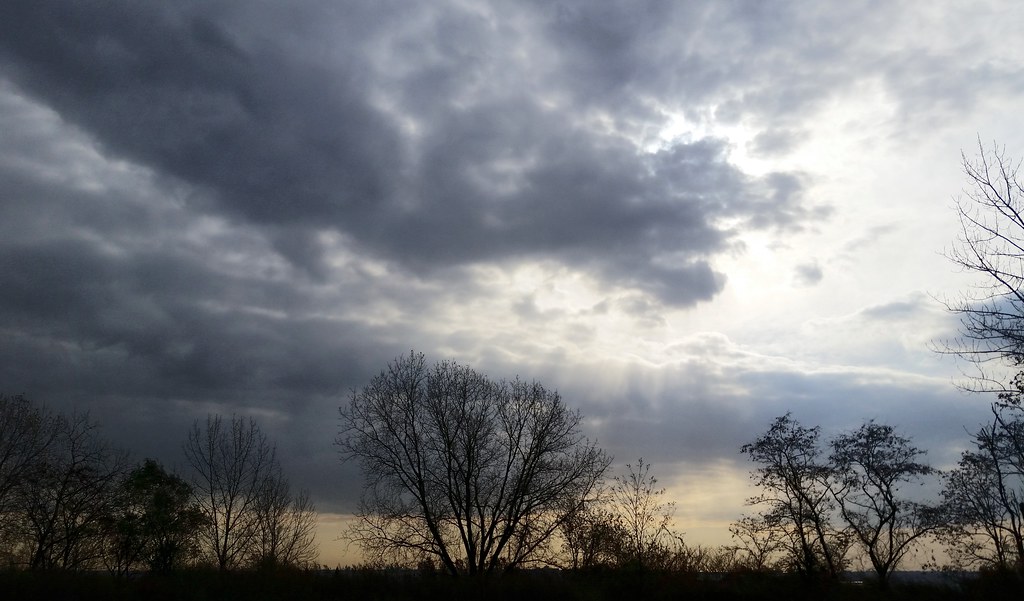
Here's one more shot from the artificial hill that stands on the former site of Banzer's Cypress Hills Park. While researching the park, I discovered that there used to be a Brooklyn neighborhood called Picklesville in the area of East Williamsburg/Bushwick. Some highlights from my subsequent quest for information about Picklesville:
- A Brooklyn Daily Eagle article from May 30, 1936, entitled "A Lot of Bologna, Indeed, Comes Out of Long Island in the Course of a Year—and the Whole World Eats It, Thick or Thin", part of a larger tribute to the industries of Long Island:
Shortly before the turn of the century, the vicinity of Morgan Ave. and Rock St. was decidedly a rural section. The inhabitants who were mostly of German descent lived in trim bungalows along the tree-lined, level dirt streets. The chief activity of these German farmers was the raising of pickles for nearby metropolitan market, and consequently the neighborhood earned the appropriate if inelegant title of "Picklesville."
- An NY Times article from October 5, 1883, entitled "Two Irate Picklesvillians — True Love Pursuing the Traditional Erratic Course":
Far over in the wilds of Brooklyn, away from the strife and turmoil of the city, is the little suburb of Picklesville . . . So rural is this place that no cars run through its quiet streets, beer saloons are infrequent, and the belated Picklesvillian going home from his business in the city at 9 o'clock at night discovers no signs of life in the deserted thoroughfares, save as the night-winds convey to his ears the tuneful breathing of the sleeping inhabitants. Even into so quiet a community as this, however, trouble may enter and dissensions lead to seemly squabbles. Within a week a scandal has arisen which has convulsed the entire district of Picklesville.
- A Brooklyn Daily Eagle article from February 2, 1890, entitled "Dogs of War Let Loose — Hostilities Renewed Between Picklesville and Elm Street":
The casus belli is a question of territorial rights, the boys of Picklesville claiming that Picklesville includes the easterly side of Knickerbocker avenue and the Elm street men claiming that both sides of the street are included in their domain. The armies yesterday, equally matched, numbered about two thousand; the Picklesville forces, two divisions, under command of General John Seid, of 102 Central avenue, aged 17, and the Elm street forces, two divisions, under General Charles Engelhoffer, of 195 Ellery street, aged 11 years. Johnny Schneider, aged 13, commanded the right wing of the Picklesville forces and went early into action, or was rather drawn into it by the capture of all his pickets by Lieutenant Colonel Epaminondas Schwakhammer, aged 13, in command of the Elm street band of skirmishers. . . . General Seid, seeing that Schneider's command was in danger of being cut off and attacked in detail, dispatched his aide de camp, Diedrich Finnegan, with an order to fall back on the sand bank known as the Eagle's Nest, back of the Manhattan Avenue Railroad, beyond Irving avenue. On his way the aide de camp was struck with a tomato can, knocked down, taken prisoner, and the order fell into the hands of the enemy. The result foreseen by General Seid then took place. Schneider's command was cut off and most of them, after a terrible resistance, laid down their arms. While Seid with the main body of his forces was pressing on the cry of "Police" was raised, and the form of Officer John Ruoff looming up in the distance like Gulliver, the Liliputian [sic] armies became instantly a rabble rout.
- A Brooklyn Daily Eagle article from December 22, 1890, entitled "War on the City Frontier — It Is Brought to a Close by the Intervention of a Third Power":
The war has been a protracted one, dating back over a year, the casus belli being the north side of Knickerbocker avenue . . . The contending forces came within sight of each other on Knickerbocker avenue, between Starr street and DeKalb avenue. The Picklesvillers, halting, were addressed by General Sauerbrod from the roof of a grocery coal bin. He said:
"Men of Picklesville—I do not expect that words from me can impart valor to anyone who lacks it. The enemy is before us, but let the recollections of memorable deeds done by men of Picklesville in the past stimulate you to the achievement of greater things this day. Soldiers, from the cupola of yonder brewery twenty years look down upon you." . . .
[After several of the boys were arrested and locked up for the night,] Justice Goetting this morning seemed at first determined to send the prisoners to the Fortress of Refuge till they were 21 years old, but finally let them off with a fine of $5 each.

The artificial hill on the former site of Banzer's Cypress Hills Park stands high above even the upper section of Cypress Hills National Cemetery.
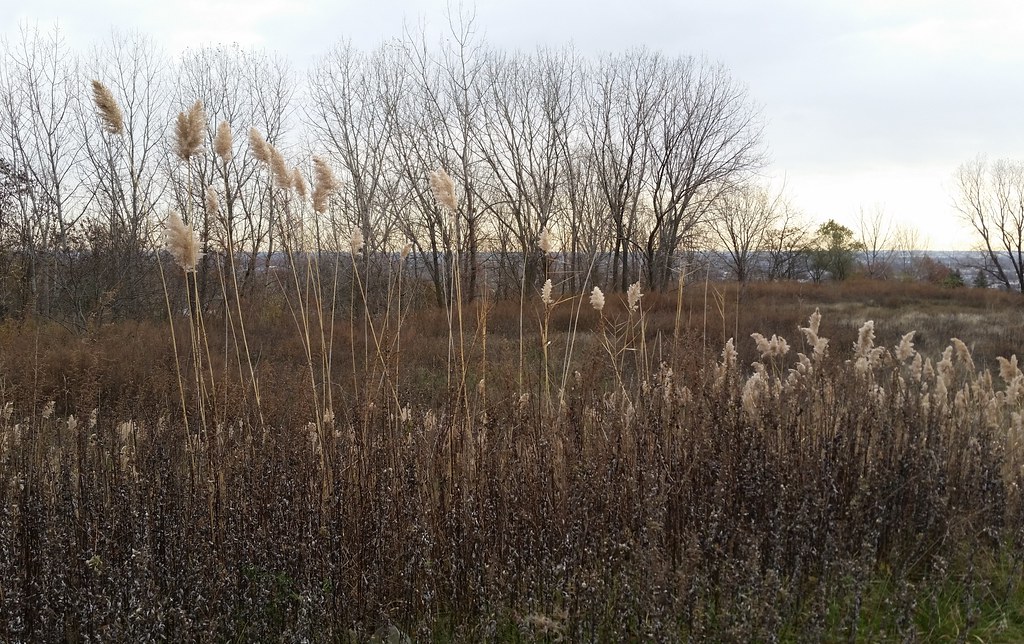
This steep-sided, flat-topped, unnatural-looking hill rises abruptly just beyond the western edge of Beth Olom Cemetery. Standing above the surrounding sea of burial grounds and the neighboring Ridgewood Reservoir, it's a very curious sight — the only piece of land in the vicinity that's not part of a cemetery or park.
It turns out that for about half a century, starting around 1877, this property was home to a privately run recreation area known as Cypress Hills Park. It was owned by the Banzer family but had different proprietors over the years, and so was also at times called Banzer's, Wissel's, Bookman's, Richter's, or Gerken's Park. A large U-shaped pond, used by boaters in the summer and ice skaters in the winter, was the dominant feature of the site (1924 aerial view), which also contained, by 1891, a pavilion, a bandstand, a dining room, four bowling alleys, and some popular shooting ranges where "some of the best rifle shots in the United States . . . [had] their regular practice days". (You can see old photos of the place here; scroll down about halfway.) The park's days came to an end around 1928, when the Banzers sold the land to its present owner, Temple Emanu-El, the Jewish congregation that also owns the adjacent Salem Fields Cemetery.
The pond was filled in sometime before 1951, although at least part of it still existed in 1937 when a 13-year-old boy drowned in it, an incident that prompted the boy's father to sue the synagogue. Over the years, it appears that Emanu-El used the site as a dumping ground for dirt and rocks — including, perhaps, some excavated material from the cemetery and/or other nearby cemeteries? — forming the hill that now stands here. An aerial view from 1996 shows a largely barren landscape with a path running up the hill, presumably for trucks and earth-moving equipment, while subsequent images from the past decade (2006, 2008, 2010, 2012) show trees springing up and the dirt paths gradually becoming overgrown.
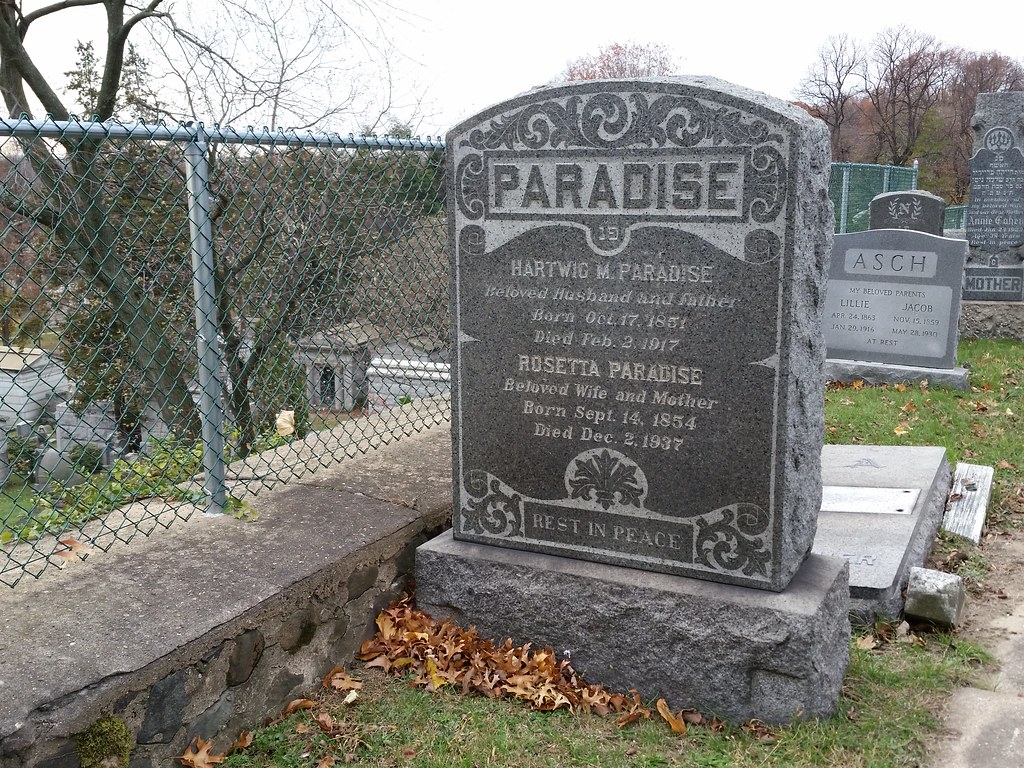
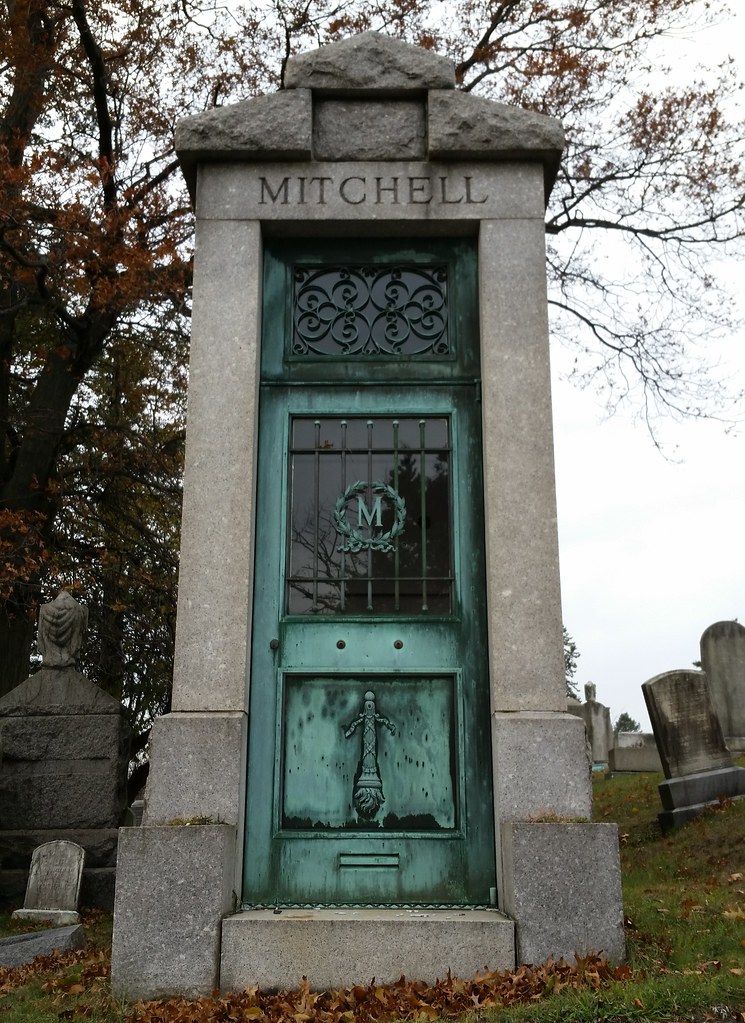

From atop the Harbor Hill Moraine at the edge of Beth Olom Cemetery, I'm looking down at Salem Fields Cemetery and out onto the outwash plain of southern Brooklyn and Queens.
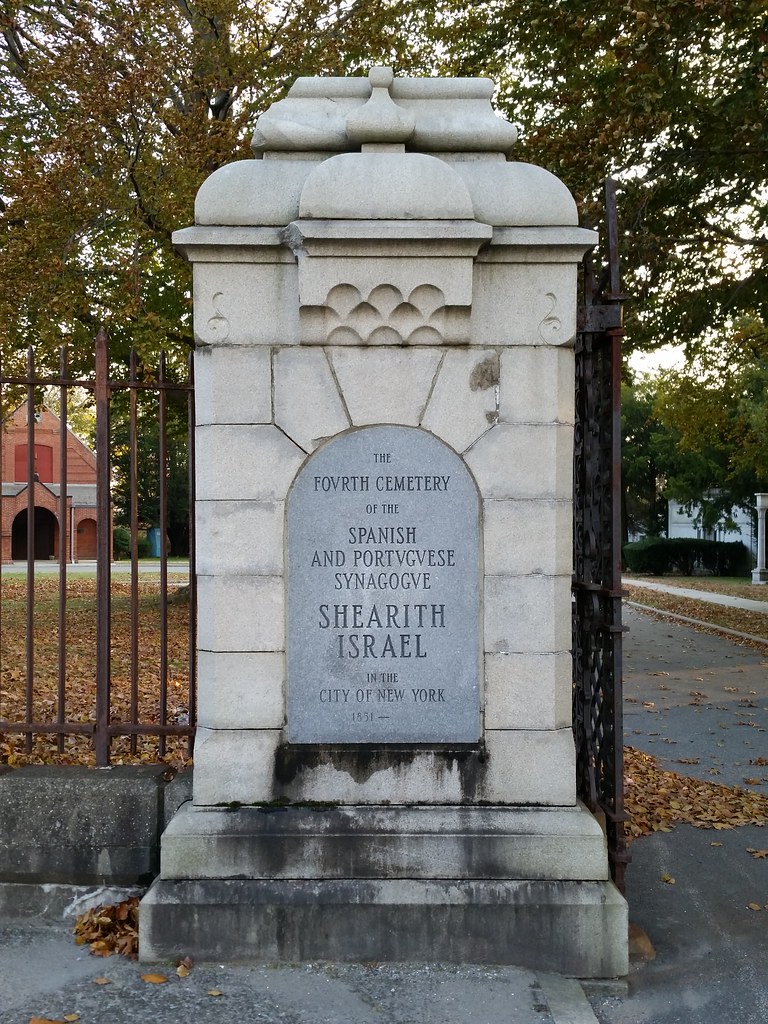
Beth Olom consists of burial areas for three different synagogues: Shearith Israel, B’nai Jeshurun, and Shaaray Tefila. Shearith Israel, founded in 1654, was the first Jewish congregation in North America and the only one in New York City until 1825, when some of its members left to form B’nai Jeshurun. Shaaray Tefila split off from B’nai Jeshurun in 1845.
As you can see above, the Shearith Israel portion of Beth Olom is known as the synagogue's fourth cemetery. We've already seen its first, second, and third cemeteries in Manhattan. (The congregation may have had an earlier cemetery that predated even the "first" one: in 1656, the city's Jewish community was granted permission to use "a little hook of land situate outside of this city for a burial place", but there is no definite record of this burial ground's establishment or location.)
In what I would imagine was just a weird coincidence, I once walked past this cemetery — the final resting place of Emma Lazarus — and found that someone had left a large statue of the beggar Lazarus and two of his canine companions standing outside the gate.
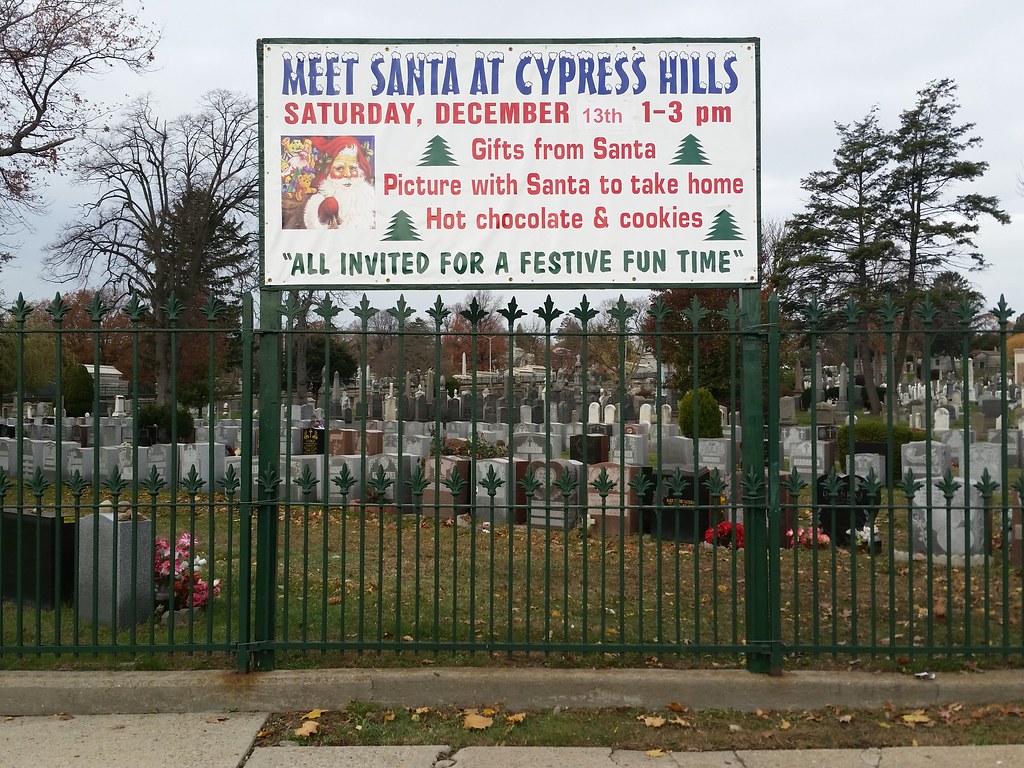
at Cypress Hills? I love a good cemetery as much as anybody, but this seems like a bizarre place to take the kids for a Santa meet-and-greet.


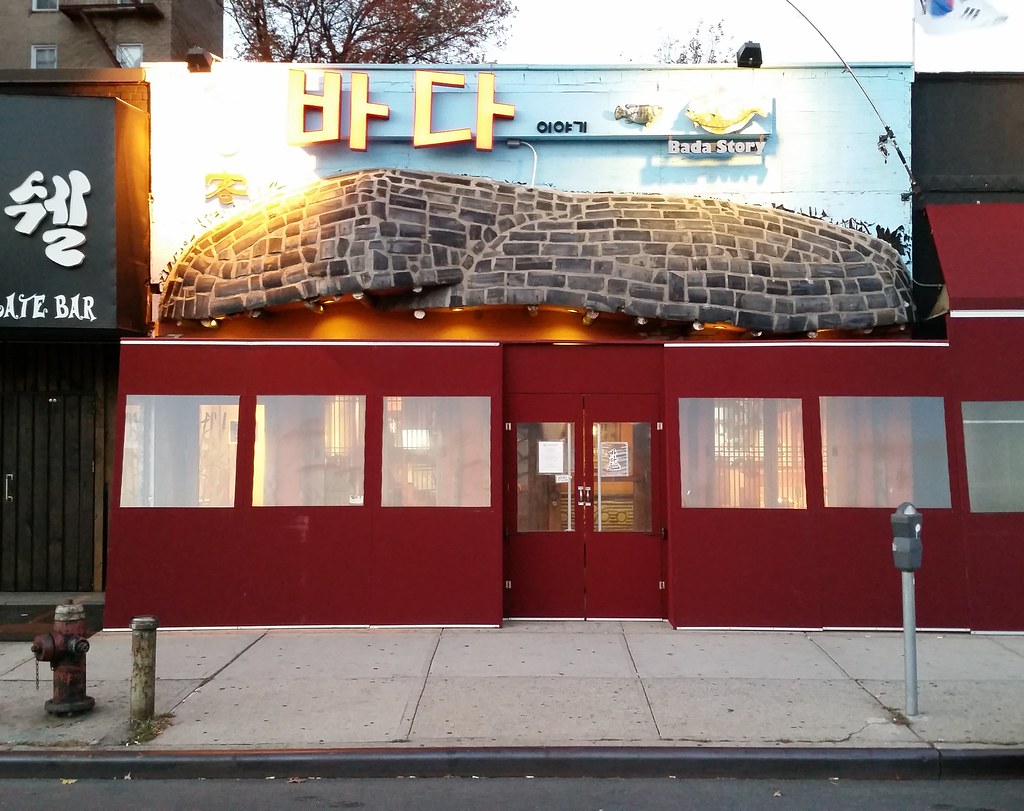
From an NY Times article about Korean Restaurants in Queens:
A Bada Story feast (bring a crowd) might start with some excellent fried fingers of fish and a first-rate seafood pancake, then move on to a tableau of marine life not seen on the sashimi special at your corner sushi bar: chewy sea squirts with their wrinkled orange skin; strips of sea cucumber that unfurl like streamers from your chopsticks but tense up again when you bite down; sea worms that look like veins and taste like not very much but have chewiness to spare. Then, in a swirl of mist, arrives a whole imported Korean fluke that a few minutes ago was lounging at the bottom of a pool by the kitchen. The slices, draped over frosty ceramic cups to keep them firm, are arranged as they were on the skeleton, with the lightly crunchy hard-working muscles around the fins showcased at the edge of the platter.Photos here.

I'm walking every street in New York City.
This is the counterpoint to my walk across the US. Instead of seeing a million places for just a minute each, I'm going to spend a million minutes exploring just one place. By the time I finish walking every block of every street in all five boroughs, I'll have traveled more than 8,000 miles on foot — all within a single city. Details!
Email me at matt@imjustwalkin.com
Subscribe to my email list
Maps: Progress | Photos

Your donations allow me to keep walking full-time. If you think what I'm doing is valuable and you'd like to offer some support, I would be very grateful. On the other hand, if you think I'm a worthless bum, feel free to email me and tell me to get a job, bozo. Both are excellent options!
