

It was quite a surprise to come across this massive wooden pallet structure standing in the middle of the South Bronx's Forest Houses. As it turns out, this is the early stages of Thomas Hirschhorn's Gramsci Monument, a tribute to Antonio Gramsci, the Marxist Italian political theorist and philosopher. Residents of the housing project have been hired to build the monument, which will eventually consist of "a bridge and a series of 'houses' that will include a library, theater platform, workshop area, lounge, Internet corner, and the Gramsci Bar, which will be run by local residents." The whole thing is scheduled to open on July 1st and run until September 15th. You can find much more information on the monument's official website. (That's Mr. Hirschhorn sitting on the edge of the pallet-platform, by the way.)

IMPORTANT!
PLEASE UNPLUG THE
ELECTRICAL CORD
BEFORE YOU DRIVE
So says a sign taped up inside this unmarked police vehicle parked next to the former home of the NYPD's 41st Precinct — the infamous Fort Apache, whose reputation was cemented by the Paul Newman film Fort Apache, The Bronx.

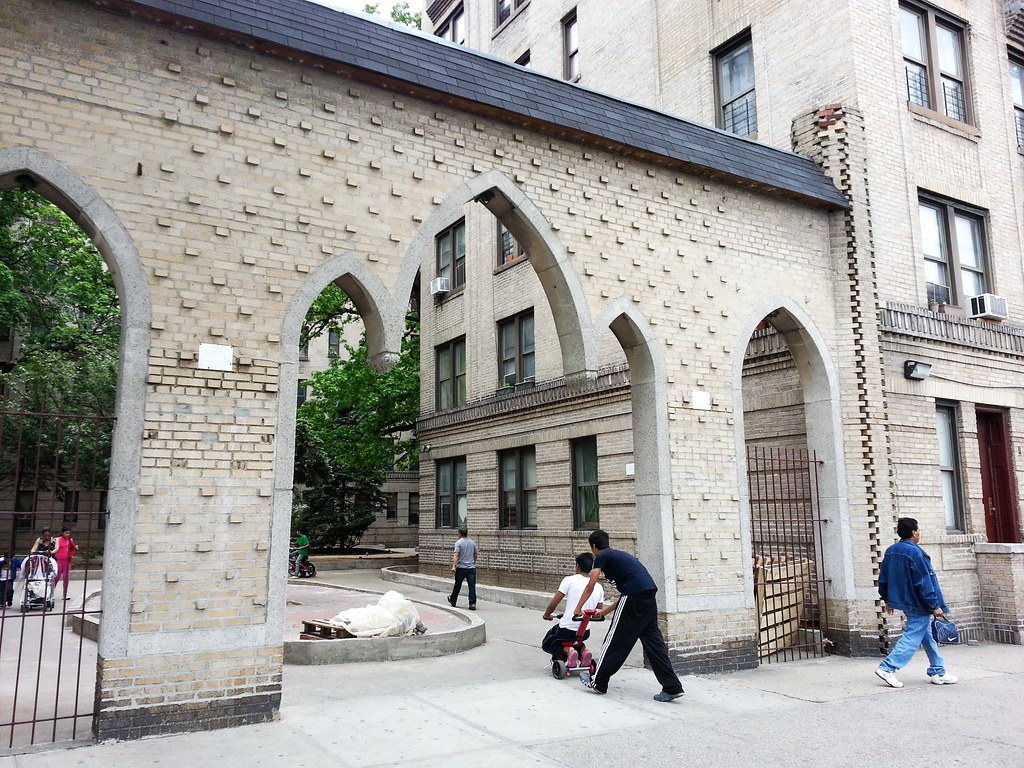
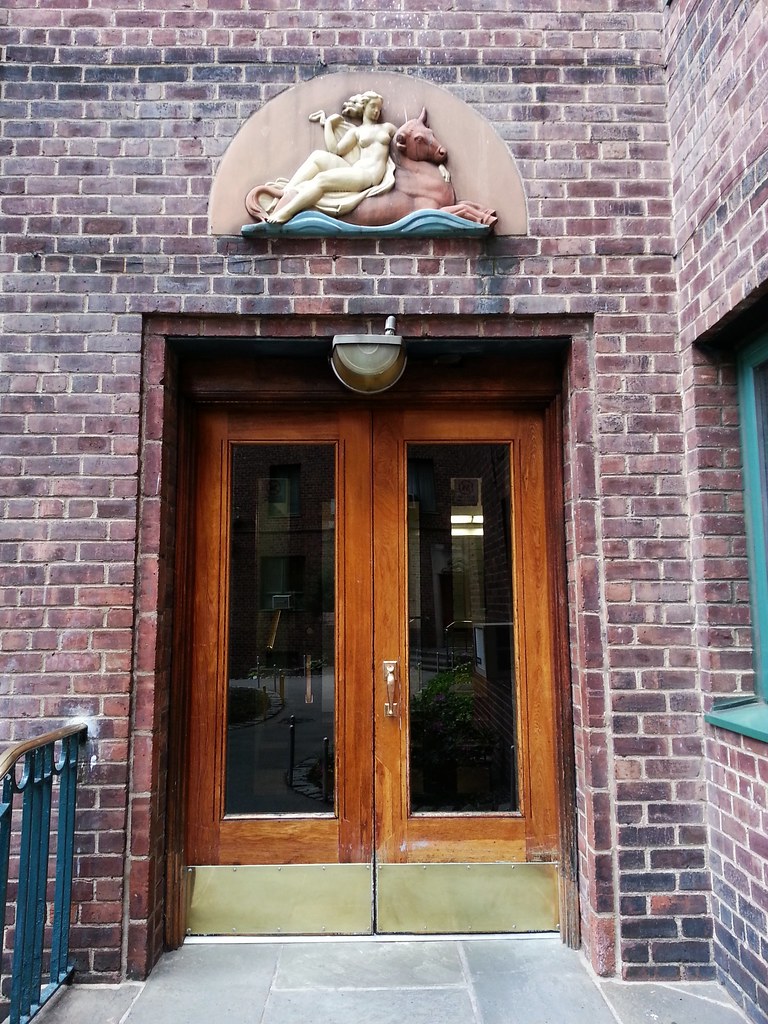
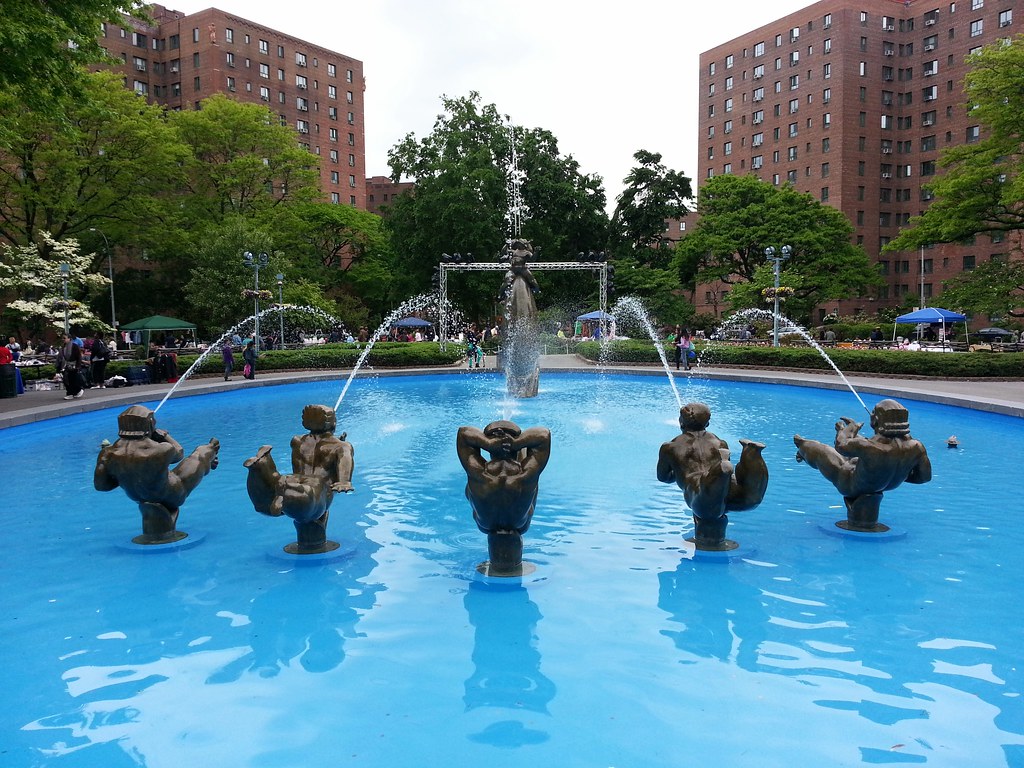
This playful 1941 fountain-sculpture by Raymond Granville Barger sits in the middle of Metropolitan Oval, the centerpiece of Parkchester. You can see more photos here.
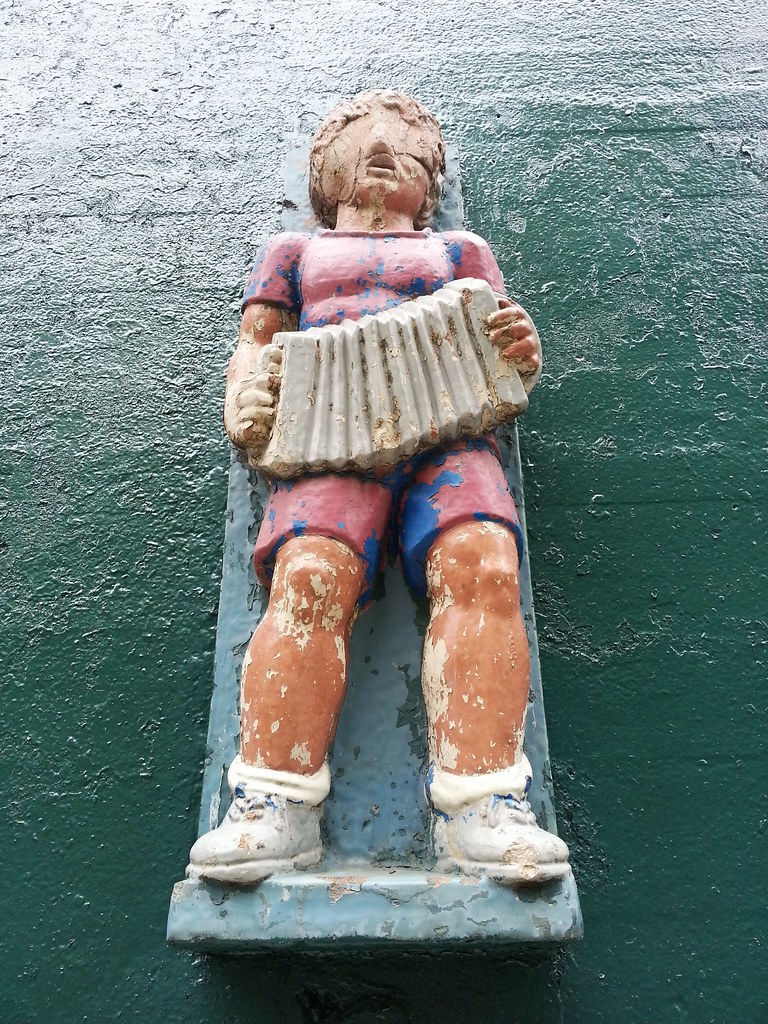
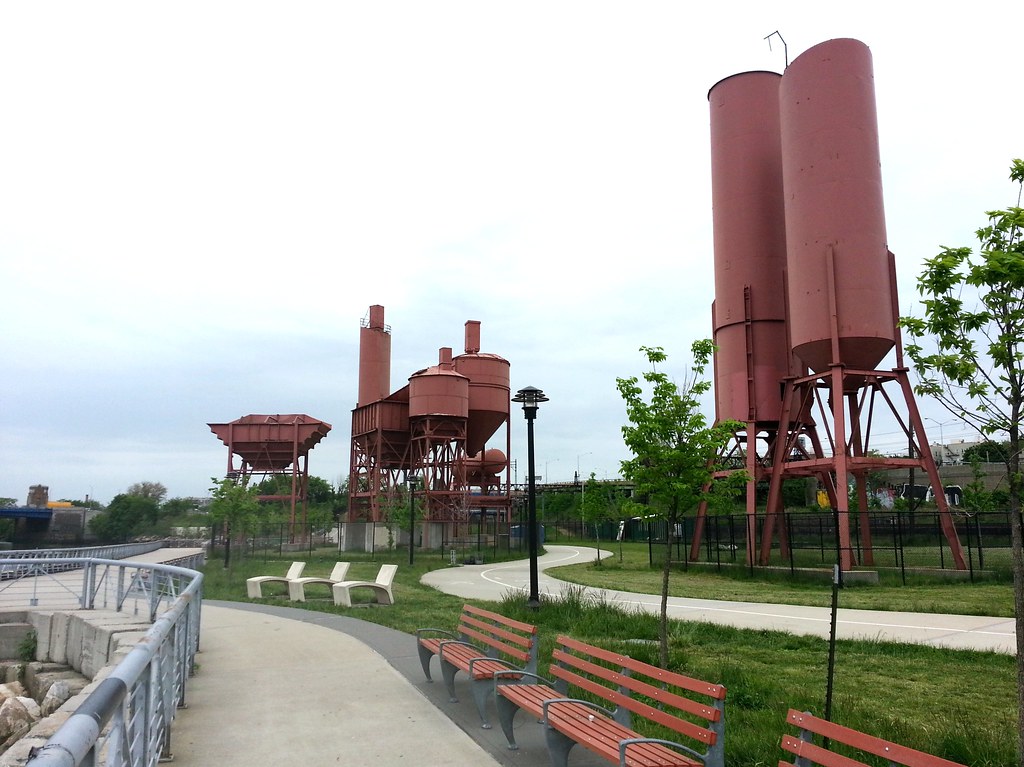
"A Bronx River brownfield is reborn as a place of rugged beauty."

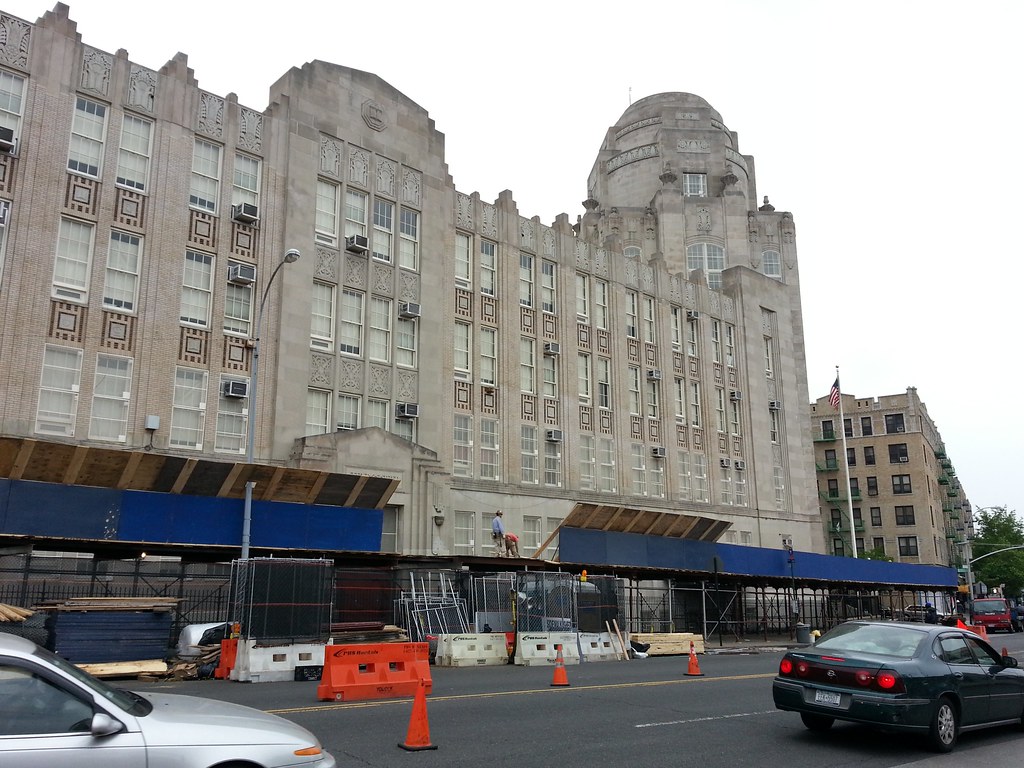
This school "was the first thoroughly 'modernistic' Art Deco style public school building in New York City and the first junior high school to depart in design from a modification of a standard elementary school plan."
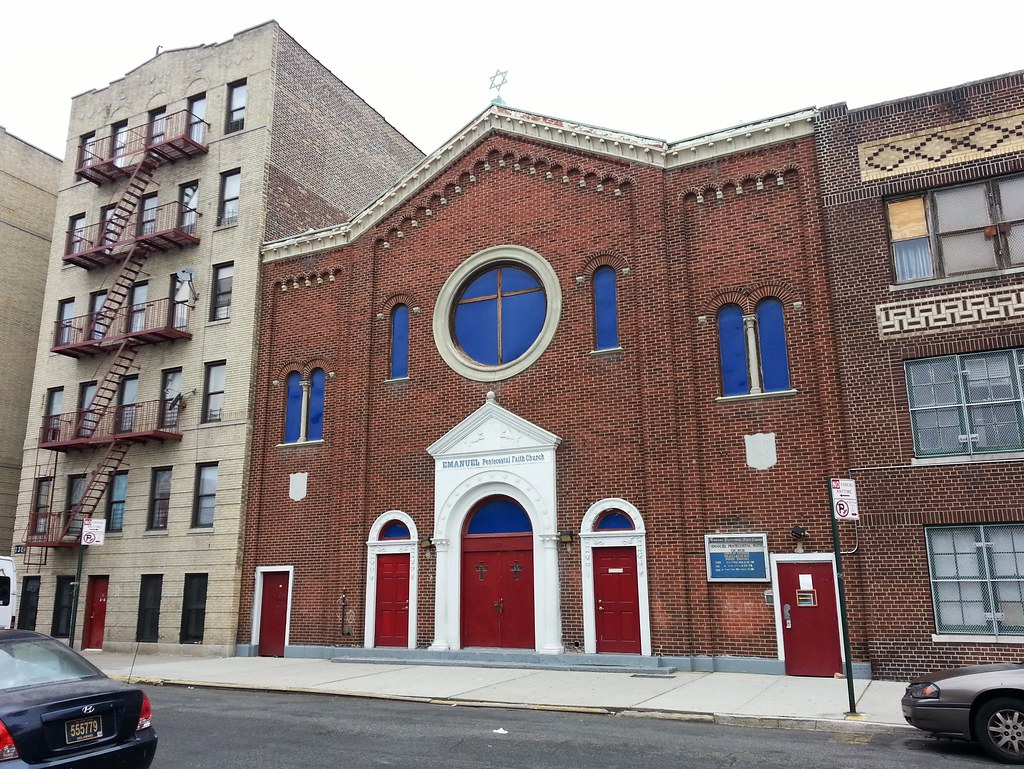
Emanuel Pentecostal Faith Church: a tip of the hat to its predecessor, Emanuel Synagogue
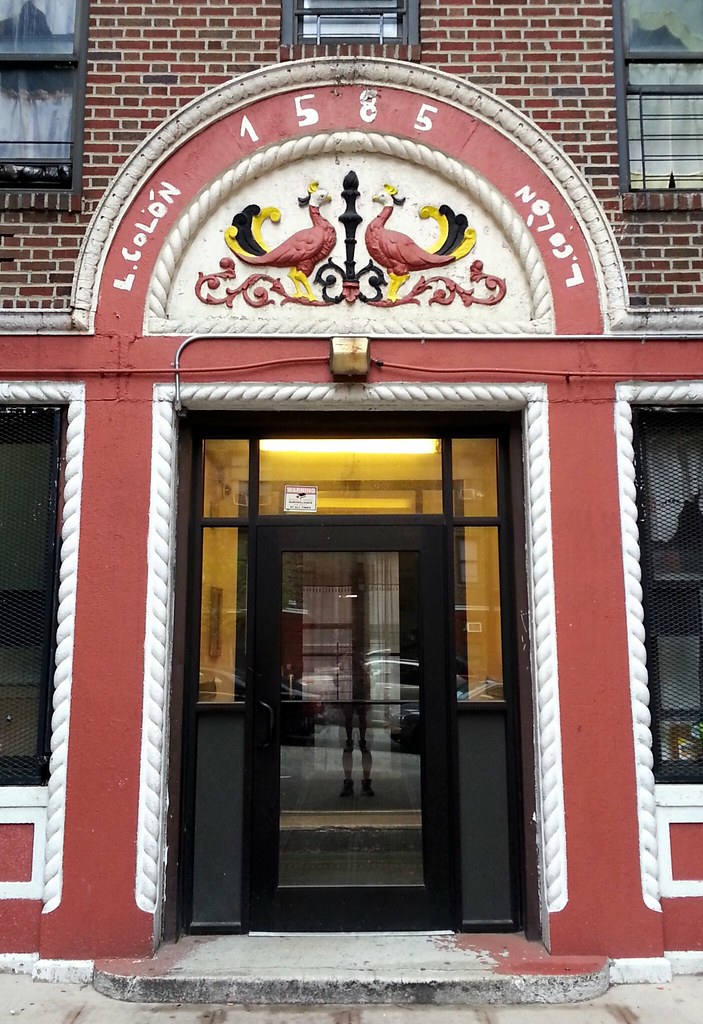
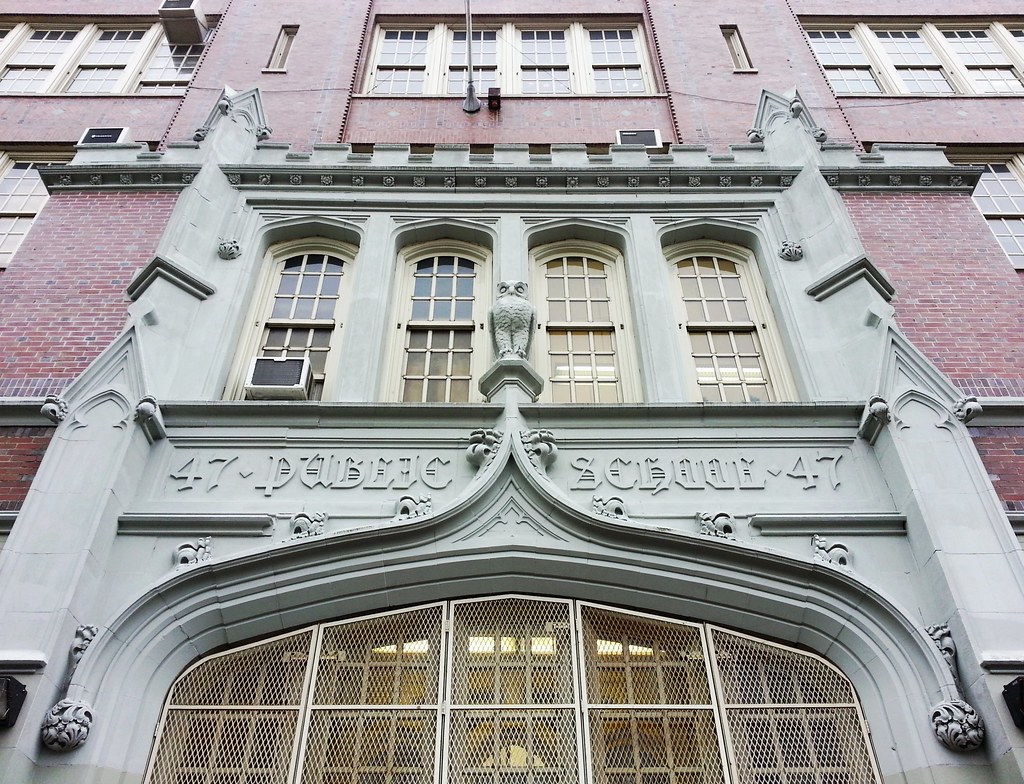
A fairly common adornment on NYC public school facades.
A wise old owl sat in an oak
The more he saw the less he spoke
The less he spoke the more he heard
Why aren't we like that wise old bird?
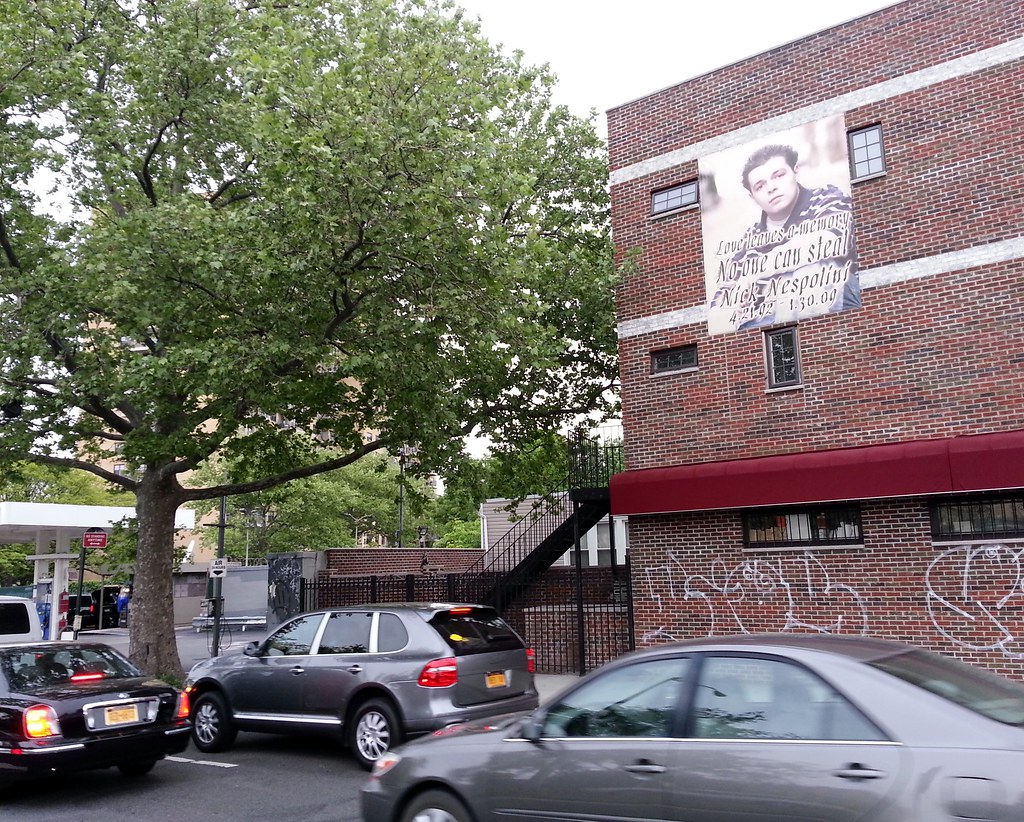
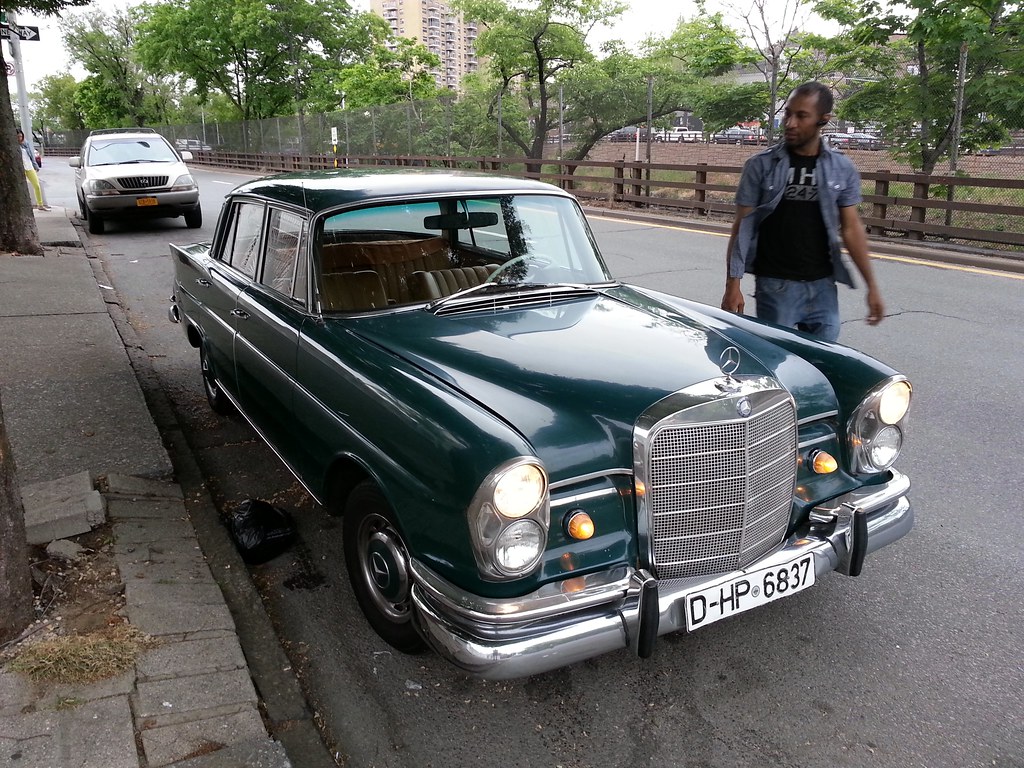
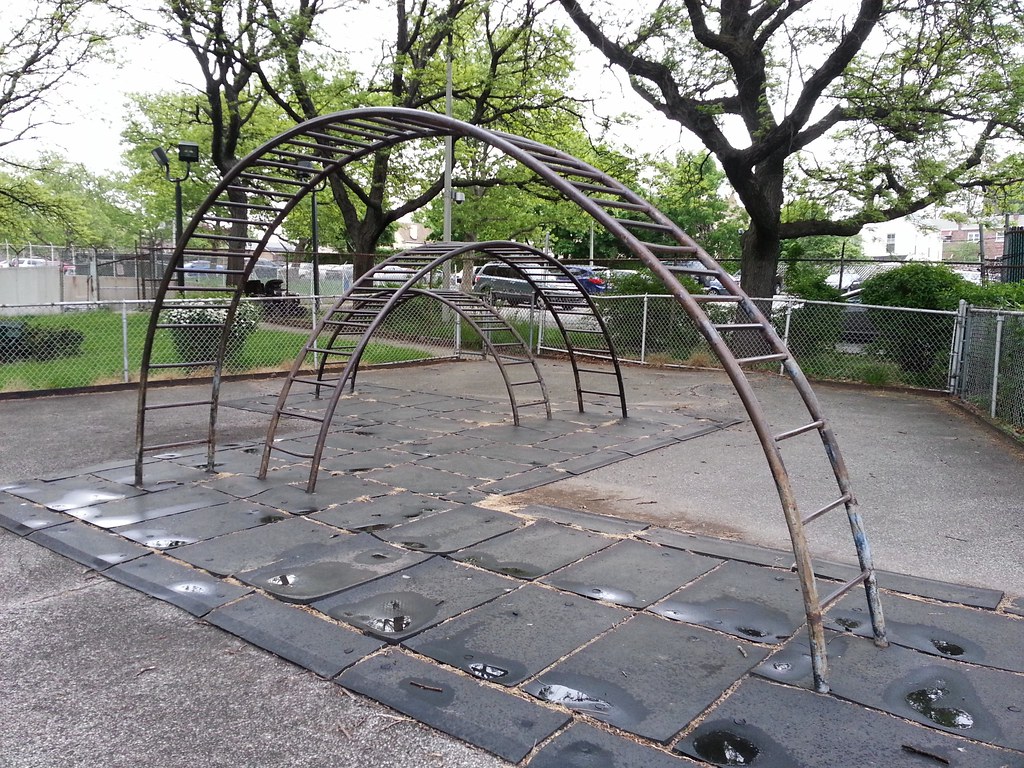
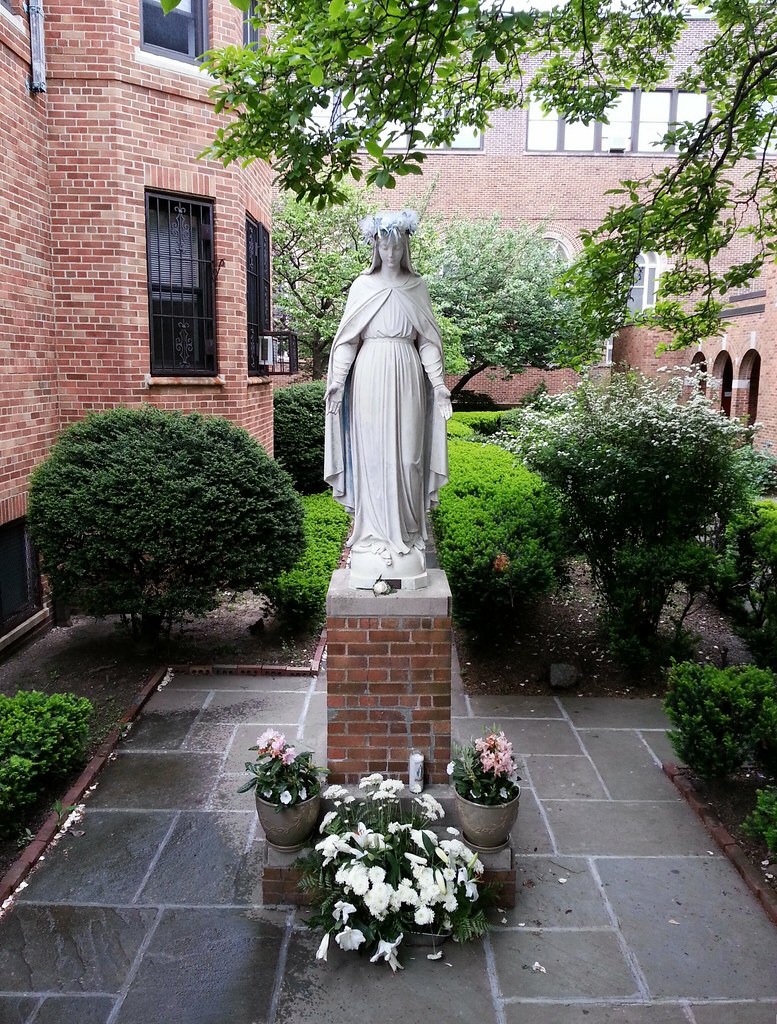
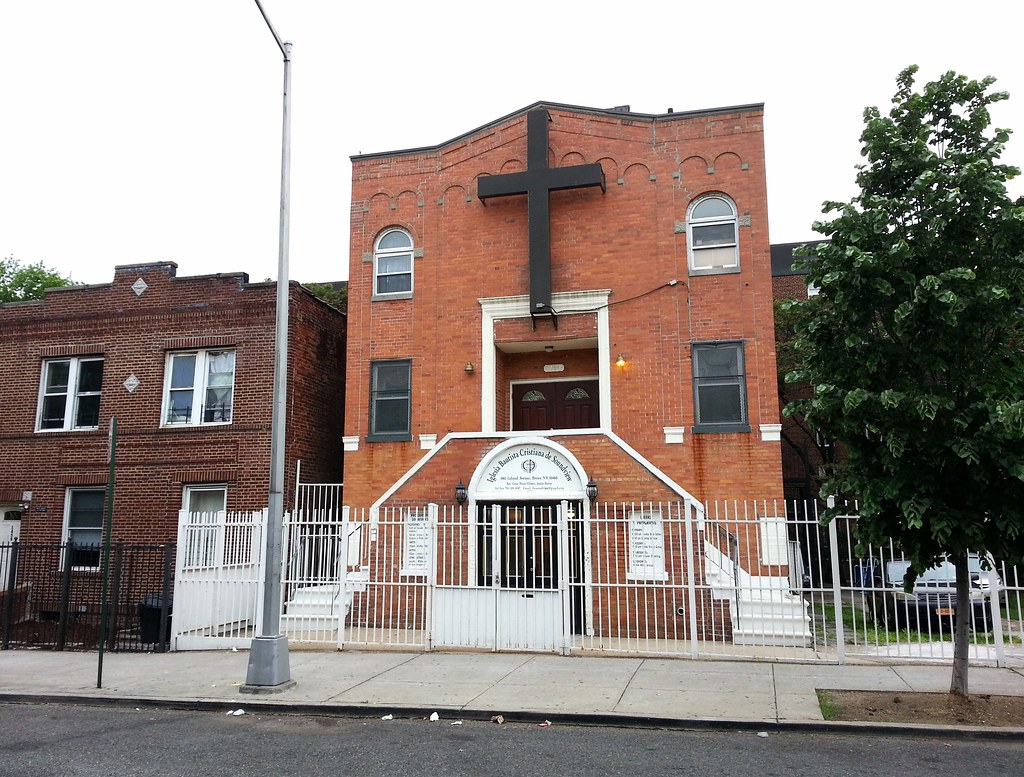
Another churchagogue, the former Congregation Beth Jacob B’Arav Abraham
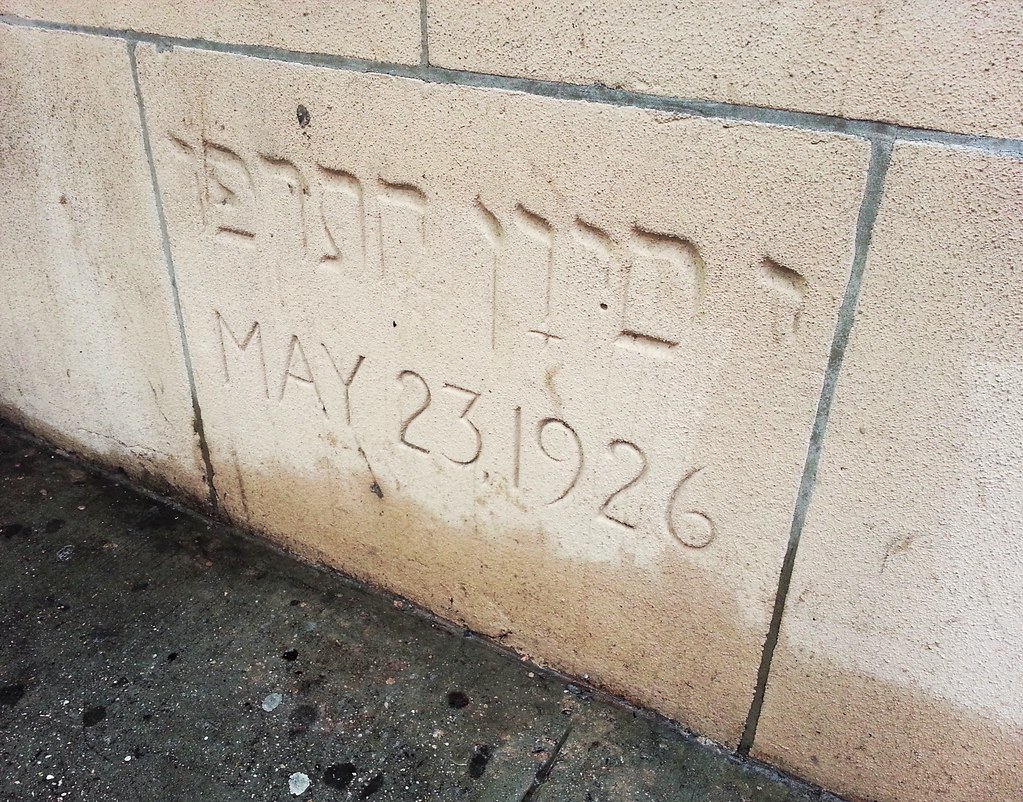
I was on an unofficial peregrination through some already-walked turf in the East Village today when I noticed this non-cornerstone at the Village East Cinema, which, it turns out, used to be the Yiddish Art Theatre, built in 1926 for the theater company of Maurice Schwartz, the "Olivier of the Yiddish stage".
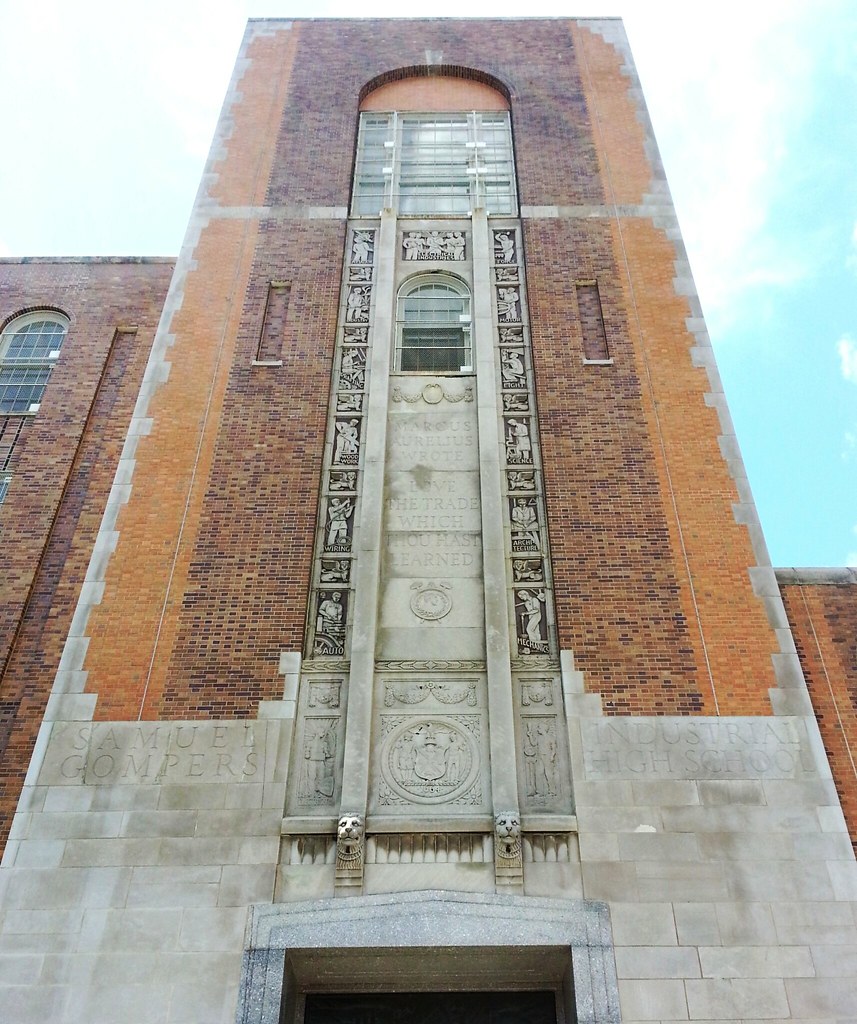
"Meant to look like a factory" and "purpose-built as an 'industrial' public high school, [Gompers] was the first such institution to focus its training on a single industry-the electrical, rather than on multiple trades, preparing students for the integrated labor of mass production. Its building appropriately represents a 'general electric' plant." Gompers had been struggling for a while when the city decided to close it last year and replace it with a couple of smaller schools operating in the same building.


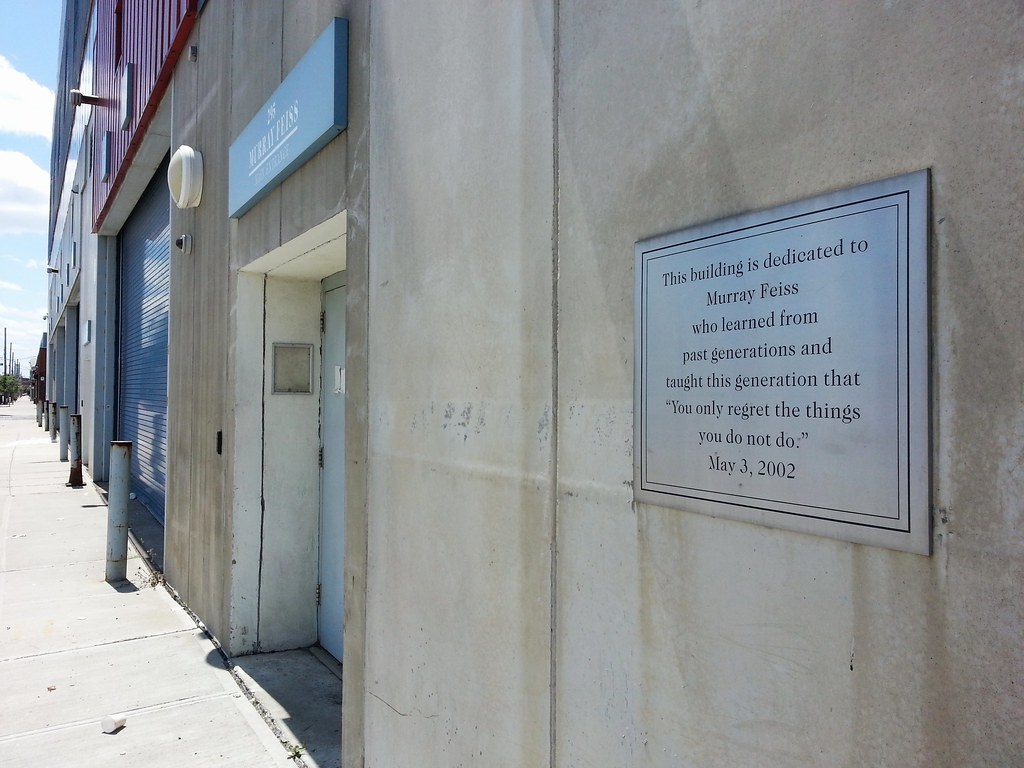
but I now know plenty about his late wife Dorothy, the "First Lady of Lighting".

Looking out into the East River from the old 134th Street ferry terminal in Port Morris, we can see the trees and smokestacks of North Brother Island. (The smaller South Brother Island is located just out of frame to the right.) Now a bird sanctuary, North Brother was formerly home to a quarantine hospital (where Typhoid Mary spent her last two decades), college dorms for veterans, and a drug rehab center, and was also where the burning General Slocum ran aground and sank in New York's worst pre-9/11 disaster. The island has been uninhabited (by humans) for the past 50 years; here are some photos of its many ruins.

For years, one of Richard Serra's massive curved steel sculptures (possibly Bellamy) was being stored, in its constituent parts, in the crane yard to the north of the old 134th Street ferry terminal, just behind the taller of the two squat brick buildings. On one of its more exciting days back in 2006, a group of artists snuck inside the piece and stuck a bunch of magnets to its walls. Mr. Serra's creation has now seemingly been relocated — perhaps finally delivered to its owner — but, as you can see, an intriguing new huge rusty metal thing (the wheel-like contraption standing behind the shorter brick building) has emerged to take its place.
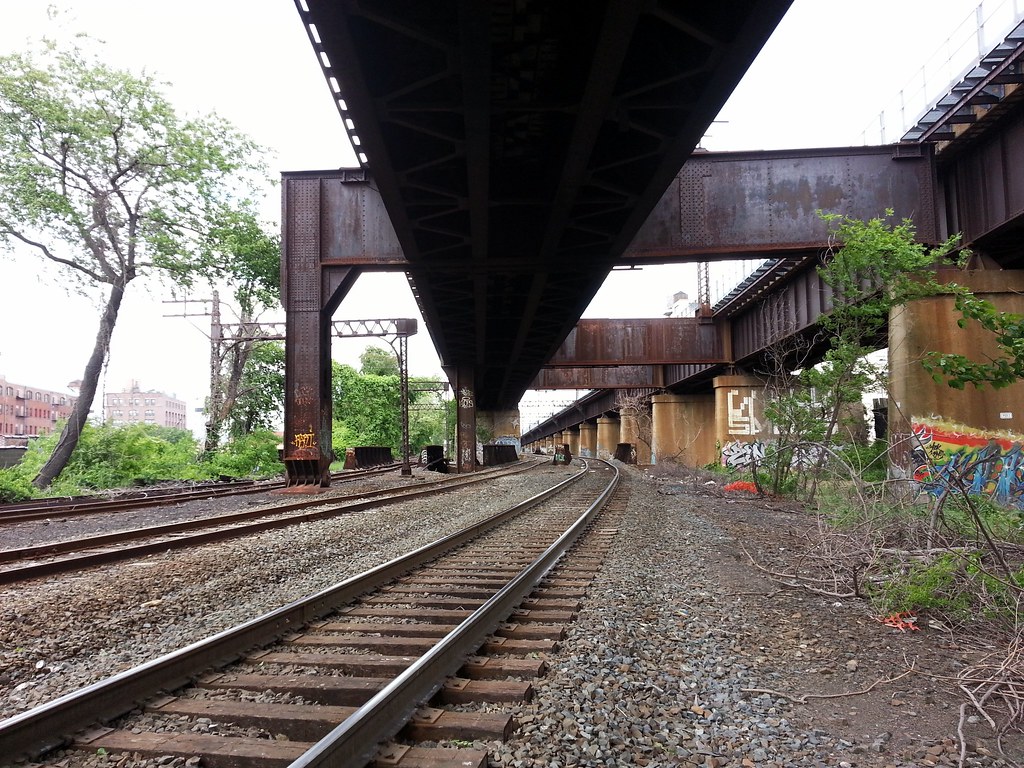
Heading south from the Oak Point Yard, the elevated tracks continue over my head across the Bronx Kill toward the Hell Gate Bridge, while the tracks at my feet hook west toward the Harlem River Yard, where FreshDirect is controversially planning to set up shop. If the company does indeed relocate from its current home in Long Island City, is it going to take its extraordinarily obnoxious 5000-square-foot video billboard with it?
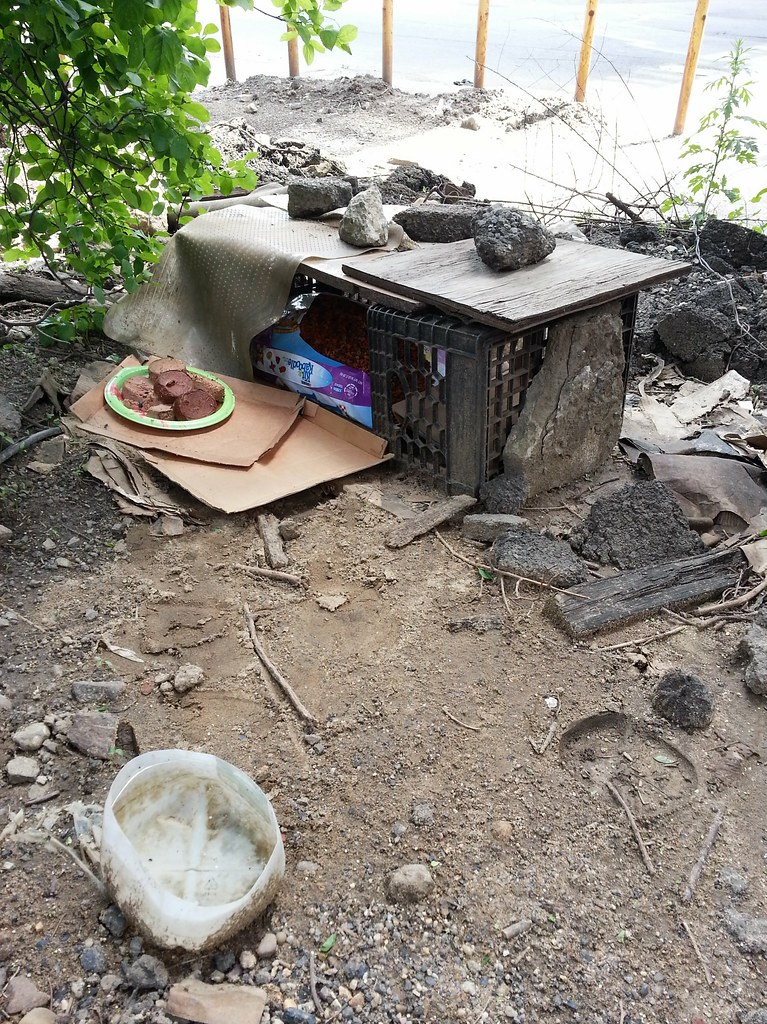
Located just down the slope from the railroad tracks, this well-stocked shelter is a favorite overnight stop for hobo-kitties who need a break from riding the rails.

There are hundreds of these colorful fire-and-brimstone signs stabbed into the trees of the Bronx, but this is the first instance I've seen of one superimposed atop an older model.

Sidewalks run along both sides of the Triborough's Bronx Kill span; after crossing the narrow strait, the walkways dip below the bridge and merge, emptying foot and bike traffic onto Randall's Island.
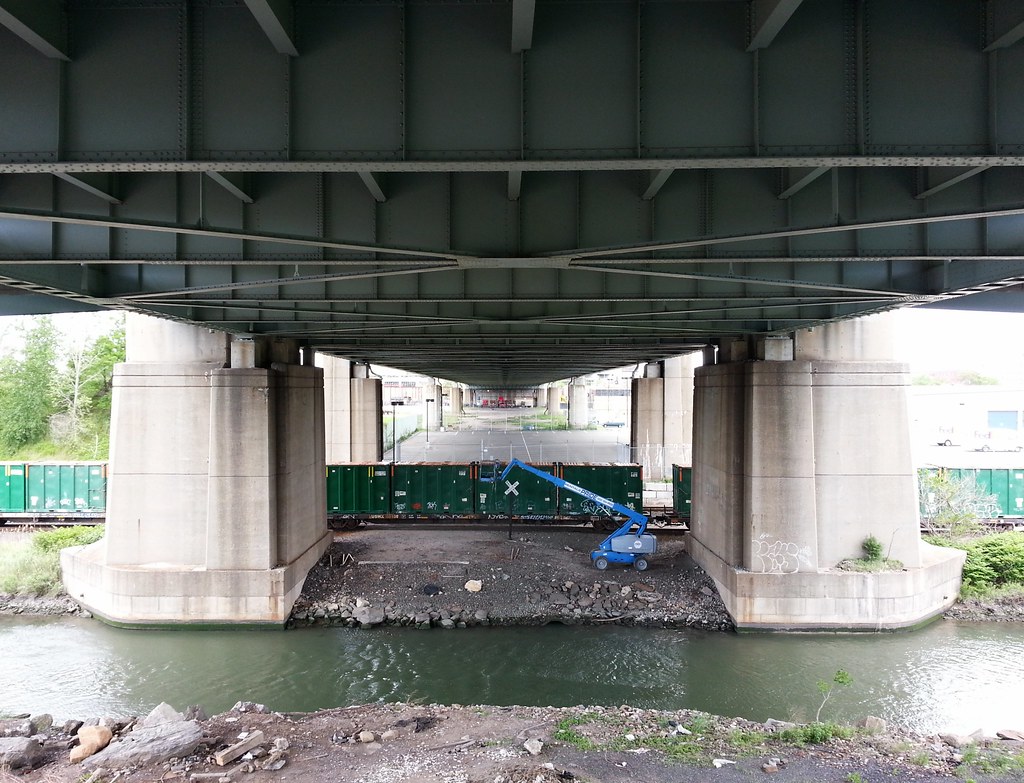
We're looking from Randall's Island (part of the borough of Manhattan) across the Bronx Kill into the Bronx.

For decades, Con Edison supplied electricity to Randall's Island through two sets of cables encased in concrete beams spanning the Bronx Kill beneath the railroad viaduct approach to the Hell Gate Bridge. Because the beams sat so close to the water, kayakers and canoers could only pass under them during a narrow window when the tide was just right.
A couple of years ago, the little red bridge you see above (and can see much more clearly here) was built to support the future Randall’s Island Connector, a multi-use path that will link the South Bronx to Randall's Island. (As you may have suspected, the bridge is not yet open to the public; it lacks a deck on which people can walk.) An array of new Con Ed conduits, partially visible above, is attached to the bottom of the bridge, clearing the high tide level by a few feet. To the relief of local boaters, the utility company finally got rid of its old concrete beams sometime in the last year or so, rendering the kill fully navigable for small recreational watercraft.

This little strait was once much wider, but was narrowed considerably by the addition of landfill to Randall's Island (at right). A trace of its former size exists in the rail bridge (at far right; fully visible here) that once spanned the waterway, but now stands amid baseball fields. (If you look closely, you can make out the small red bridge from the previous photo hidden beneath the railroad viaduct where it crosses the kill.)
At left is a long line of the green and orange garbage cars that will eventually make their way by rail up to the Oak Point Yard and then on toward the landfills of Virginia, via the inconvenient Selkirk Hurdle. (As far as I understand it, Virginia is the final destination of Bronx garbage trains, but landfills in Pennsylvania, Ohio, and South Carolina, as well as an incinerator in Newark, also take in large amounts of waste from other parts of the city.)


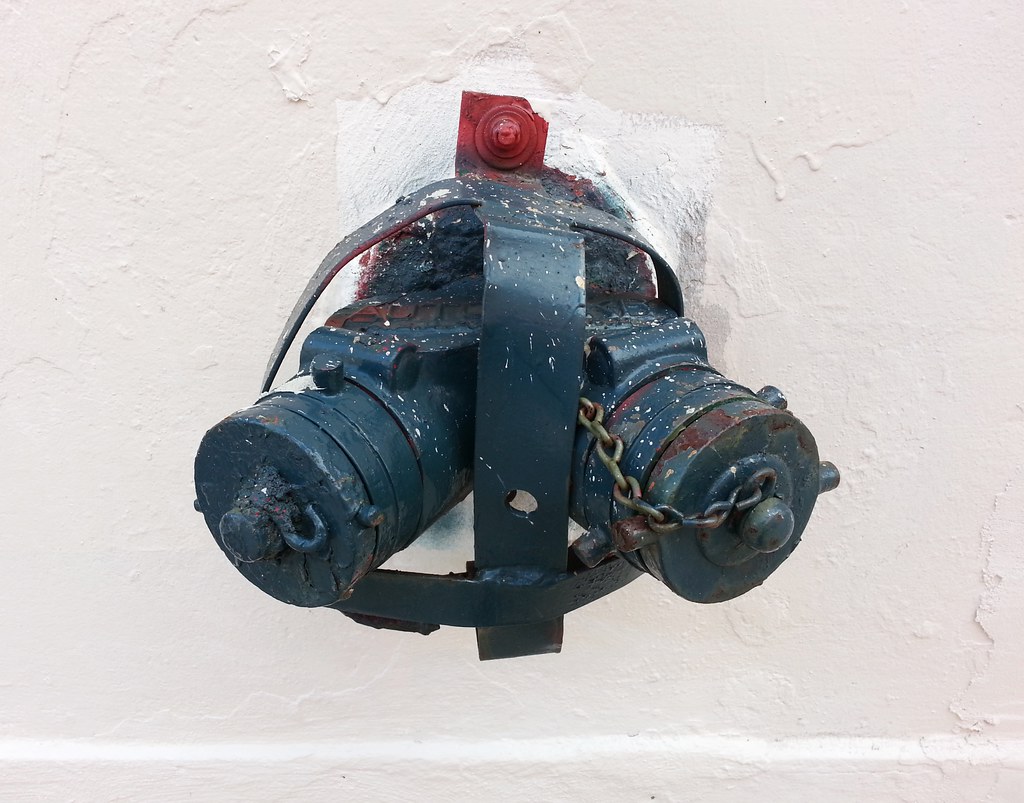
It's not one of the more vicious anti-butt devices I've seen, but at least it's trying harder than this one.

