


Completed in 1928, this was originally St. Matthew's Episcopal Church. When I passed by in 2013, St. Matthew's had been closed for almost two years. But a few months after my visit, a new occupant — All Saints — began holding services here.
A historical sign outside the church seems to indicate that the property was a "burial site of early settlers". It turns out that the sign is referring to an old burial ground located behind the church. Known as the Wyckoff-Snedicker (or -Snediker, or -Snedeker) Cemetery (photos), its earliest gravestone dates back to 1793.


JC & Sons signs are a common sight in certain parts of Queens and Brooklyn. When I first started noticing them a couple of years ago, their spelling was in need of some improvement/unimprotement. But they were fixed in fairly short order, and it's been quite a while now since I've seen one of these unimproved ones.

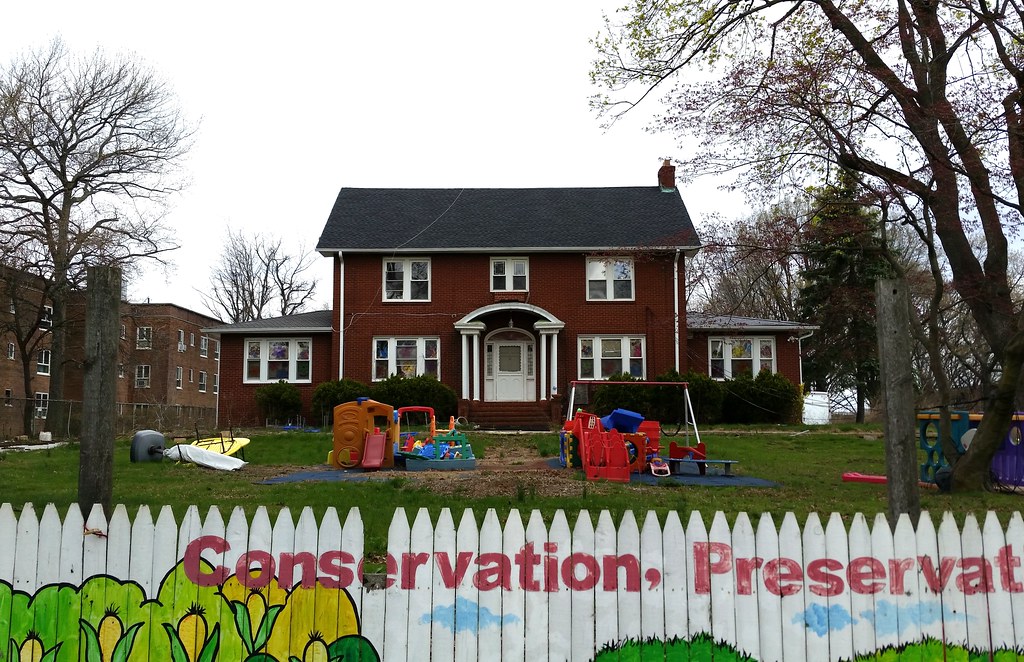
Before the Kleins sold it in 2003, this 1.4-acre property was the last family farm left in NYC and the final remnant of what was once a 200-acre spread purchased by Adam Klein in the 1890s. As of 1990, according to the Associated Press, the Kleins were growing "beets, carrots, scallions, radishes, basil, dill, parsley, cucumbers, squash, and kohlrabies" — "stuff that doesn't need that much room to grow" — on what I would guess was about half an acre of cultivated land located behind the old farmhouse pictured above. (The playground next door, which sits on land once owned by the family, is named Farm Playground in honor of the farm's unlikely longevity.)
Much to the chagrin of preservation-minded neighbors and civic leaders, who were hoping the farm could be maintained and run by the Queens County Farm Museum, the Kleins sold the place (for $4.3 million) to the notorious — and felonious — Huang family of developers. The Huangs subsequently leased the property to Ziming Shen, who opened a Preschool of America (a chain owned by Mr. Shen and his wife, Joanna Fan) on the site. In 2012, Ms. Fan and Mr. Shen pleaded guilty to embezzling $2.7 million of federal funds meant to provide food for children at their Red Apple chain of preschools. In 2014, despite being delinquent on the $5.2 million judgment from the Red Apple case, Mr. Shen bought the old farm from the Huangs for $5.6 million. The property lies within a "special planned community preservation district", making it difficult to develop, but the high sale price has local leaders concerned that Mr. Shen, who has already illegally cut down trees on the site, has some kind of underhanded scheme in mind.
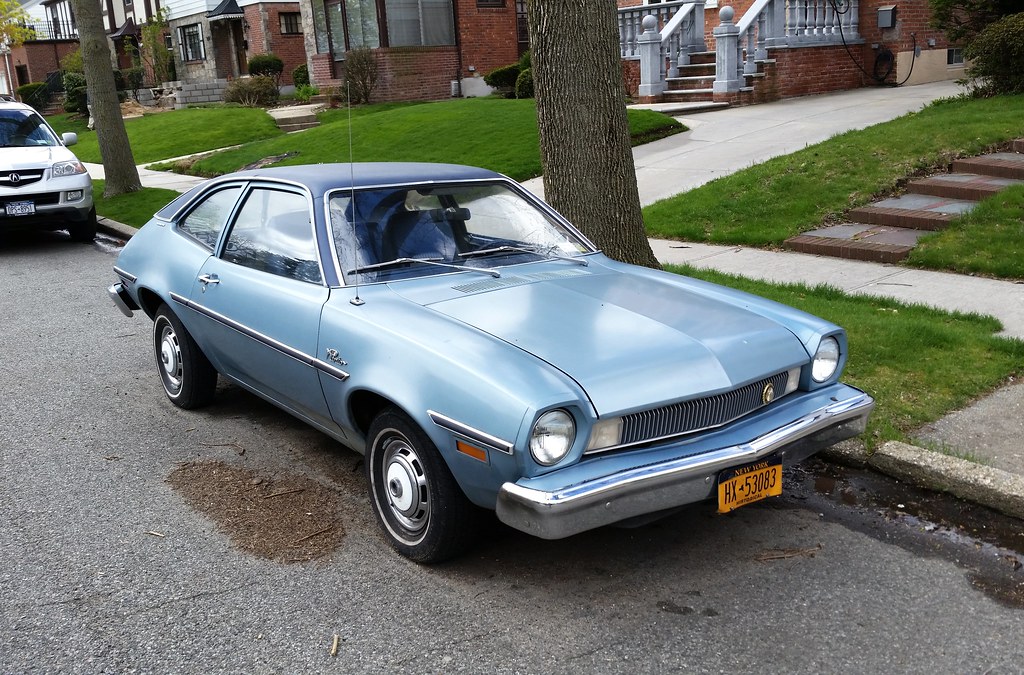

Ford Pintos had a notorious (if unfair) "reputation for bursting into flames when hit from behind in collisions", a fact I learned as a kid when my dad explained to me this scene from the movie Top Secret! 1.5 million 1971-76 Pintos were eventually recalled, and one case of an exploding Pinto in Indiana led to Ford being charged with reckless homicide, the first time a US corporation was ever tried on criminal charges. (The corporation won.)
For the record, here are the model years of the three cars pictured above. Blue: 1975. Brown: 1974. Green: 1971.
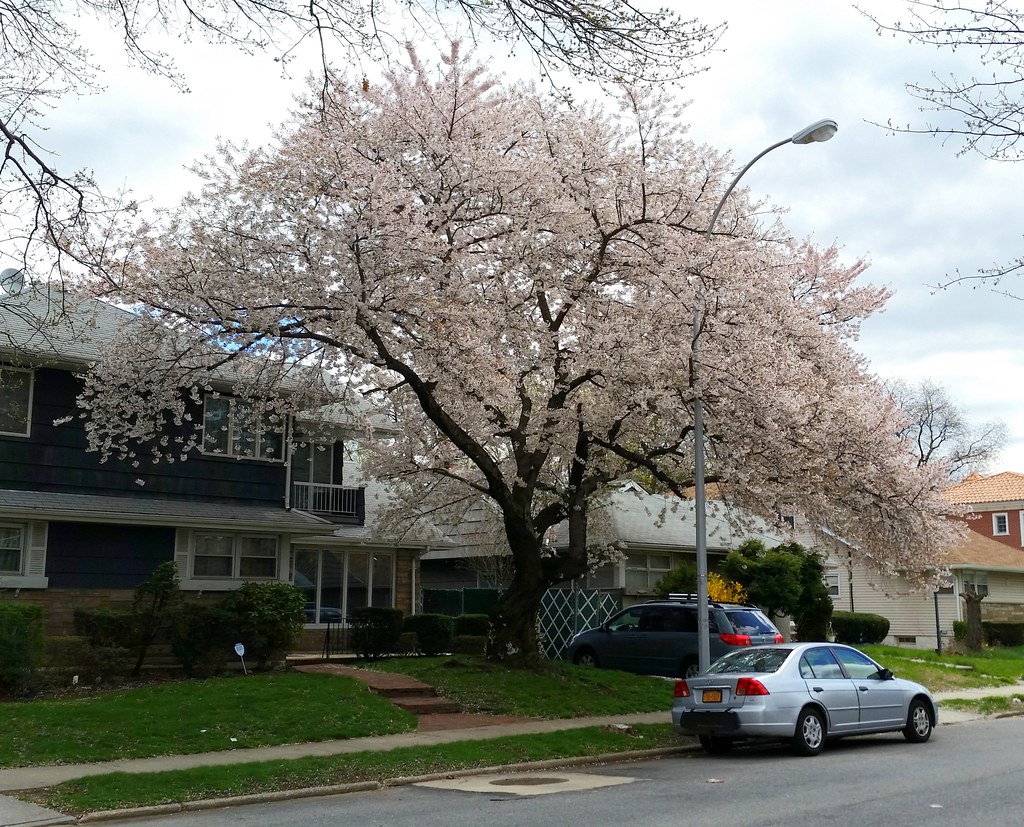
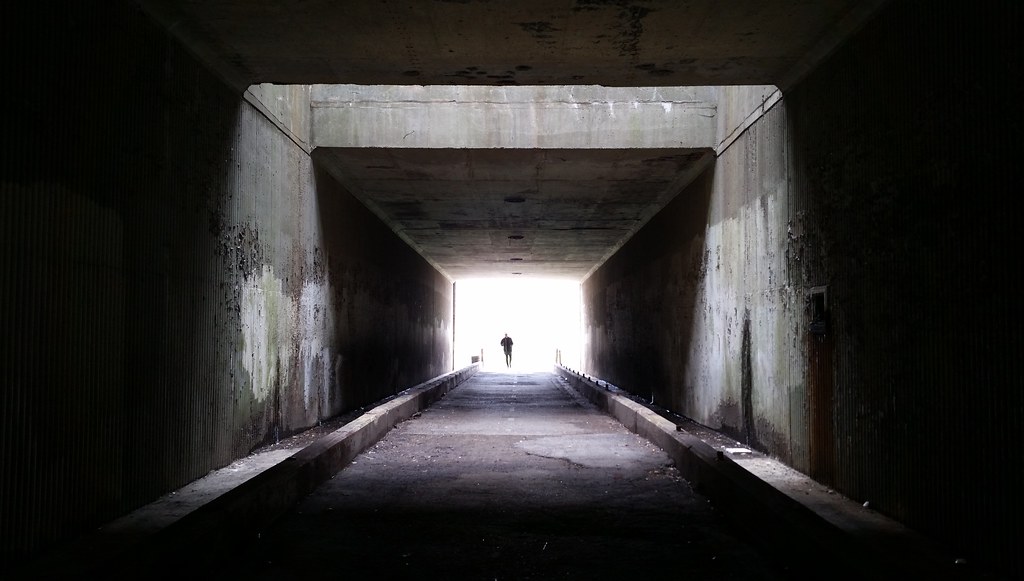
in Cunningham Park. This recreational path mostly follows (though not at this particular location) the former route of the Long Island Motor Parkway from Cunningham Park to Alley Pond Park.
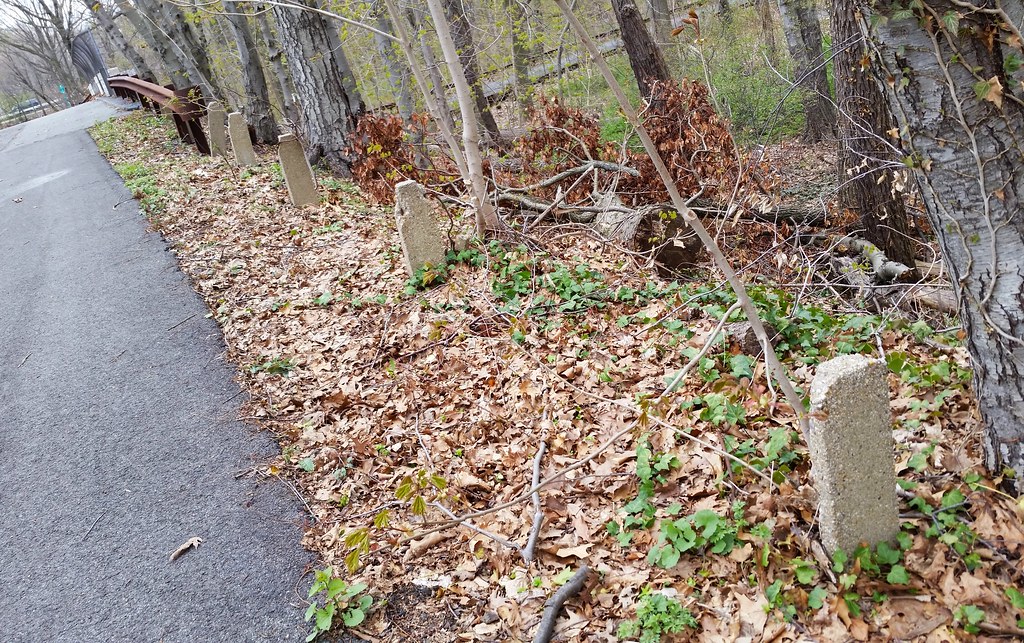
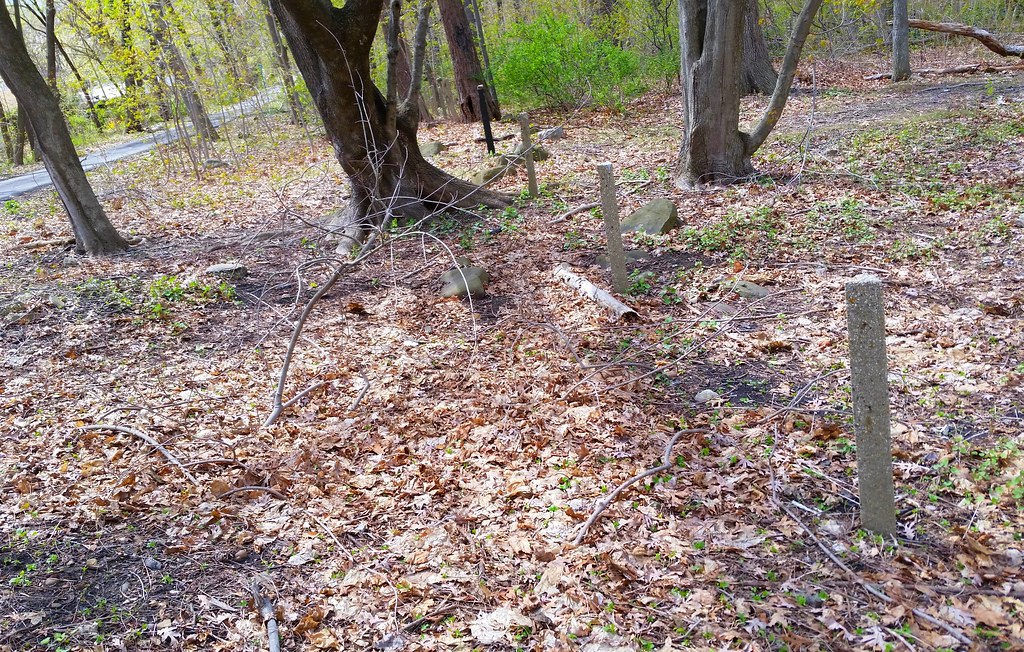
These concrete posts, found along the recreational path that connects Cunningham and Alley Pond Parks, are remnants of the old Long Island Motor Parkway, "the first highway built exclusively for the automobile".

PS 205, the Alexander Graham Bell School, is located on Bell Boulevard. The school is named, of course, for the inventor of the telephone* (hence the adjacent Telephone Playground). Bell Boulevard, on the other hand, takes its name from Abraham Bell and his family, whose farm it bisected back when it was still just a 19th-century country lane.
* Some would take issue with that claim.
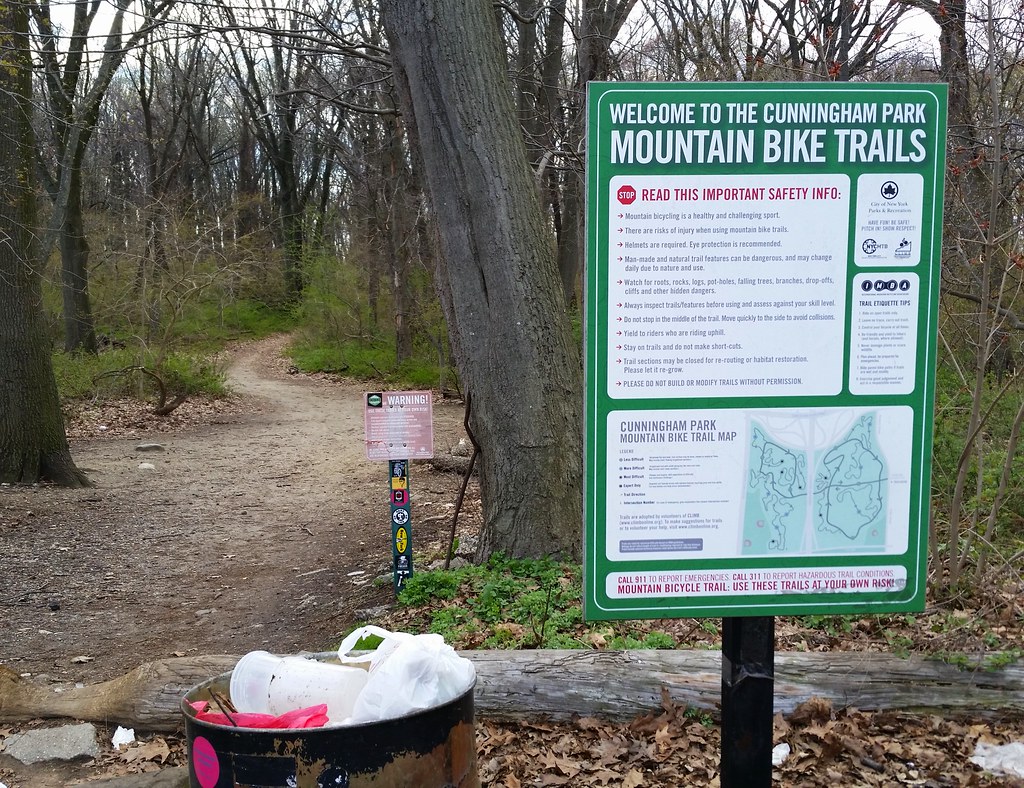
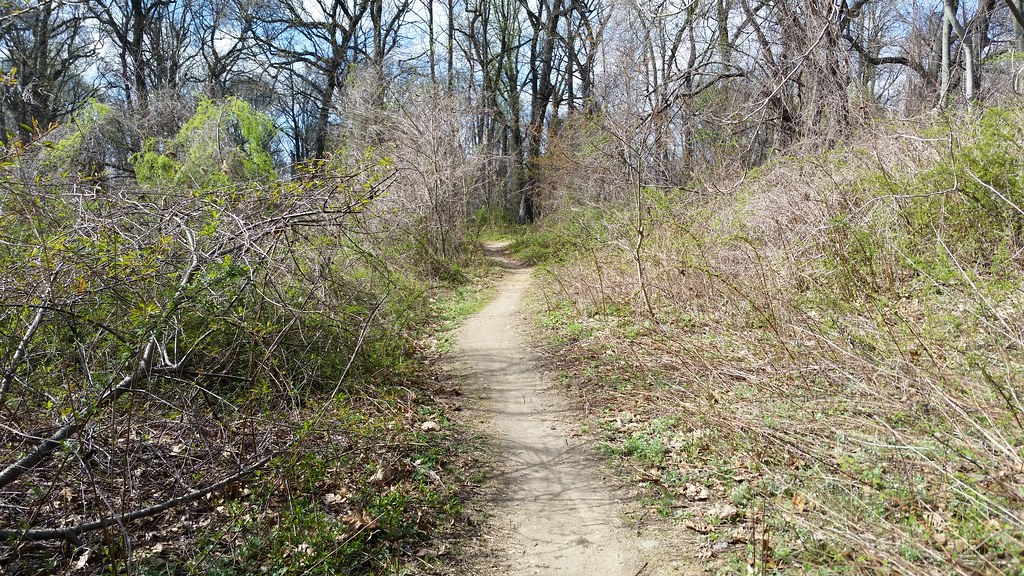
Queens's Cunningham Park is one of three city parks with mountain bike trails, the other two being Highbridge Park in Manhattan — whose trails I passed back in the early days of this walk — and Wolfe's Pond Park in Staten Island. According to the NY Times, all three sets of trails are in areas that "were de facto dumping grounds before volunteers did some heavy lifting, both in persuading the city to allow the mountain biking and in actually removing discarded tires, refrigerators and stoves."
(While we're on the subject of biking in the woods, I should also mention the now-ruined bike course that once stood on the North Shore of Staten Island, a glorious, homemade wooden track hidden inside a thin strip of trees along the waterfront.)
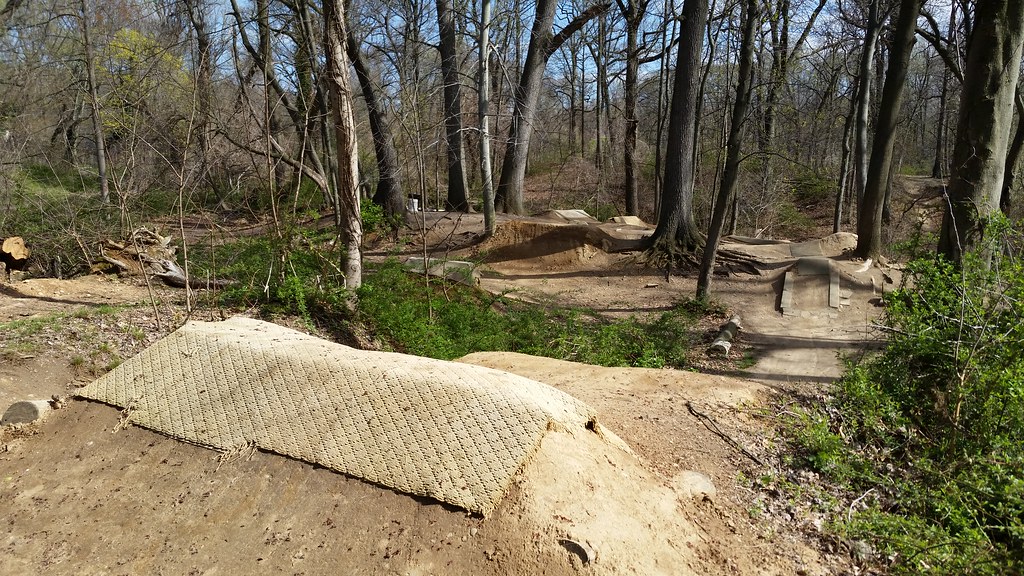
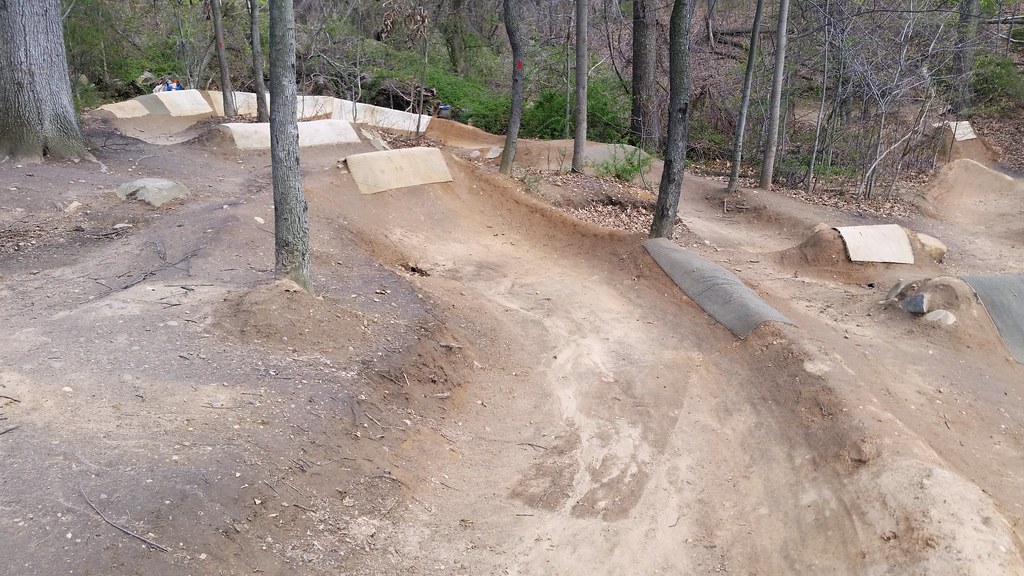
Like Highbridge Park, Cunningham Park offers a dirt jump course along with its mountain bike trails. Here's some video of the jumps in use.
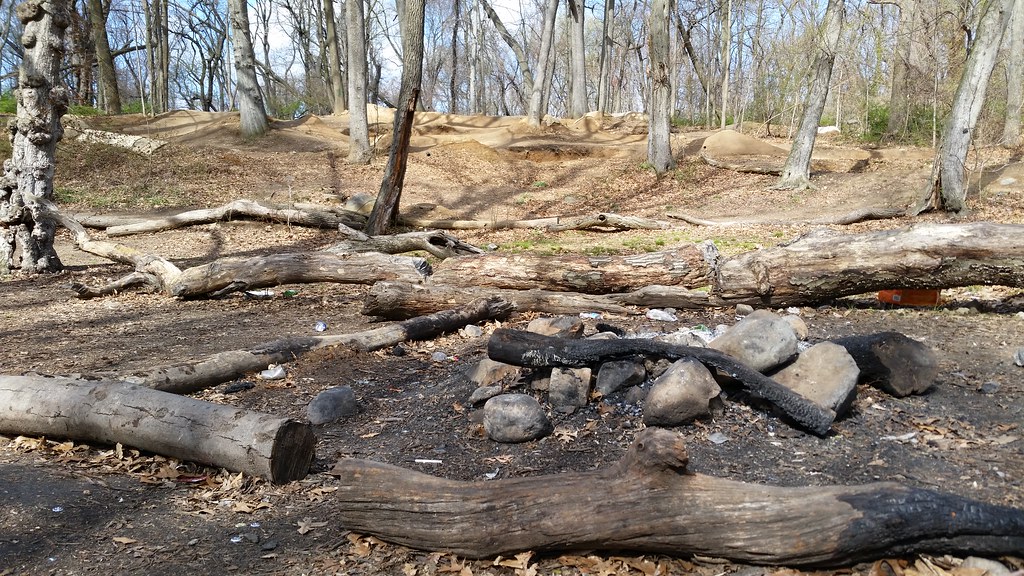
Charred logs and empty beverage containers sit beside the dirt jumps in Cunningham Park.
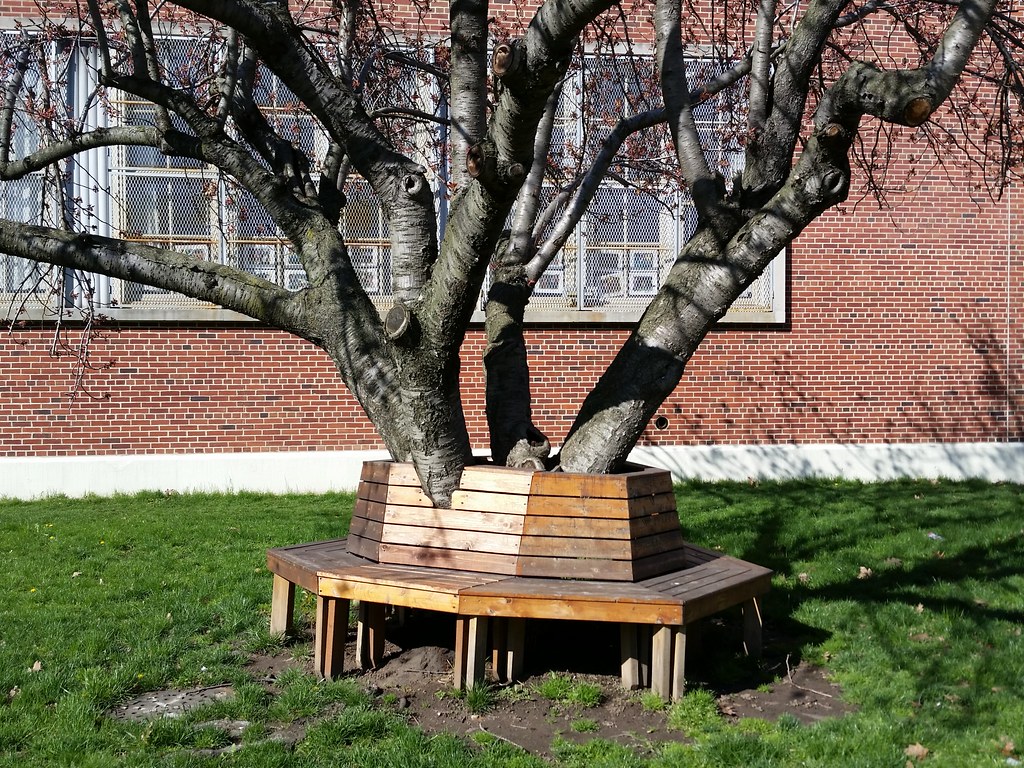
This wraparound bench can be found at the main location of PS 4 (a.k.a. P4Q), a multi-site school for severely emotionally challenged and/or autistic children. The P4Q building here in Fresh Meadows originally served as PS 179, the Lewis Carroll School, and later as the Japanese School of New York, which was one of only two full-time Japanese grade schools in the country when the Associated Press wrote about it in 1987.
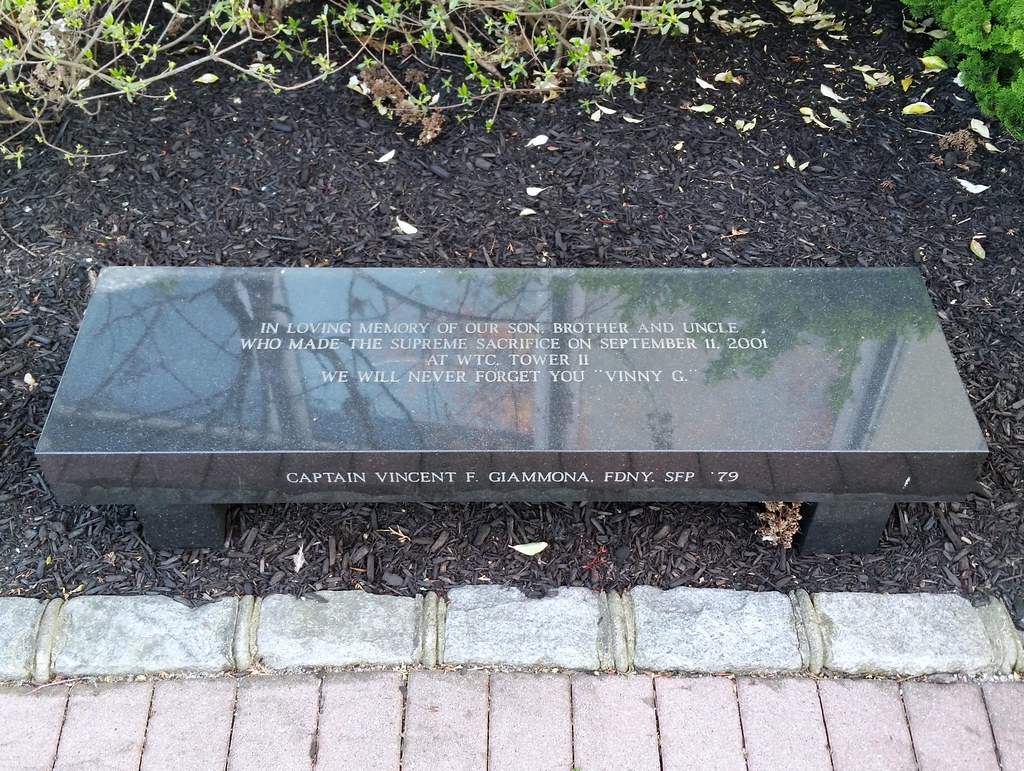
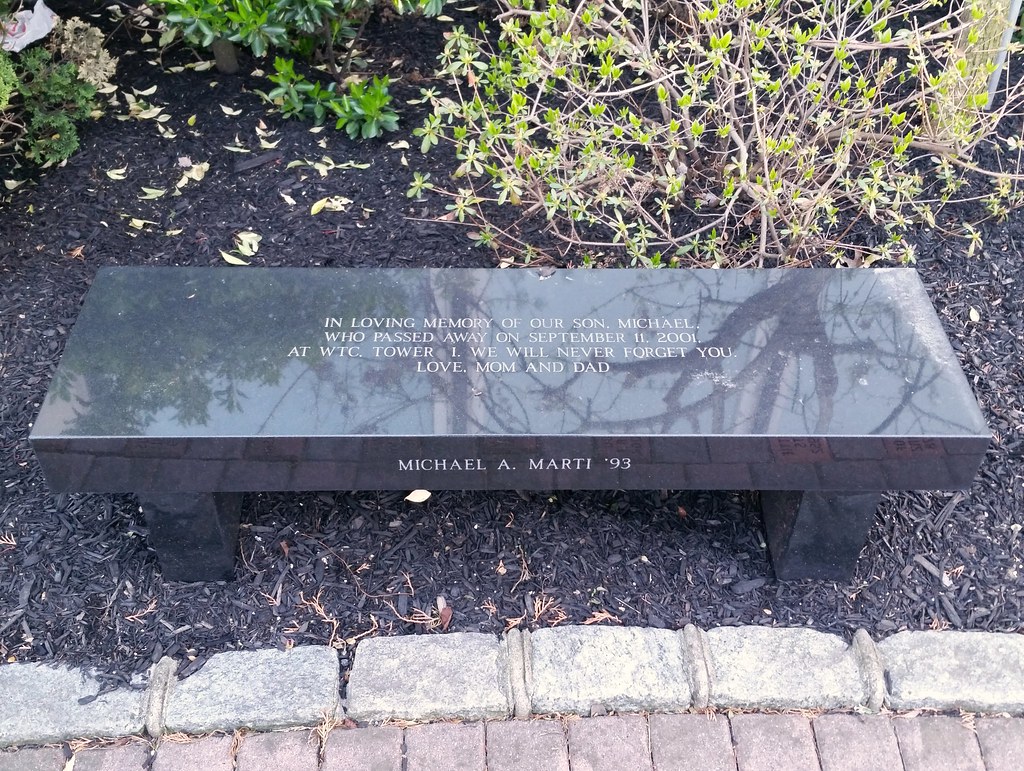
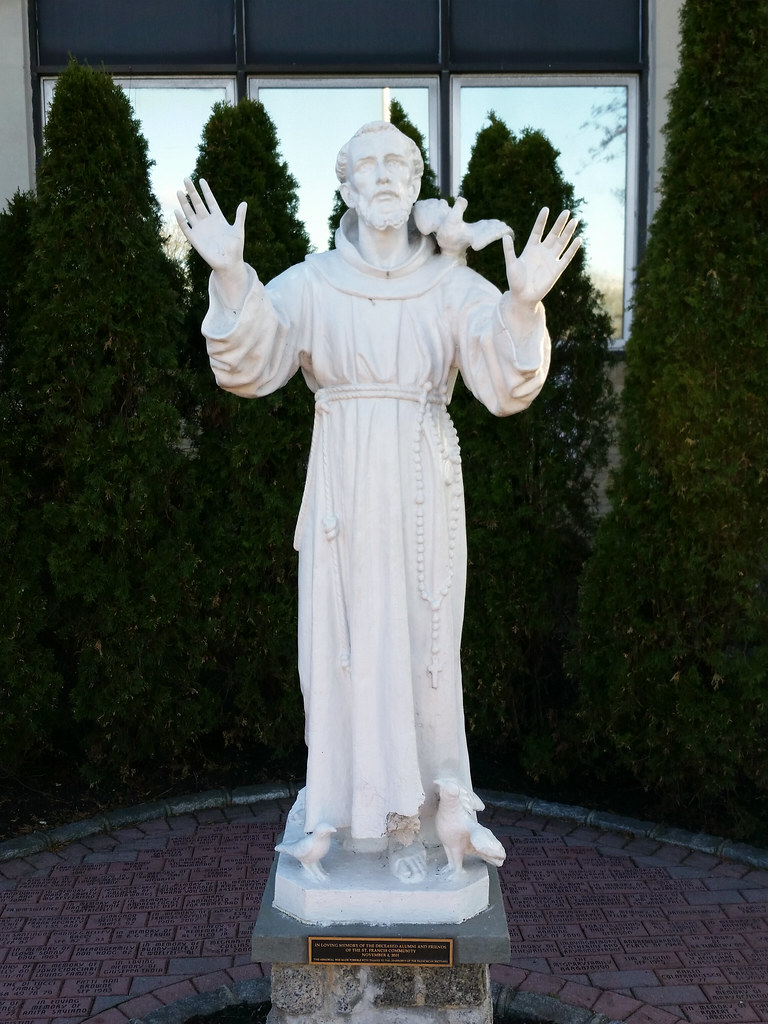
The two benches pictured above are part of a memorial garden at St. Francis Preparatory School. The garden is dedicated "in loving memory of the deceased alumni and friends of the St. Francis community", according to the plaque, dated November 4, 2001, mounted beneath the statue of St. Francis of Assisi that stands at the center of the garden.
St. Francis, said to be the largest Catholic high school in the US, is the alma mater of Vince Lombardi, Joe Torre, and Frank Serpico, among others. It was in the news in 2013 following a lawsuit by Marla (formerly Mark) Krolikowski, a long-serving, popular teacher who was fired after acknowledging to school officials that she was transgender.
UPDATE: A few months after my visit to St. Francis, Ms. Krolikowski passed away at the age of 62.
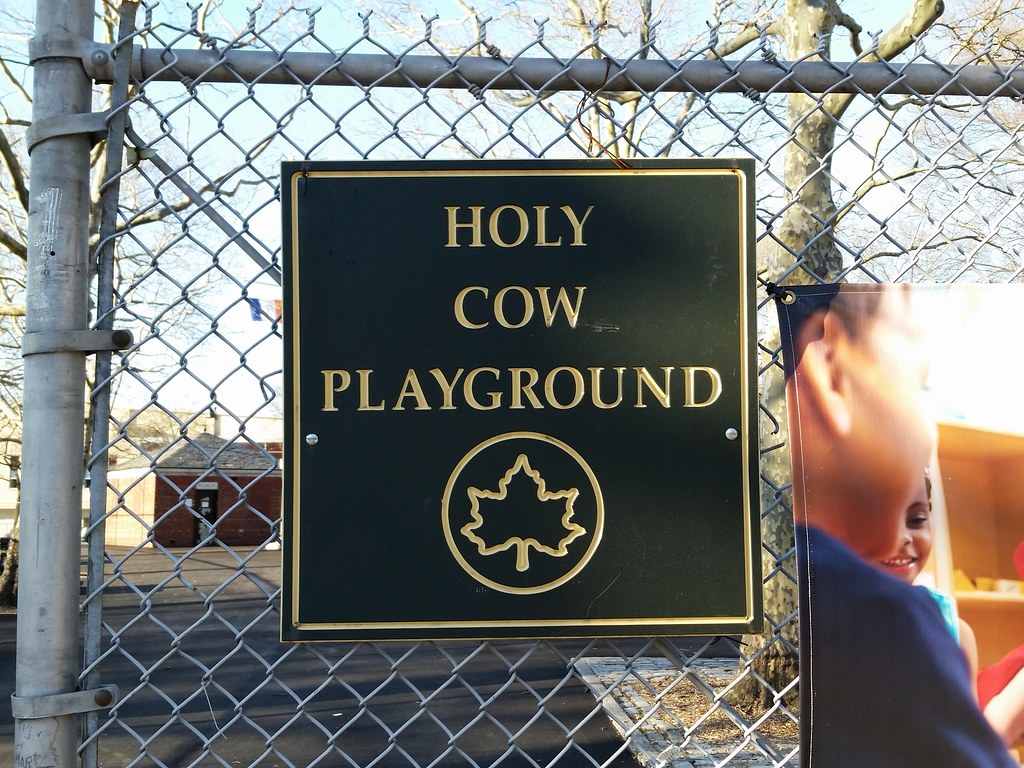
The name of this playground, which was bestowed upon it during — obviously — Henry Stern's reign as Parks commissioner, pays tribute to Phil Rizzuto and his well-known catch phrase. This is now the second Parks property we've seen named for the former Yankee shortstop. The first was Richmond Hill's Phil "Scooter" Rizzuto Park, the center of New York's avian speed-singing scene.
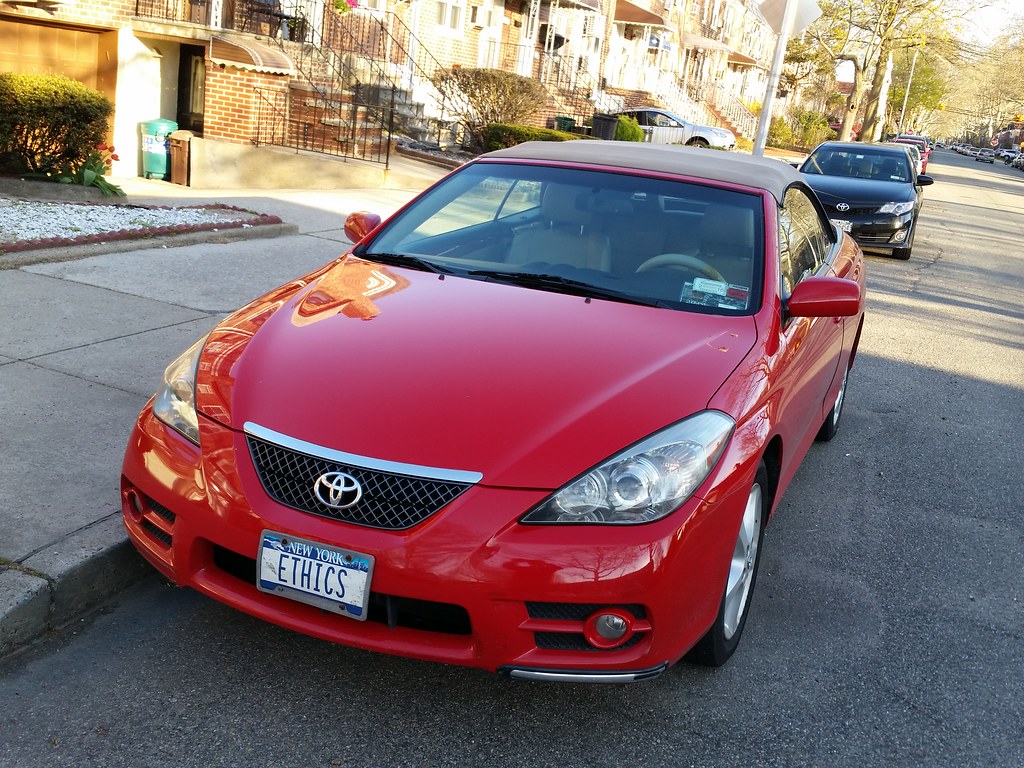
If the Captains Endowment Association placard displayed in the windshield is any indication, this car belongs to a high-ranking member of the NYPD.
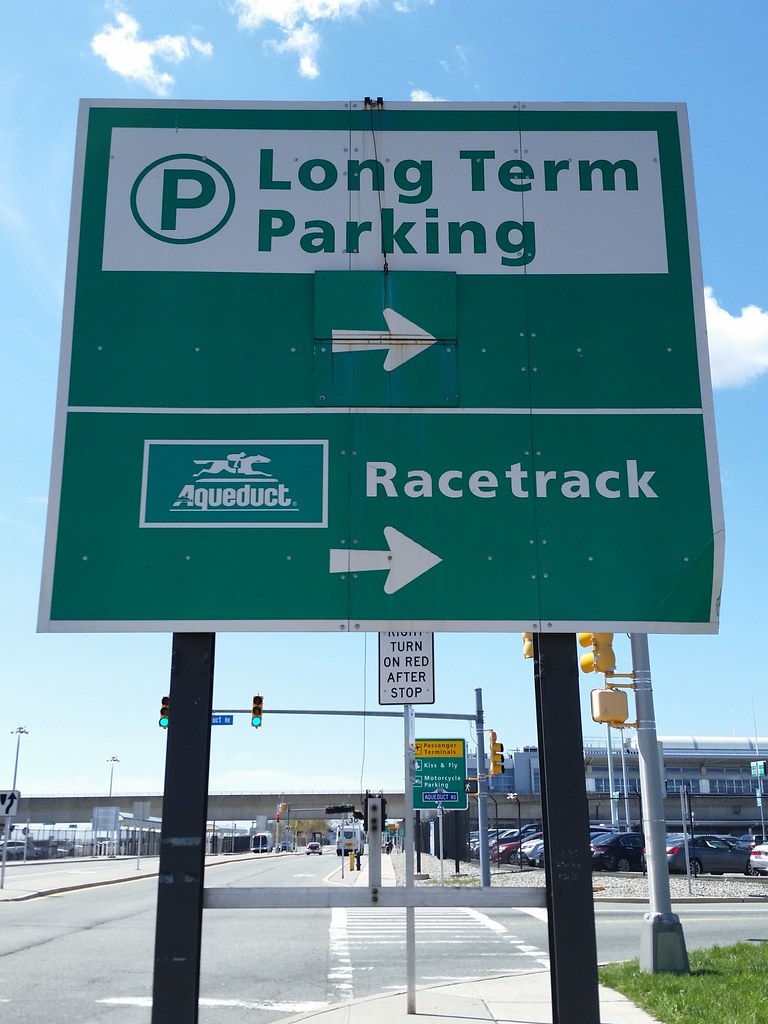
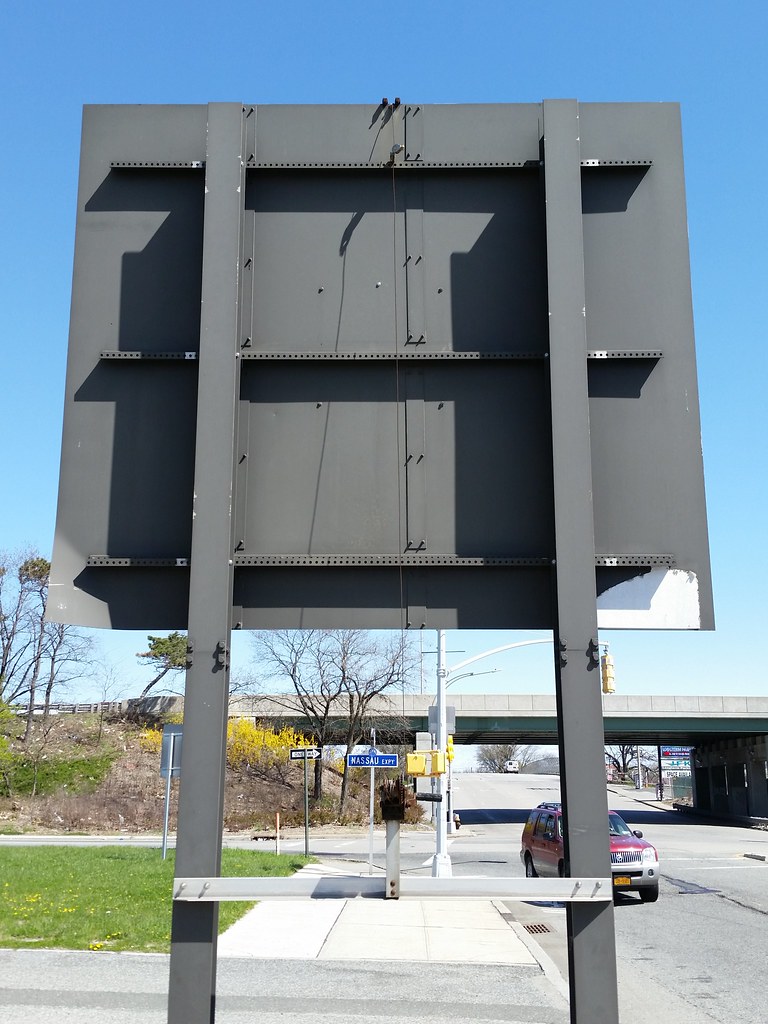
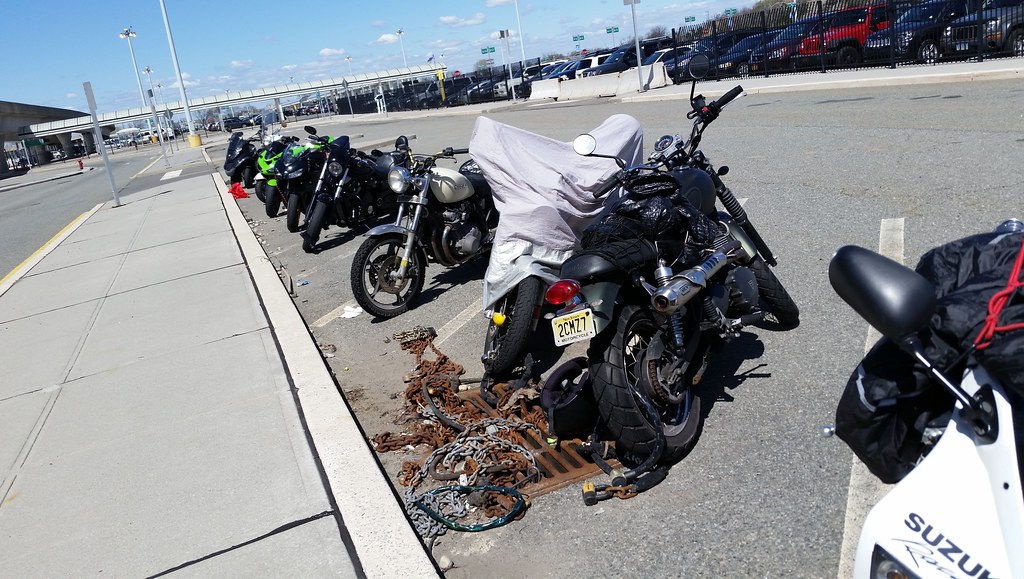
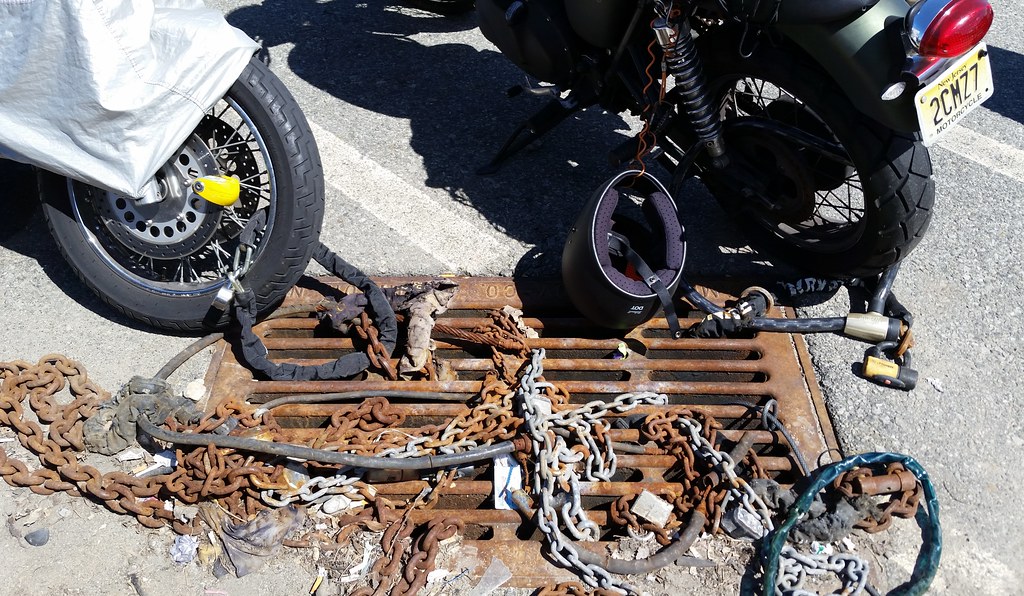
JFK Airport offers a row of (free) spots for motorcycles beside the Lefferts Boulevard AirTrain station at the long-term parking lot. Two of the spots abut a sewer grate laden with chains and locks. Were these chains left here by regular parkers to be used again in the future? Attaching a chain to the grate seems like it would be something of a hassle — dipping one end of the chain down into an opening and then fishing it back out through a different opening — so it might make sense for bikers to just leave their chains in place for next time. And these idle chains also provide other bikers with something easy to thread their own chains through, as seen above.
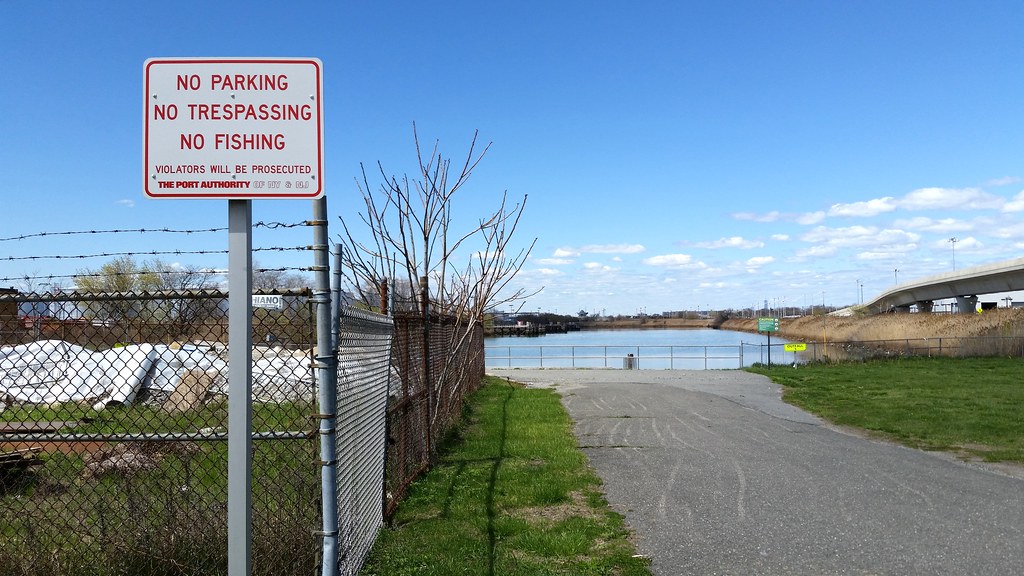
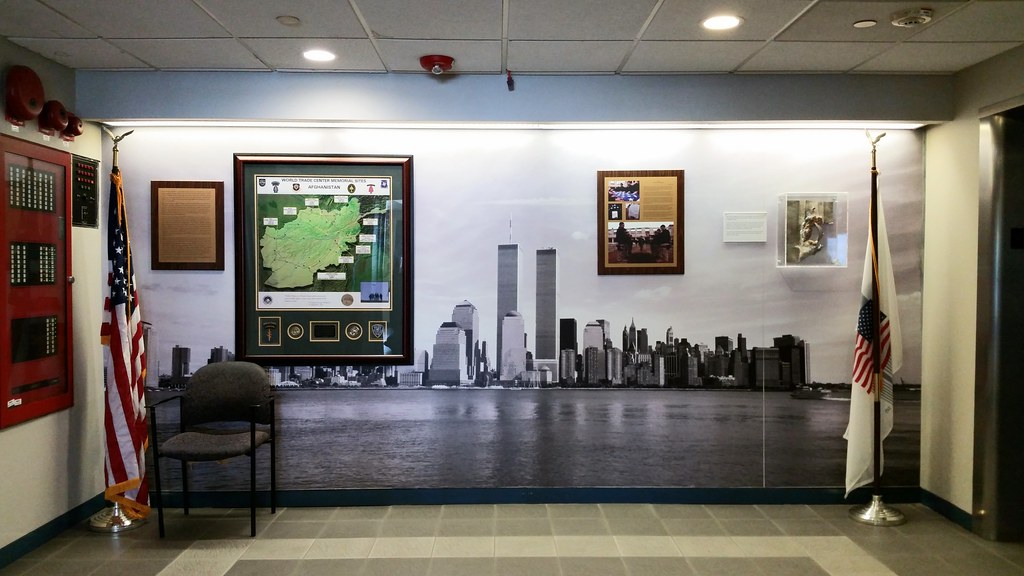
I found this memorial inside the Port Authority Administration Building at JFK Airport. You can take a closer look at the various components of the memorial here.
The map shows the locations of nine 9/11 memorials scattered around Afghanistan. As the accompanying plaque explains, each memorial consists of a piece of steel that was recovered from the wreckage of the World Trade Center, given to a team of Special Forces soldiers at the start of the US invasion in 2001, and ceremonially buried following the completion of the team's mission.
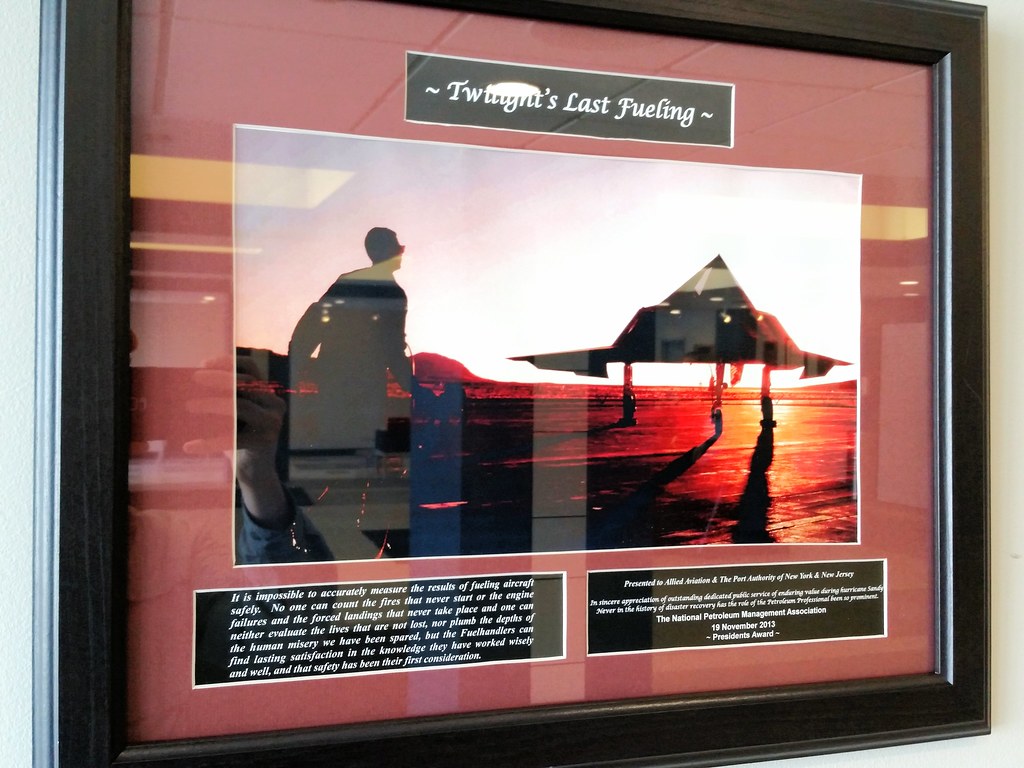
~ Twilight's Last Fueling ~
It is impossible to accurately measure the results of fueling aircraft safely. No one can count the fires that never start or the engine failures and the forced landings that never take place and one can neither evaluate the lives that are not lost, nor plumb the depths of the human misery we have been spared, but the Fuelhandlers can find lasting satisfaction in the knowledge they have worked wisely and well, and that safety has been their first consideration.
Presented to Allied Aviation & The Port Authority of New York & New Jersey
In sincere appreciation of outstanding dedicated public service of enduring value during hurricane Sandy. Never in the history of disaster recovery has the role of the Petroleum Professional been so prominent.
The National Petroleum Management Association
19 November 2013
~ Presidents Award ~

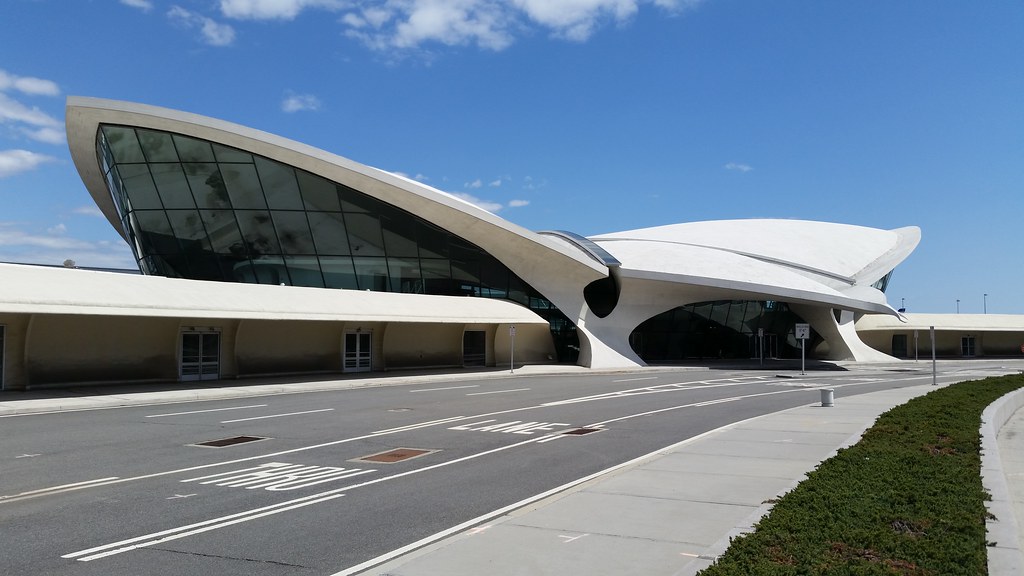
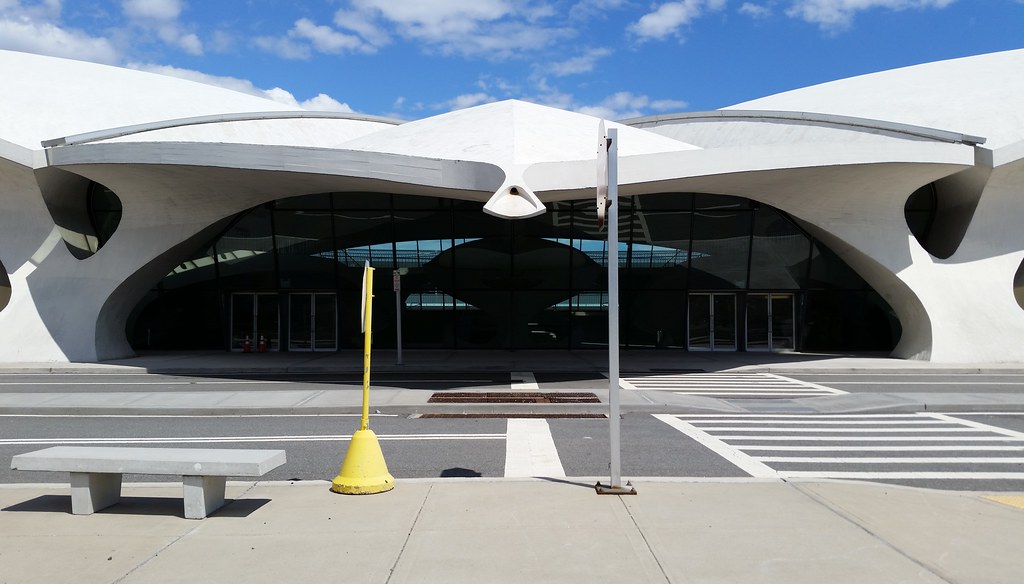
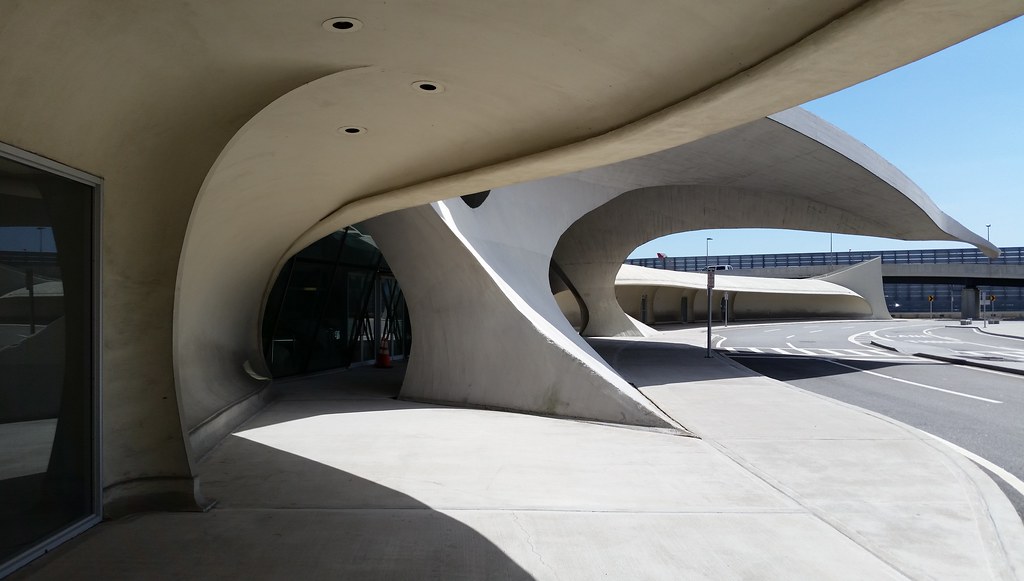
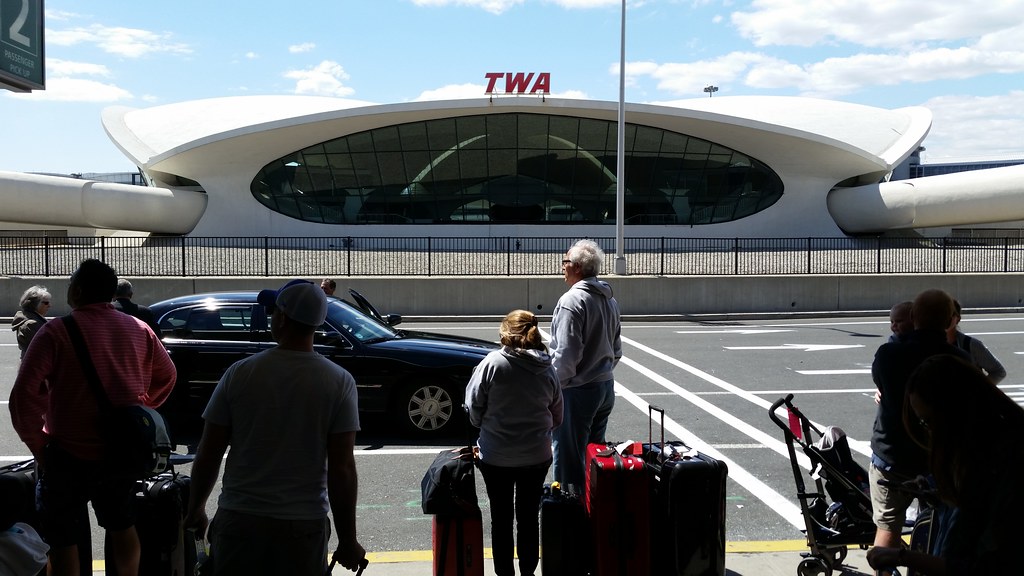
"Perhaps America's most lyrical monument to the dawn of the jet age", the TWA Flight Center at JFK was designed by Eero Saarinen, architect of the Gateway Arch in St. Louis. The birdlike air terminal opened in 1962, but has been closed since TWA went out of business in 2001. You can view lots of photos of the interior by scrolling through the slideshow at the bottom of this article.
The two tubes you see emerging from the building in the bottom photo above are corridors that once connected to two satellite structures containing the boarding gates (1996 aerial photo). Those structures have since been demolished and replaced with a JetBlue terminal that opened in 2008 (2012 aerial photo).
Parts of the 2002 movie Catch Me If You Can were filmed inside the Flight Center; you can see the main terminal in this scene and one of the tubular corridors in this scene.
Ideas for reusing the terminal have come and gone over the years, but it sounds like there are now pretty firm plans in place to turn it into the centerpiece of a new hotel complex.
The longevity of the landmarked Flight Center is a testament to its architectural distinction, as JFK has not proven to be an easy place for notable but outdated structures to survive. The Flight Center's fallen brethren include Pan Am's Worldport, National Airlines' Sundrome, and the old American Airlines terminal whose facade featured what was once said to be the world's largest stained-glass installation (cool photo).
UPDATE: A few months after my visit, Governor Cuomo announced the approval of a long-term lease deal for the development of the site as a hotel.
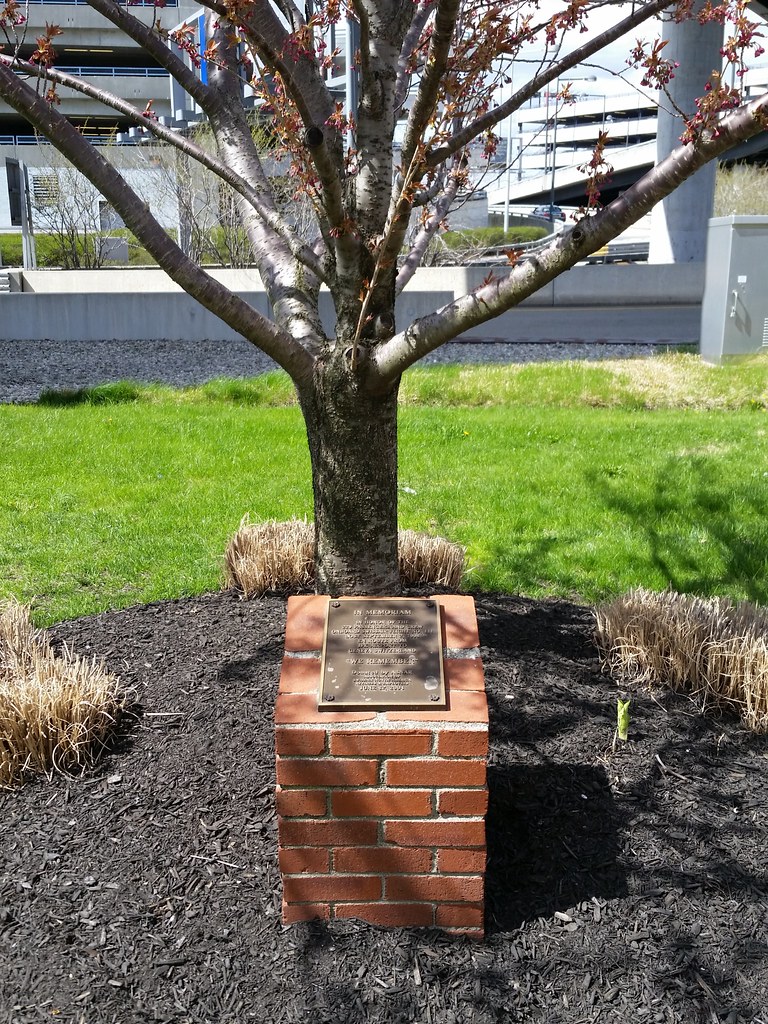
The plaque reads:
IN MEMORIAMI didn't notice it at the time, but is that a skunk cabbage starting to unfurl its leaves to the right of the memorial? Here's a closer look. Skunk cabbage grows in wetlands — a good reminder that JFK was built atop a huge expanse of Jamaica Bay marshland. To get a sense of how drastically the construction of the airport has changed the area, compare these before-and-after aerial images from 1924 and 2012.
IN HONOR OF THE
229 PASSENGERS AND CREW
ONBOARD SWISSAIR FLIGHT NO. 111
LOST SEPTEMBER 2, 1998
EN ROUTE FROM
JFK AIRPORT TO
GENEVA SWITZERLAND
"WE REMEMBER"
Donated by ASNAR
ASSOCIATION OF
SWISSAIR NORTH AMERICA
RETIREES & EMPLOYEES
JUNE 12, 2004


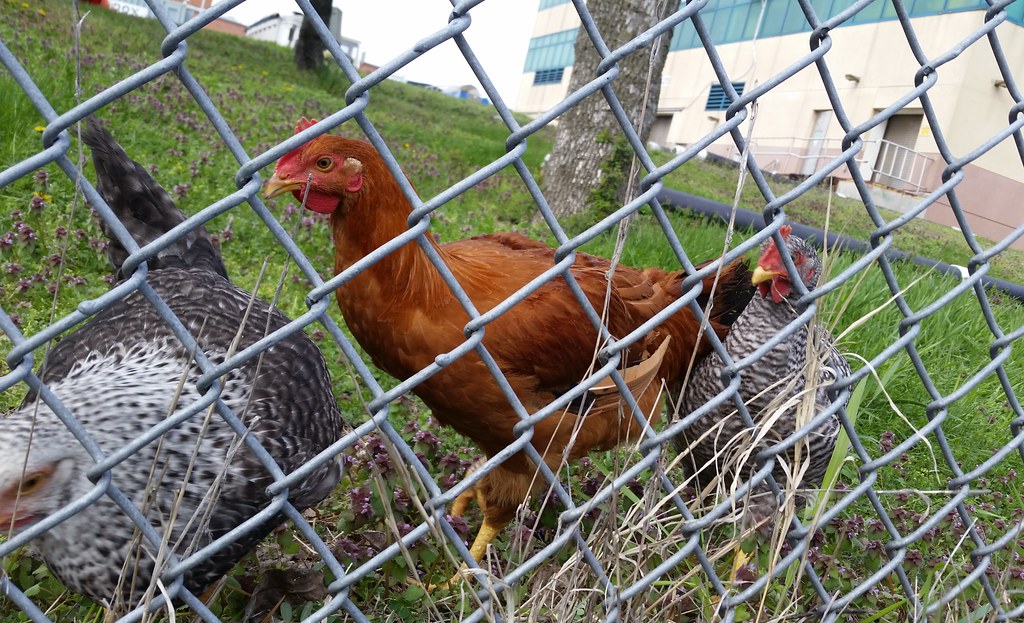
I was quite surprised to find a trio of chickens wandering around the fenced-in property of the Jamaica Wastewater Treatment Plant at the periphery of JFK Airport.
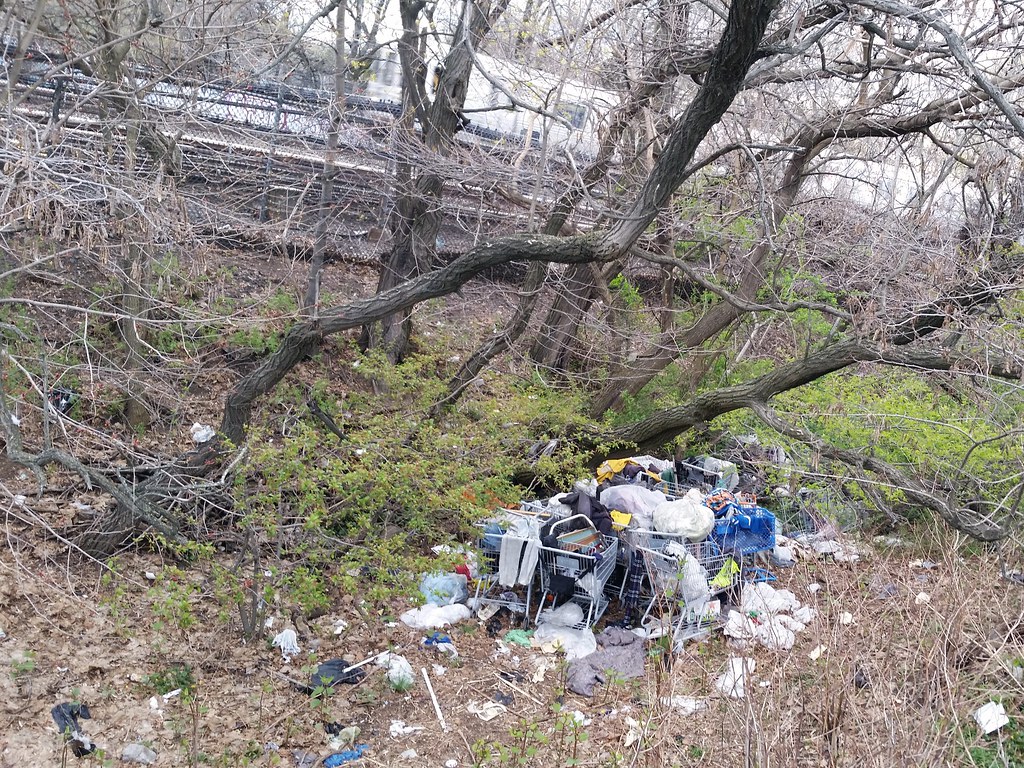
In this tiny wooded area beside the Belt Parkway sits a collection of perhaps a dozen shopping carts containing various items: clothing, folding chairs, plastic bags. This seems to indicate that someone is living here, or at least was in the fairly recent past. A Street View image from January 2013 shows what could very well be the same little encampment.
In the background of this shot, you can see a ghostly-looking A train heading south toward the Rockaways. Here's a closer look at the whole scene.


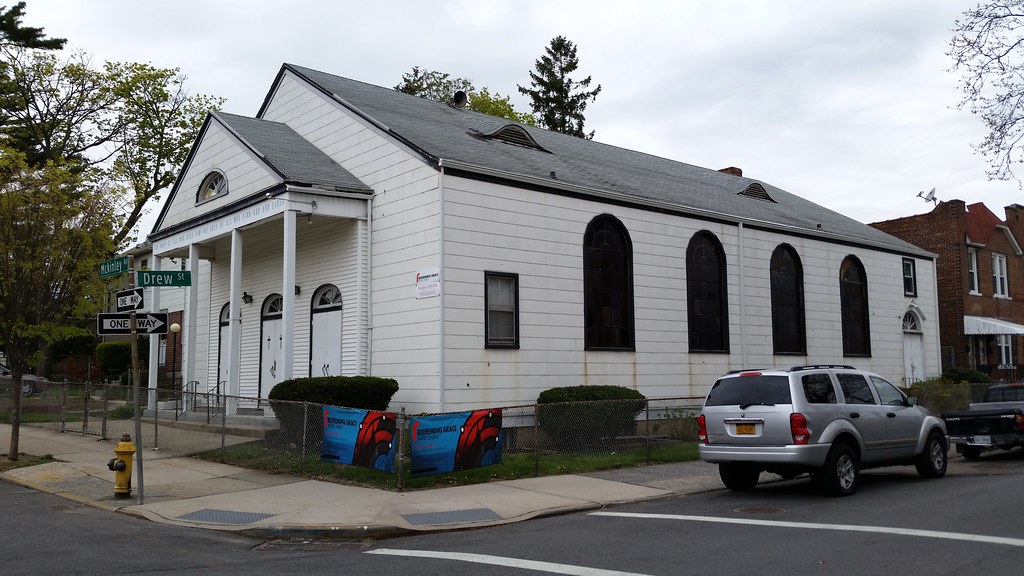
Dedicated in 1925, this building was originally, and until fairly recently, Euclid Baptist Church. The line of text atop the columns reads: "THE HOPE OF ALL WHO SEEK HIM – THE HELP OF ALL WHO FIND – OUR GOD LIVES".
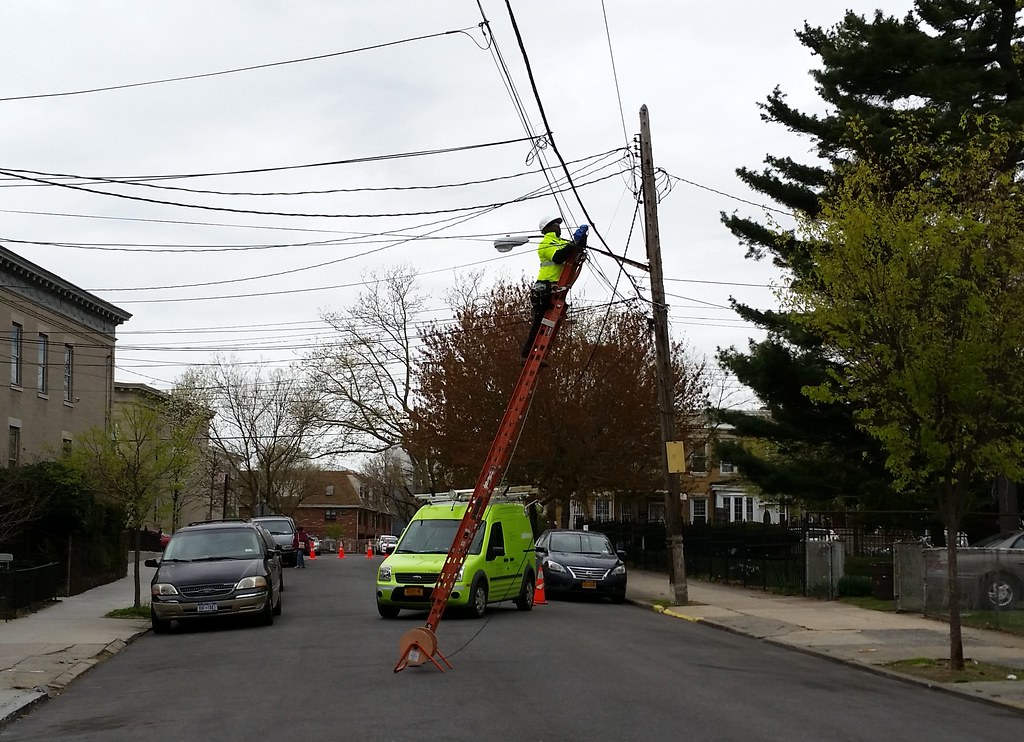
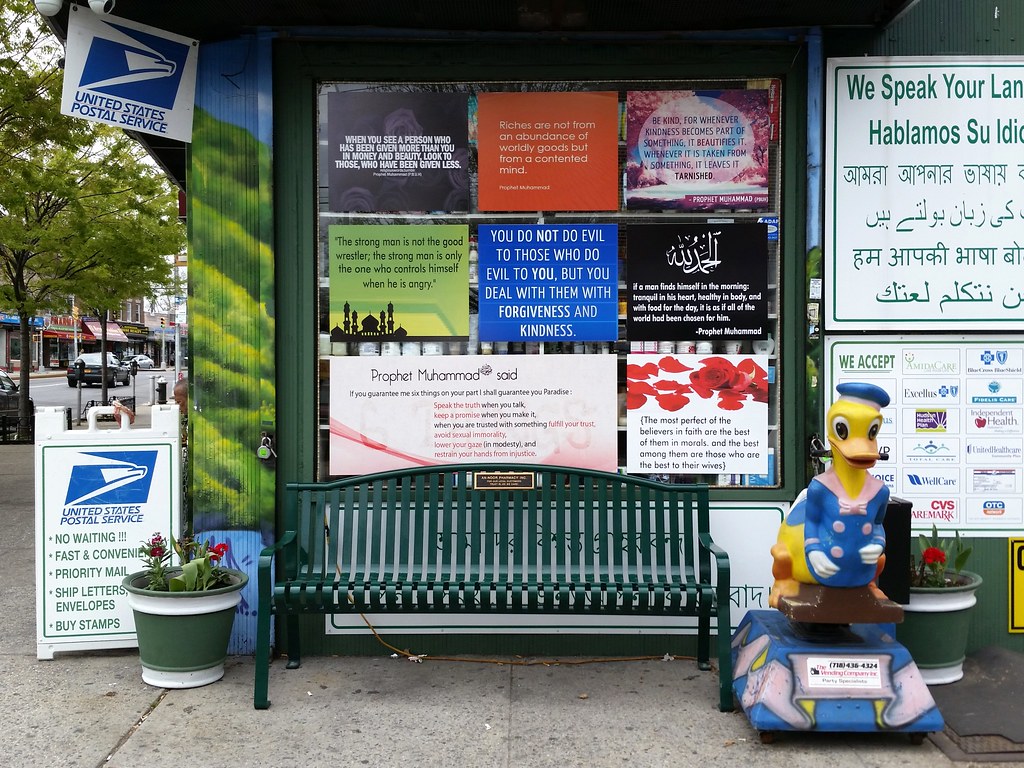
at An-Noor Pharmacy. Here's a closer look.
(The quote in the middle was not said by Muhammad, but was rather part of a description of him.)

Iglesia Bautista El Mesias, the former Temple Sons of Jacob

Wikipedia's opening paragraph about the book: "The 48 Laws of Power (1998) is the first book by American author Robert Greene. The book is a bestseller, selling over 1.2 million copies in the United States, and is popular with prison inmates and celebrities."
This particular copy looks like it was checked out from the Queens Library. The front cover notes that the book is "from the author of The Art of Seduction".


Dexter Park (more photos) was located on the north side of Jamaica Avenue here in Woodhaven, Queens, just east of the Brooklyn-Queens border. Many different sporting events took place at the park over the years, dating back to the 19th century, but it's best remembered as the home of the Bushwicks, a prominent semipro baseball team that played here from 1918 to 1951.
As the sign above indicates, many all-time greats from the major leagues and Negro leagues competed in exhibition games here against (and occasionally for) the Bushwicks. Dexter Park was among the first baseball stadiums in the country (though not the first, as is sometimes claimed) to install a permanent lighting system, allowing for night games to be played starting in 1930, five years before night baseball reached the major leagues.
The commemorative sign pictured above stands in the parking lot of a C-Town grocery store, but most of the park's former property is now occupied by modest brick row houses (aerial images: 1951, 2012). While no physical trace of the stadium remains, its name lives on in Dexter Court, the street that runs along what was once the western edge of the property.
The subway station over Jamaica Avenue in the photo above is the 75th Street–Elderts Lane stop on the Jamaica Line, served by the J and Z trains. The station's platforms, at their westernmost extent, reach just over the Brooklyn-Queens border, which runs along Eldert (without an "s") Lane at this point, making this one of only three stations in the system that span two boroughs. The others are Myrtle–Wyckoff Avenues and Halsey Street on the Canarsie Line (L train).

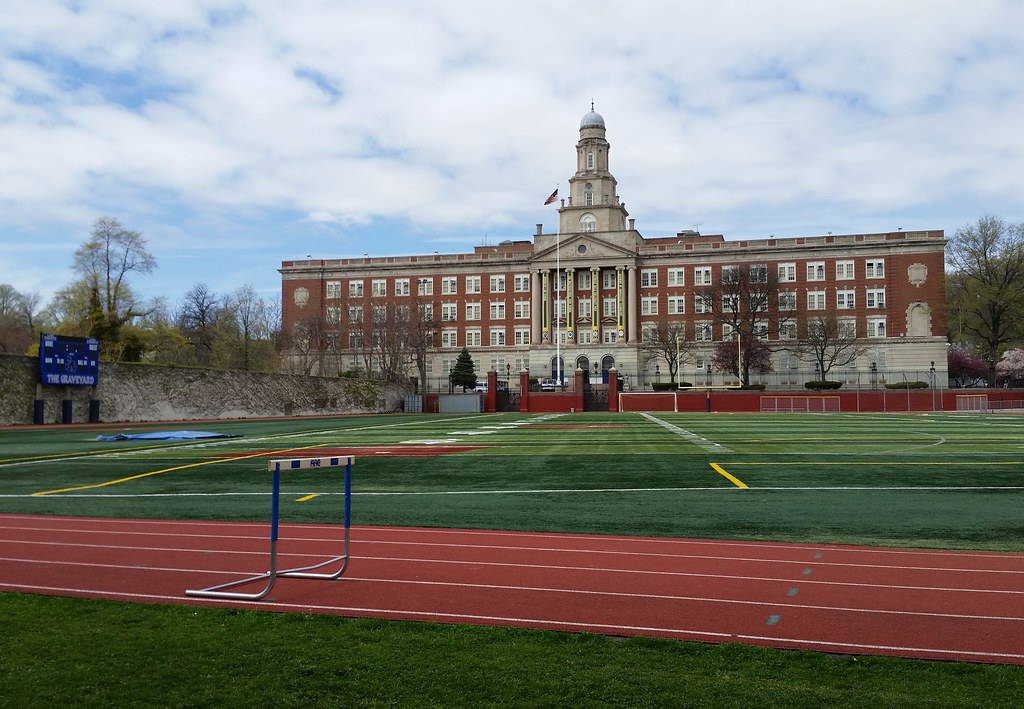
This building opened in 1937 as the new home of Franklin K. Lane High School. The vast majority of the school is located in Brooklyn, but the easternmost part of the building (at right, above) lies in Queens. According to the city Department of Education, it's the only two-borough high school site in NYC, although that's not true: John F. Kennedy High School sits on the Bronx/Manhattan border. If you zoom in on the scoreboard at left, you can see that the athletic field is apparently called "The Graveyard", undoubtedly a reference to the cemeteries that abut more than half of the school's perimeter (aerial view).
Notable Lane alumni include Red Holzman and Alfred Kazin (author of A Walker in the City), as well as drop-outs Richie Havens and John Gotti. Lane graduated its final class of seniors in 2012; like some other large, struggling high schools in the city, it has been phased out and replaced with a number of smaller schools that now occupy its former building.
But let's get to the important stuff. Here's a picture of one of the building's urinals. I found this photo at urinal.net, which is 1) a real site, and 2) even more wonderful than it sounds. Check it out if you're interested in perusing the "largest collection of urinal photographs ever assembled".

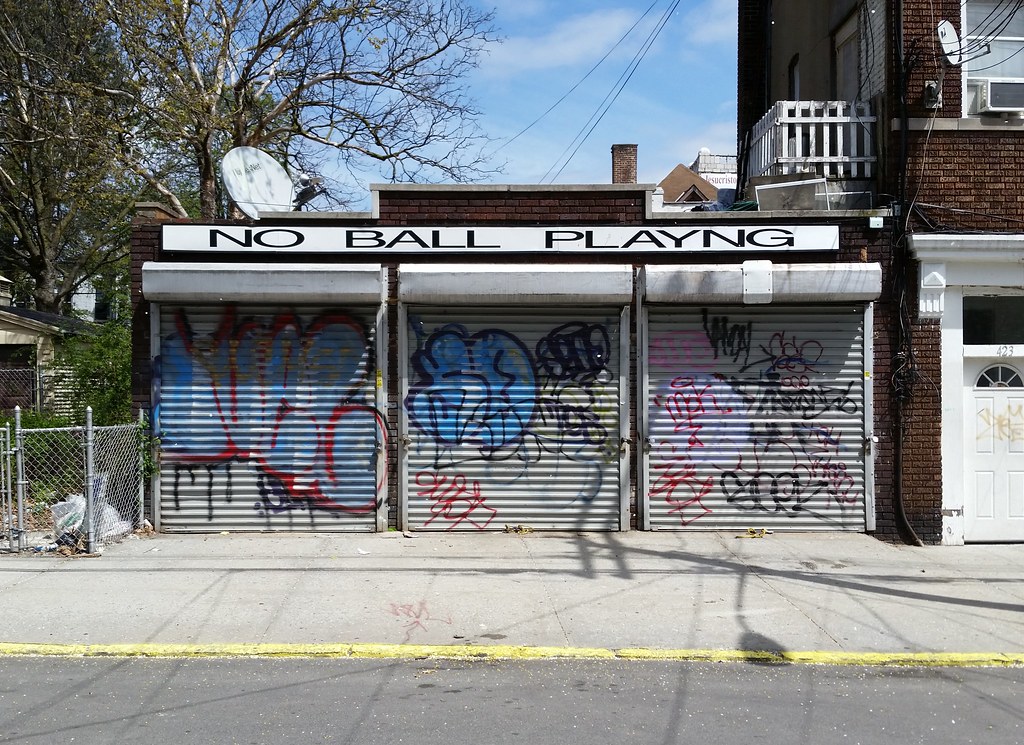
A subtle reminder for the local youngsters that when it comes to sports, there's no "I" in "TEAM", or in anythng else for that matter.

Xtreme Kurlz — located across the street from its sibling establishment, Xtreme Kutz.
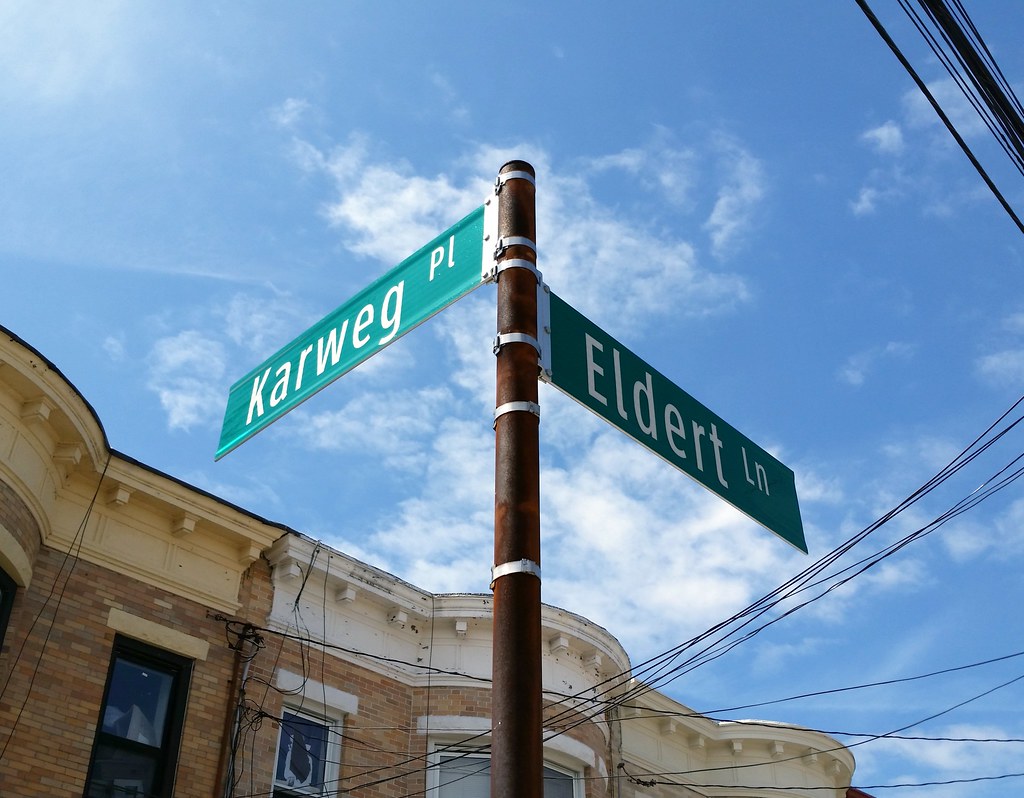
Formerly known as Liberty Street (or Liberty Place), this block-long roadway became Karweg Place in 1937. I suspect it was named for George H. Karweg, a local civic leader who died the year before.
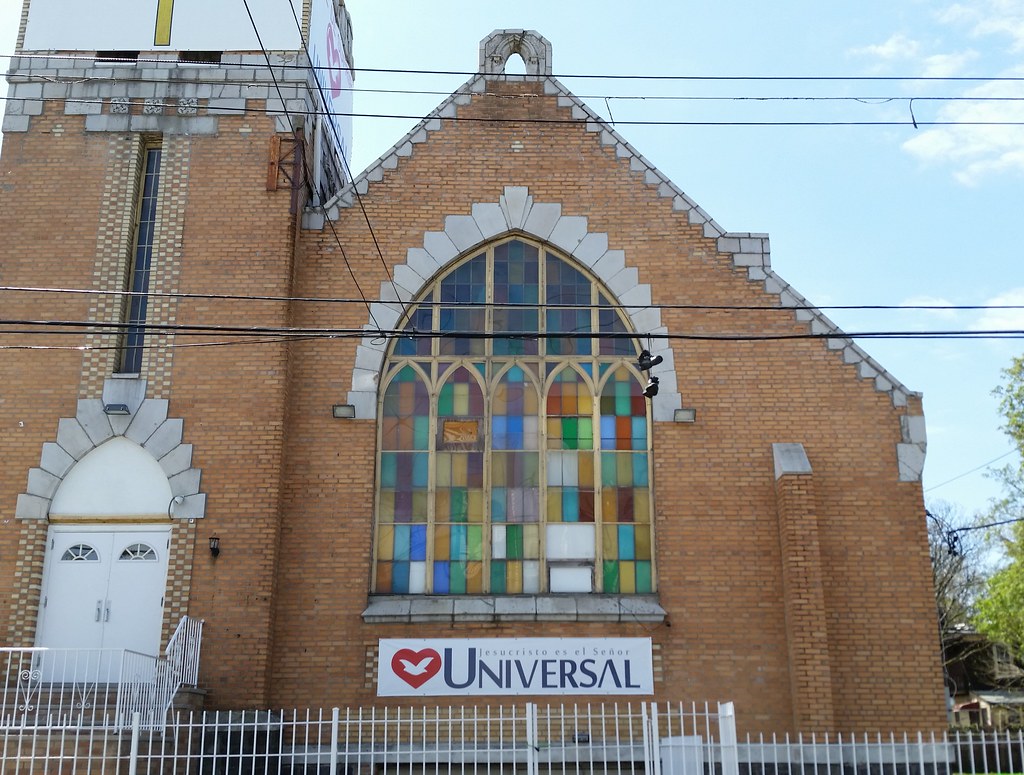
Completed in 1910, this was originally the United Presbyterian Church, known as the "Open Church". The Presbyterians held onto to the place for just over a century before selling it to the Universal Church in 2011.
In 1928, the Brooklyn Daily Eagle ran an article about a Tom Thumb wedding that was held here, saying "It is doubtful if so many 'notables' ever gathered under one roof as last night were 'seen' at the 'wedding' of 'Jennie June' and 'Tom Thumb.' "

