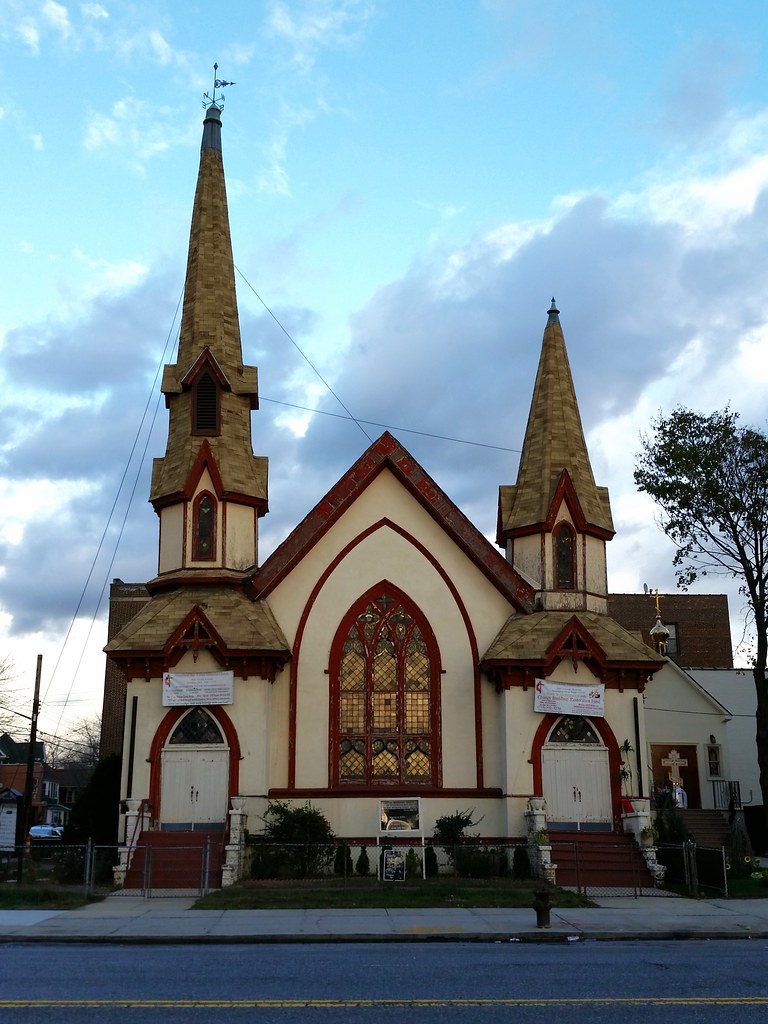
This is the home of the Sheepshead Bay United Methodist Church, originally known as the Sheepshead Bay Methodist Episcopal Church. It was built in 1884 by John Y. McKane (formerly John McCain), the tyrannical "autocrat of Gravesend"*. By 2011, the steeples had become structurally unsound, and it looked like tearing them down was going to be the only affordable solution for the dwindling congregation. The necessary permits for demolition were acquired from the city, but the company hired to do the work backed out. A second contractor then came in and convinced the church that it would actually be cheaper to fix the steeples than to remove them. The first step was to stabilize them with cables, which are visible in the photo above.
* Not to be confused with The Autocrat of Flapjack Junction.

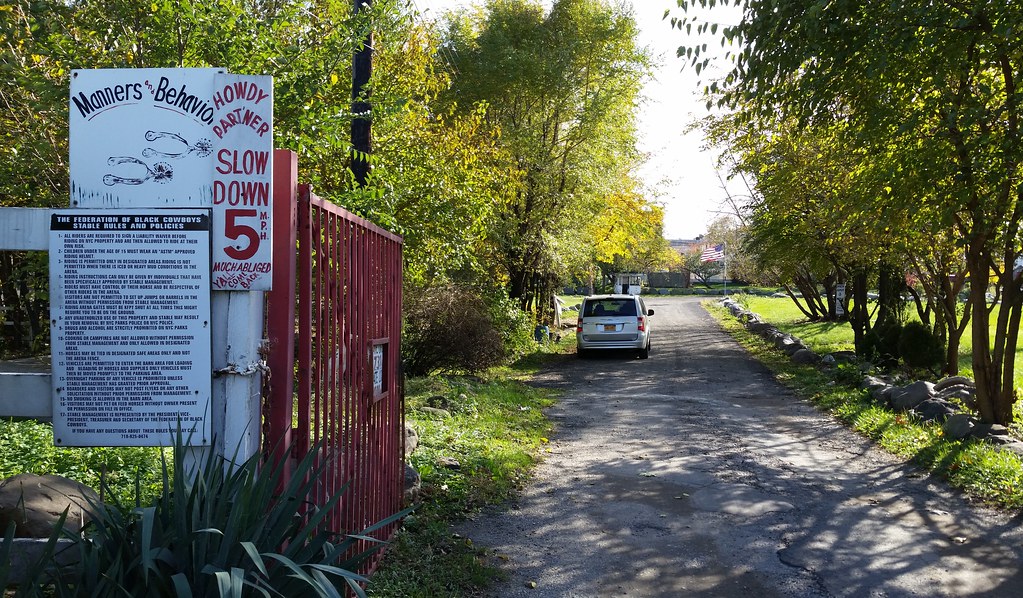
This is the entrance to Cedar Lane Stables, the home of the Federation of Black Cowboys. As far as I can tell, the stables are currently unoccupied after being shut down by the city in 2013 pending renovations.
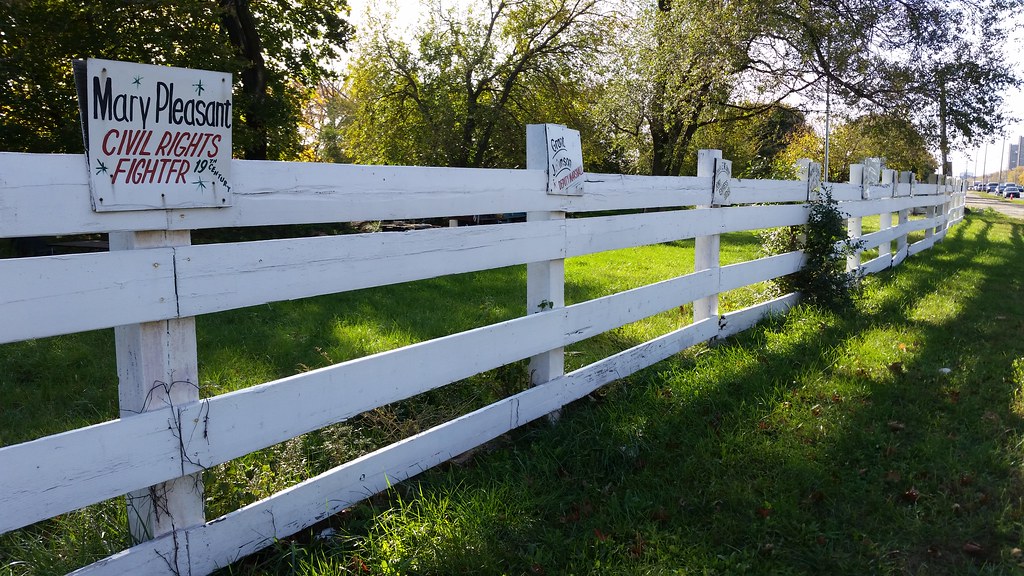
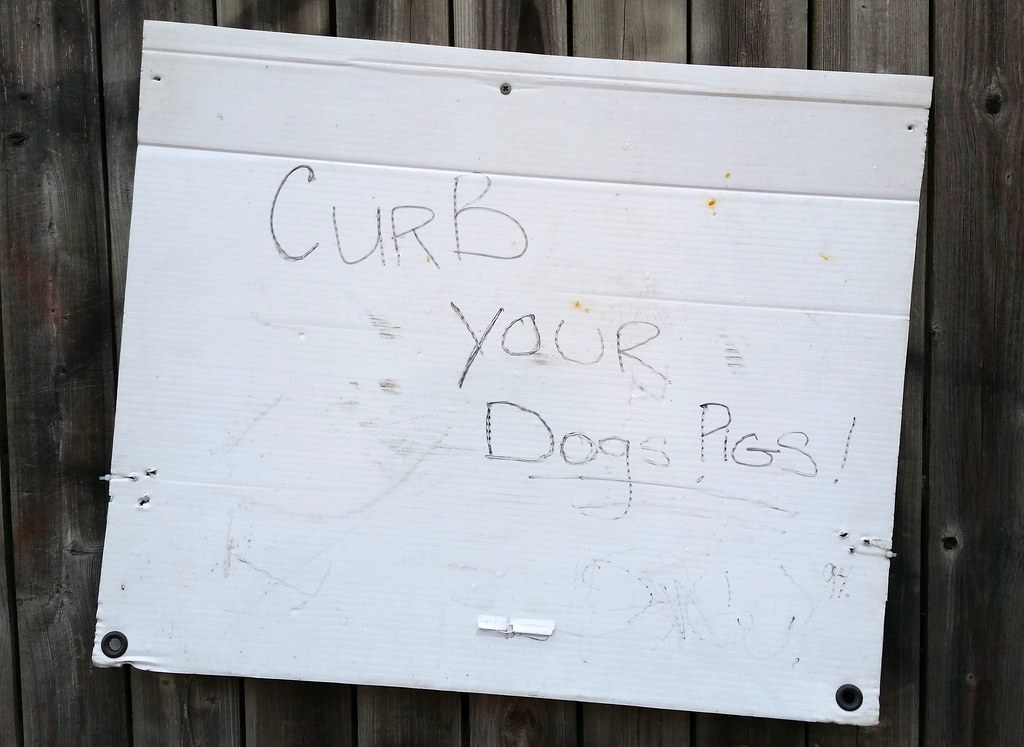
The home of the Federation of Black Cowboys is located at the intersection of two high-traffic urban thoroughfares: Conduit Avenue and Linden Boulevard. But the place manages to maintain some rustic charm nonetheless. In keeping with the federation's goal of shining a light on the forgotten history of the black cowboy, this wooden pasture fence running along the edge of the property features the names of many notable black figures from the Old West (as well as a couple who weren't black and a few from more recent times).
The names found on the fence are: Mary (Ellen) Pleasant, Grant Johnson, Frank E. Webner, Marvel Rogers, Isaiah Mays, George Goldsby, Bud Ledbetter, Bass Reeves, Mary Fields, Nat Love, the Buffalo Soldiers, James Beckwourth, Fred Whitfield, and Ben "Tex" Miller.

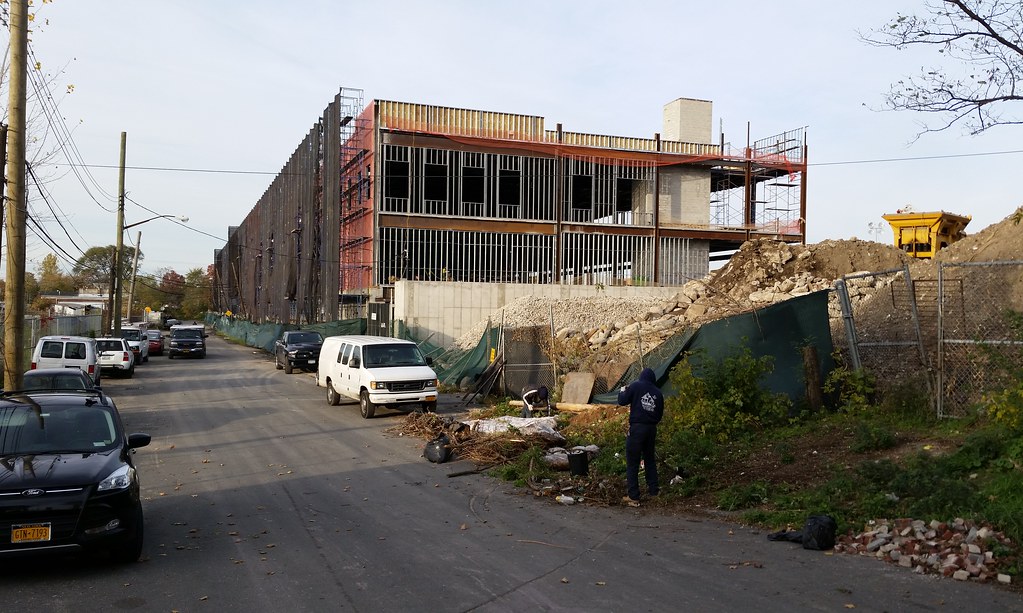
This enormous structure — presumably future retail space — is one of three buildings that have recently taken shape on the former site of the long-stalled Cobblestone Estates development at the edge of the desolate little neighborhood known as "the Hole". When we were last in the area in February 2013, there was nothing to be seen here but mounds of rubble.
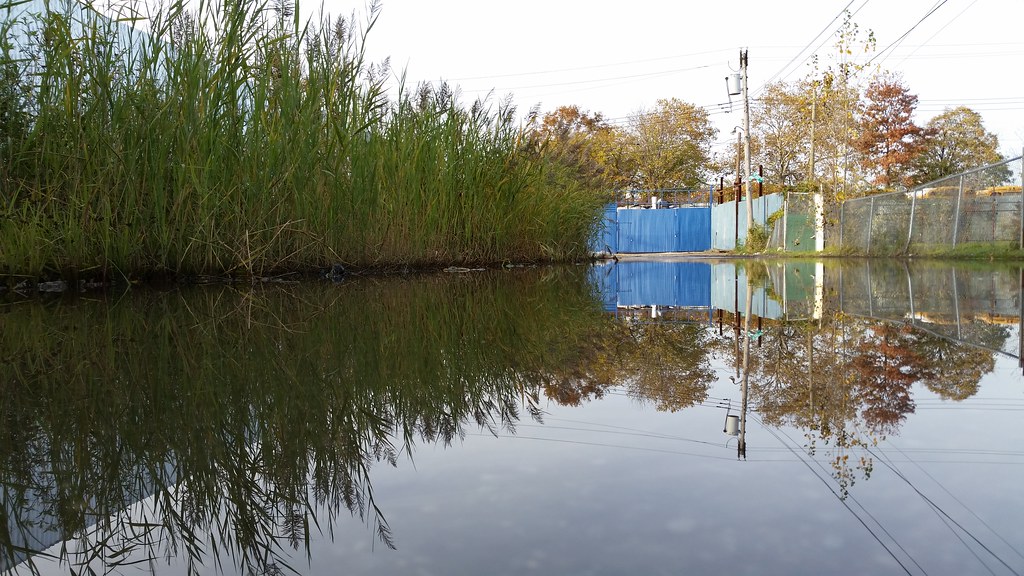
A visit to the strange, sewerless world of the Hole generally involves navigating multiple stretches of flooded roadway. Fortunately, in this case, there was a raised area on the left side of the street that I was able to walk along.


With the help of a little paint, this presumably pineapple-inspired gatepost ornament has transformed into something more reminiscent of a strawberry.

This firehouse is the former site of 9/11 memorial #121. I wonder how many other memorials have disappeared in the time since I saw them.
As suggested by the "B.F.D." over the garage door, FDNY Engine Company 236 is a big fuc— I mean, was originally part of the Brooklyn Fire Department. It began its life as BFD Engine Company 36 back in 1895, when Brooklyn was still an independent city and had its own fire department.
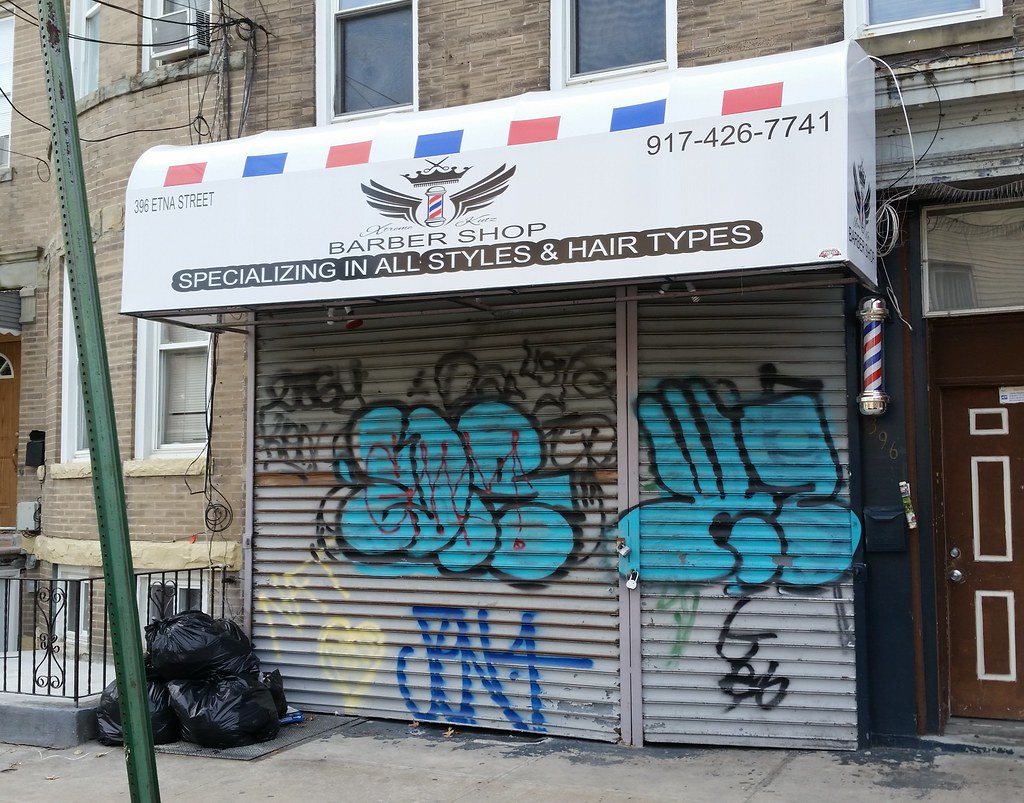
Xtreme Kutz
(This was originally Barberz #104, but I renumbered it to fill in the gap created when I downgraded the former Barberz #20.)
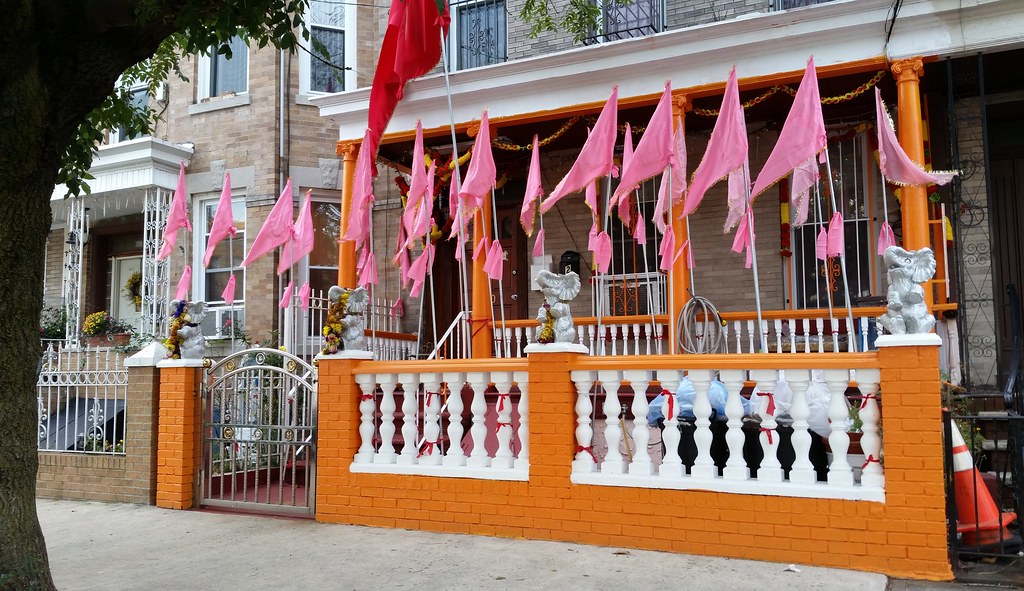
A guy who lives here told me they decorate the house for each Hindu holiday. He said the most recent one was about a week ago and involved bathing at the beach. Kartik Poornima?
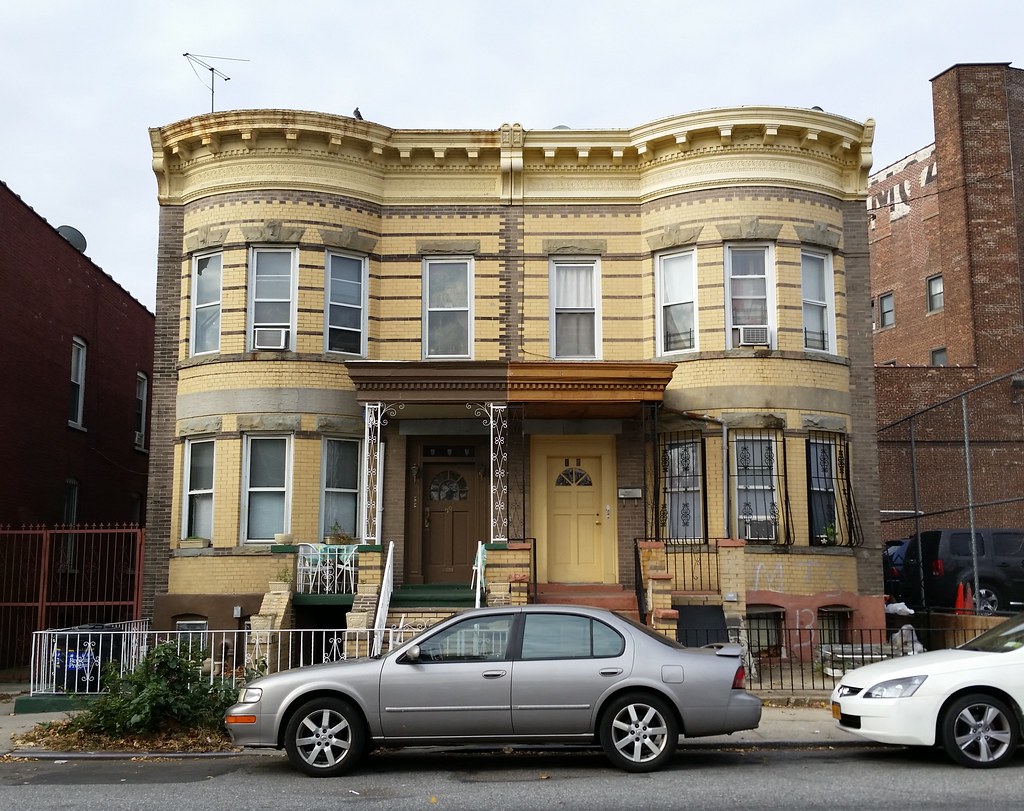
Highland Place seems like a pretty straightforward name for a street that serves as a continuation of Highland Boulevard as it heads south from Highland Park and the high land of the Harbor Hill Moraine. But the way in which Highland Place acquired its rather boring name is actually quite interesting.
During and shortly after America's involvement in World War I, anti-German sentiment in the country reached a fever pitch, stoked by US government propaganda ("DESTROY THIS MAD BRUTE", for example). This hostility manifested itself in many ways, some violent and some simply ridiculous.
Sauerkraut consumption plummeted precipitously, "owing to the prejudice that had developed against the use of a food of such unmitigated German origin". In a move that recalls the freedom fries fiasco of 2003, a delegation of vegetable dealers petitioned the Federal Food Board in April of 1918 to change the name of sauerkraut to something like "liberty cabbage" or "pickled vegetable" in hopes of stimulating sales and preventing the "immense quantities" already produced from going to waste. The idea caught on in at least some quarters: I've found several grocery store newspaper ads from that era that mention liberty cabbage. The name must have been quite familiar to customers, because the ads don't even bother to explain that it's another term for sauerkraut.
(A couple of weeks after the war ended, American soldiers in Belgium discovered many tons of sauerkraut at an abandoned German supply depot. Along with the other food found there, the sauerkraut was taken by the Army and served to the troops for the next however-many-meals-it-takes-to-eat-that-much-liberty-cabbage. The Brooklyn Daily Eagle remarked: "At Arlon, Belgium, five carloads of sauerkraut were first converted into 'Liberty cabbage' and then converted into Liberty brawn and muscle without delay. Prejudices of the palate are easily overcome.")
Sauerkraut wasn't the only German-sounding thing to get a new wartime name. Hamburgers were rebranded "liberty steaks", frankfurters became "liberty dogs", and German measles were dubbed "liberty measles". When I read about that last one (in an article that also claimed that "liberty pup" was used as a euphemism for "dachshund" and that Cincinnati banned pretzels from the free lunch counters of its saloons), I couldn't believe it. It sounded like an absurd urban legend being passed off as a fact. It's one thing to try to remove any hint of your enemy from the stuff you like — food and pets, for example — but why would you replace "German" with "liberty" in the name of a disease?
Well, it turns out it isn't an urban legend at all. It apparently originated with some soldiers at Camp Dix in New Jersey who were stricken with German measles in early 1918. They were tired of being mocked for having such an unpatriotic-sounding illness, so they started a movement to change its name. The new name caught on to some extent at least: "Liberty Measles at West Point" was the NY Times headline when an outbreak occurred at the military academy shortly after the Camp Dix story ran. I even found a fairly technical article published in the March 1920 bulletin of the NYC Department of Health that refers to the disease solely by the patriotic version of its name, with sentences like: "It serves to differentiate the beginning of measles rash from other rubeoliform eruptions—Liberty measles, variola, antitoxin rashes, vaccination rashes, drug eruptions, multiform erythema and similar eruptions."
NYC joined in on the fun by renaming a few streets that, "to the offense and humiliation of our citizens", bore German-inspired (or Austrian-inspired) appellations. In the Bronx, German Place became Hegney Place, named for Arthur Vincent Hegney, the first Bronx soldier to die in the war. In Brooklyn, Bremen Street became Stanwix Street, Vienna Avenue became Lorraine Avenue (which no longer exists; it was partially incorporated into Linden Boulevard, with other sections becoming Dewitt Avenue and Loring Avenue), Hamburg Avenue became Wilson Avenue, presumably named for Woodrow Wilson, the sitting president at the time (a rare instance of a street being named for a living person), and — finally getting back to the starting point of this whole discussion — Dresden Street became Highland Place.
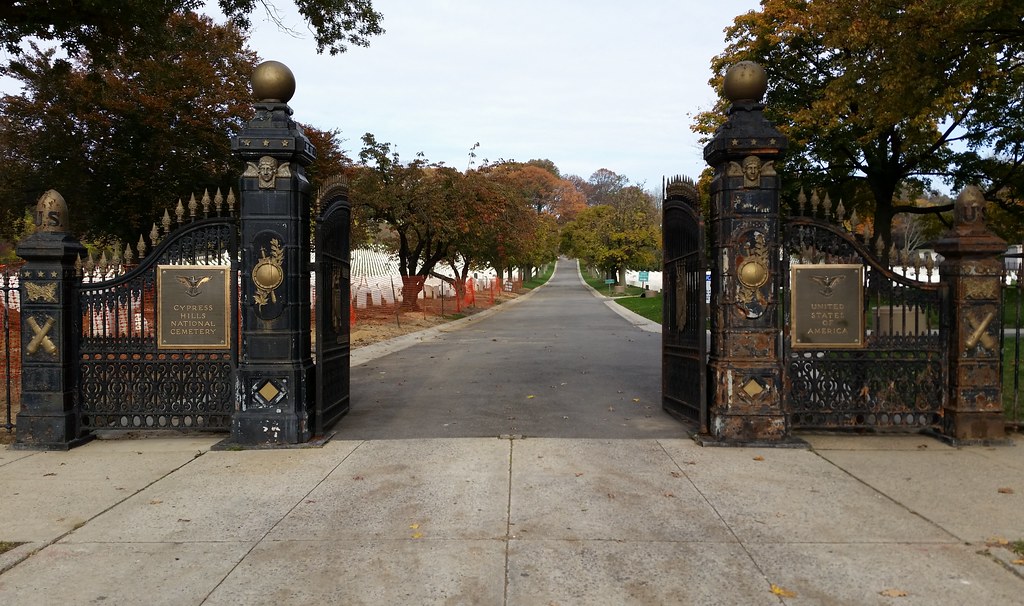
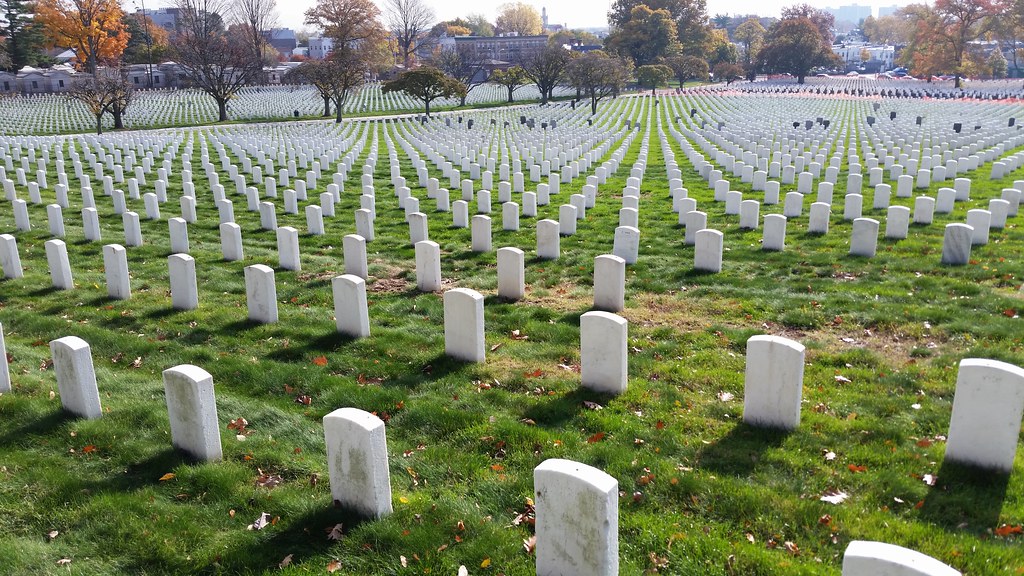
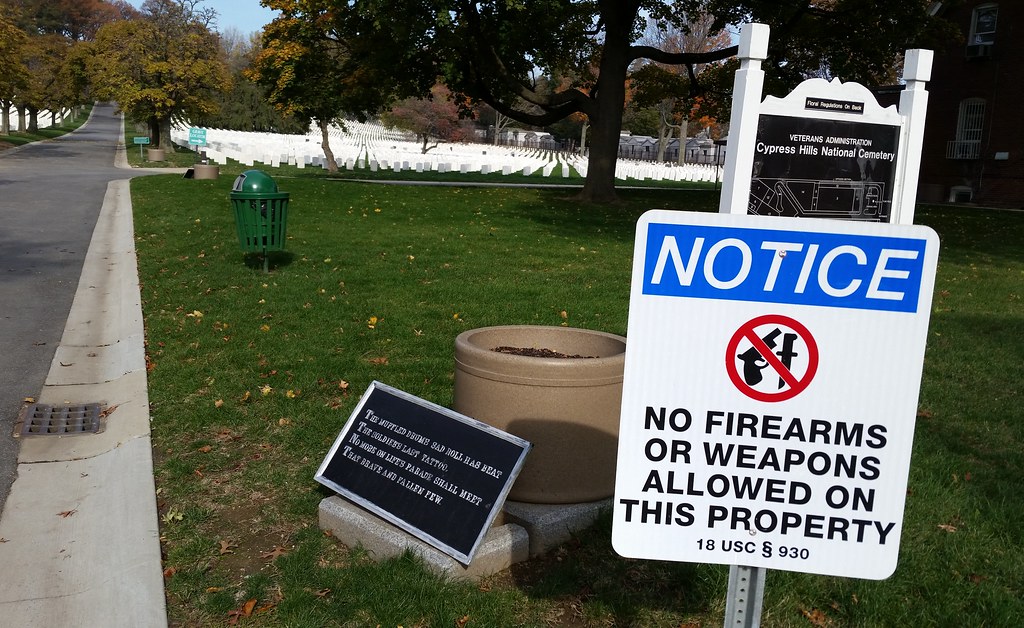
Cypress Hills National Cemetery, the only national cemetery in the five boroughs, was one of the 14 original national cemeteries established in 1862 in response to the mounting death toll of the Civil War. (There were no Civil War battles fought in New York, but there were plenty of soldiers dying in the area's military hospitals.) The oldest section of the cemetery is actually located inside a nearby private cemetery named, confusingly, Cypress Hills Cemetery. The main section, above, was purchased by the federal government in 1884. And a very small third section, also located inside Cypress Hills Cemetery, was added in 1941.

The muffled drum's sad roll has beat
The soldier's last tattoo;
No more on life's parade shall meet
That brave and fallen few.
On Fame's eternal camping-ground
Their silent tents are spread,
And Glory guards, with solemn round,
The bivouac of the dead.
That's the first stanza of Bivouac of the Dead (full text), an elegy written by Theodore O'Hara in remembrance of his fellow Kentuckians who died at the Battle of Buena Vista in the Mexican-American War. O'Hara later served as a Confederate colonel in the Civil War, but his poem resonated with veterans from both sides of the conflict and became a popular expression of loss in both the North and the South. Today, its verses can be found in national cemeteries all over the country, including here at Cypress Hills National Cemetery. (Another plaque near the entrance contains the first half of the first stanza.)
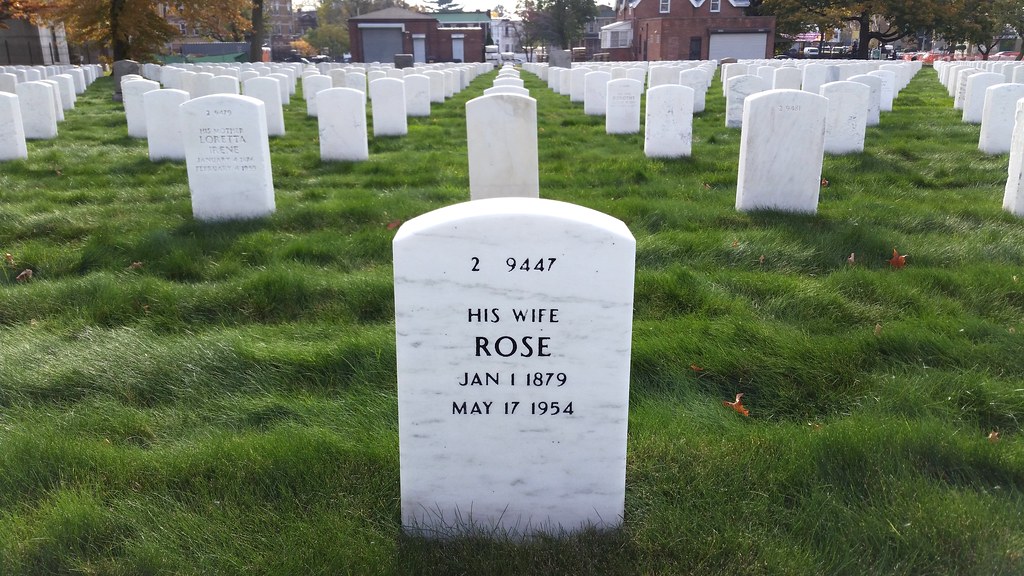
Here at Cypress Hills National Cemetery, you can occasionally spot the name of a military wife/mother on the back of the gravestone of her husband/son. I wasn't paying particularly close attention to such things, but I also noticed, in the officers' sections, several instances of a wife getting her own stone.
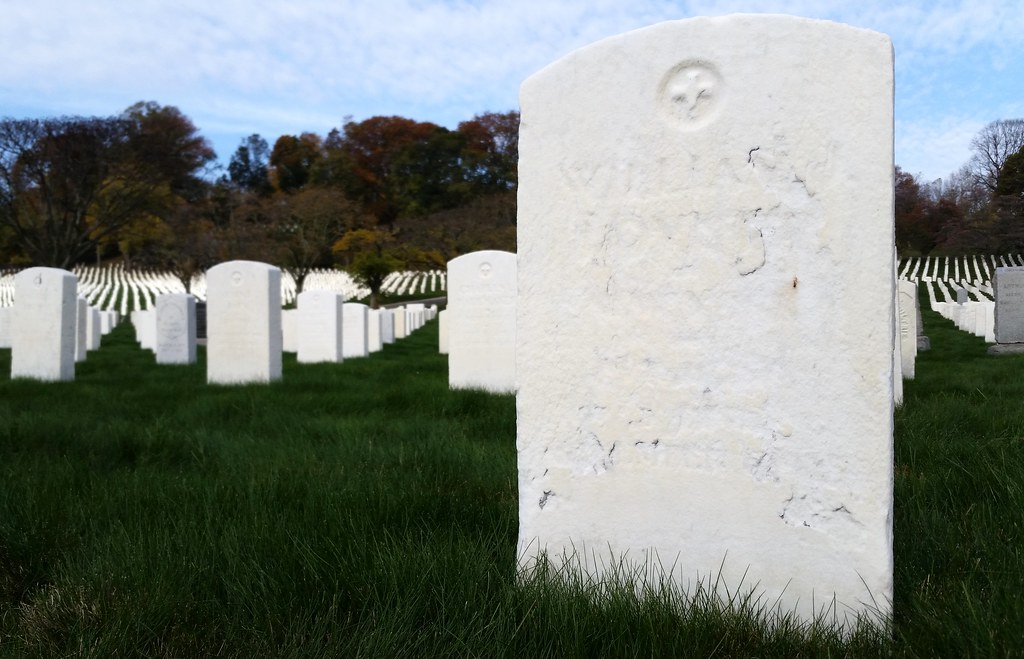
Notorious gangster/war hero.
Here's a colorful story about Lovett's wife Anna and the men in her life. Long story short: her mom shot and killed her dad, Wild Bill was murdered a few months after they wed, her one-legged gangster brother was killed a couple of years later, and then she married another gangster who was shot to death a few years after that. The deaths of her husband, brother, and husband represented the downfall and final collapse of the White Hand gang, the last Irish-American street gang to control the northern Brooklyn waterfront.

This cross is dedicated to the 25 French sailors who died while on duty in American waters during the flu pandemic in the fall of 1918 around the end of World War I. 22 of the sailors are buried here; the bodies of the other three were returned to France.

The plaque reads: "The markers in this memorial area honor veterans whose remains have not been recovered or identified, were buried at sea, donated to science, or cremated and the ashes scattered."
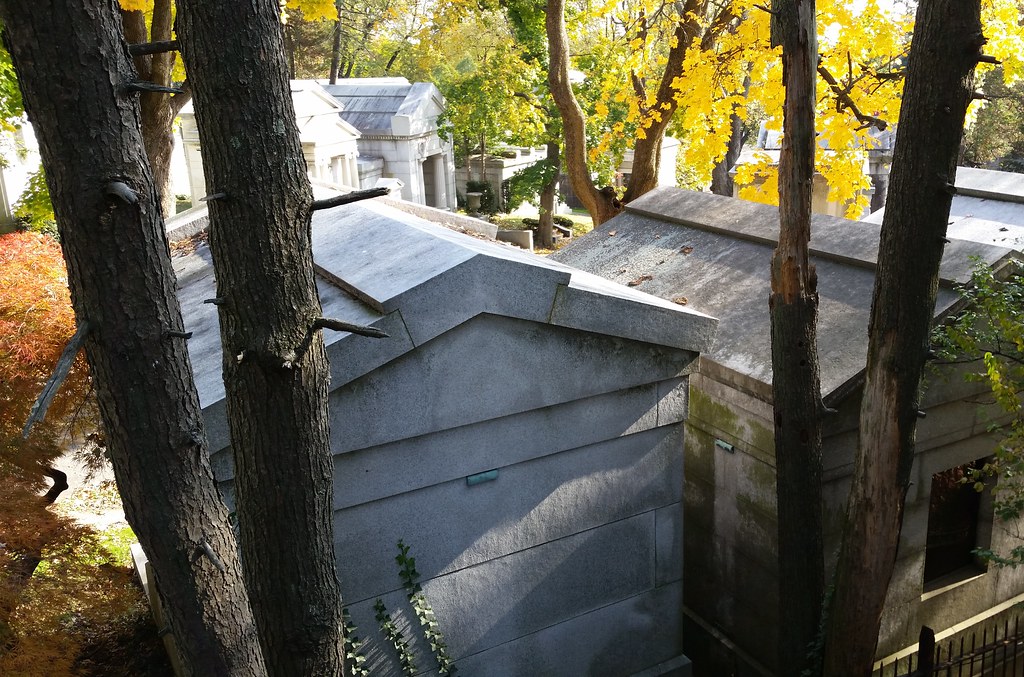
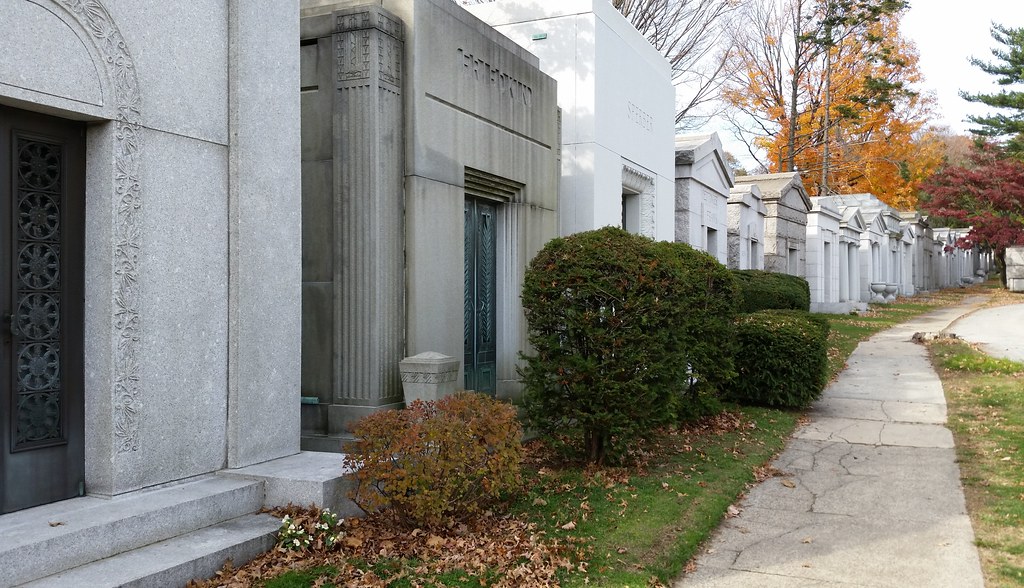
The enormous mausoleums of neighboring Salem Fields Cemetery stand in stark contrast to the uniform rows of modest headstones here at Cypress Hills National Cemetery.
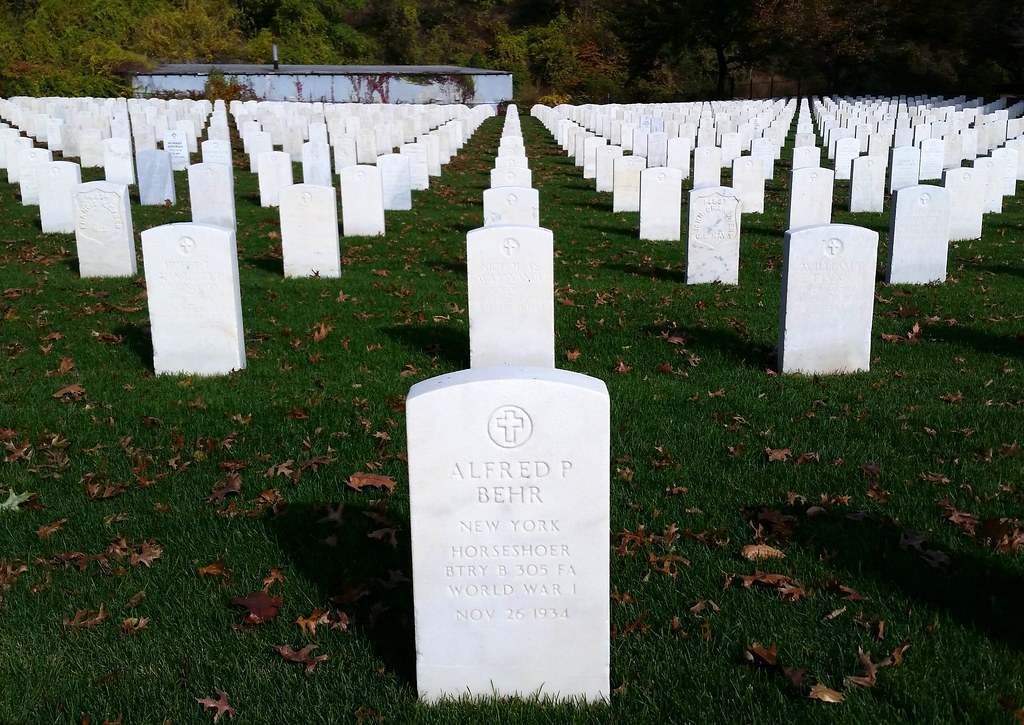
Horseshoer
I just realized that each half of that word contains the same letters.

It came right up to me and then jumped the fence into Salem Fields Cemetery.
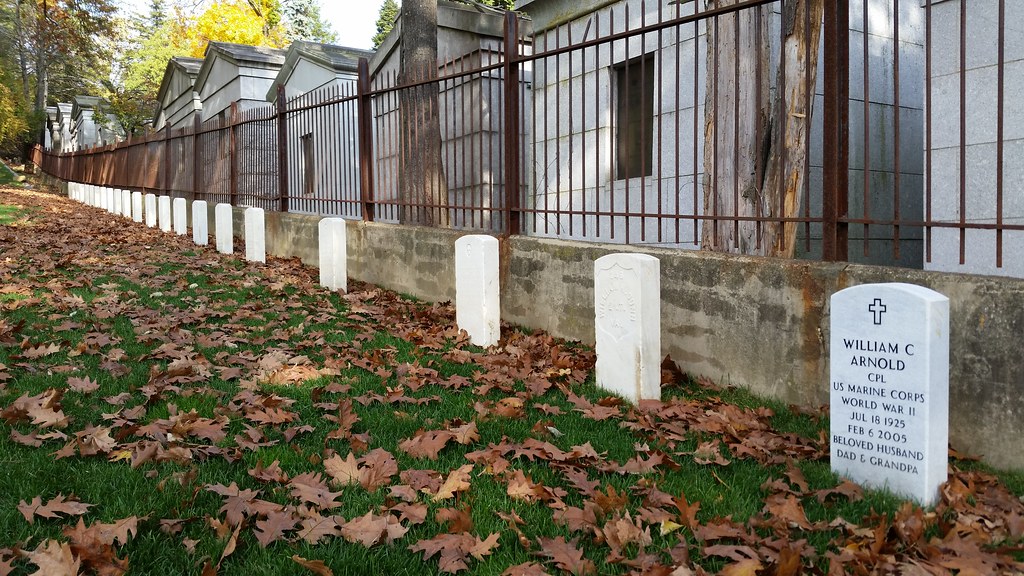
An officers' section of Cypress Hills National Cemetery and a line of mausoleums in Salem Fields Cemetery

There have only been 19 two-time recipients of the Medal of Honor (the country's highest military honor), and three of them are buried in Cypress Hills National Cemetery: Daniel Daly ("Come on, you sons of bitches, do you want to live forever?"), John Cooper, and Louis Williams (a.k.a. Ludwig Andreas Olsen).
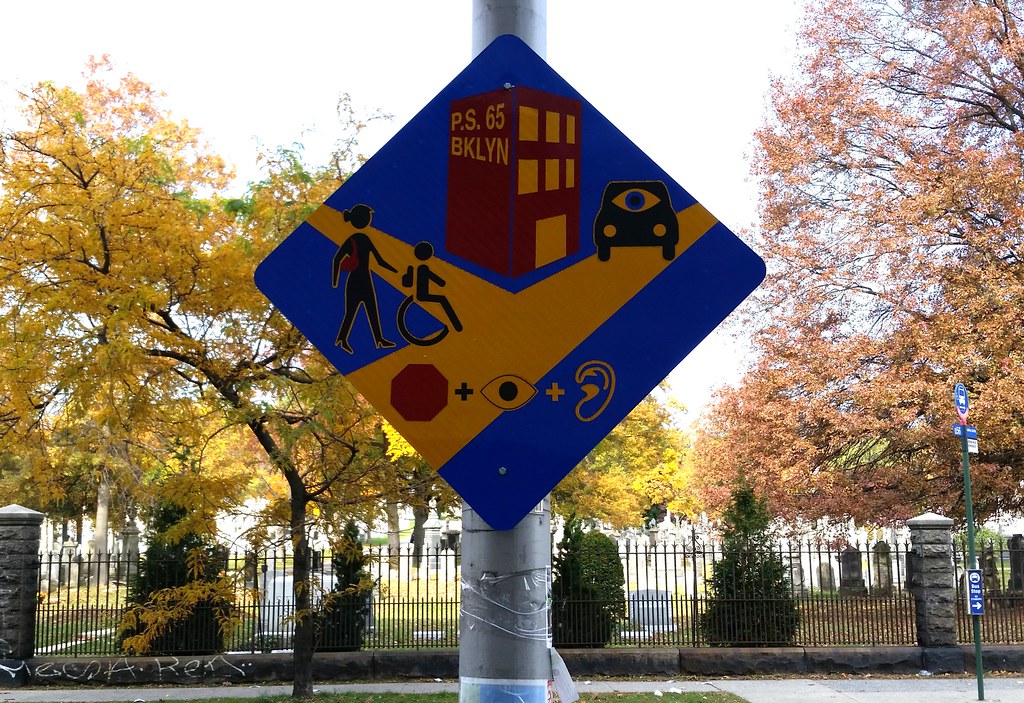
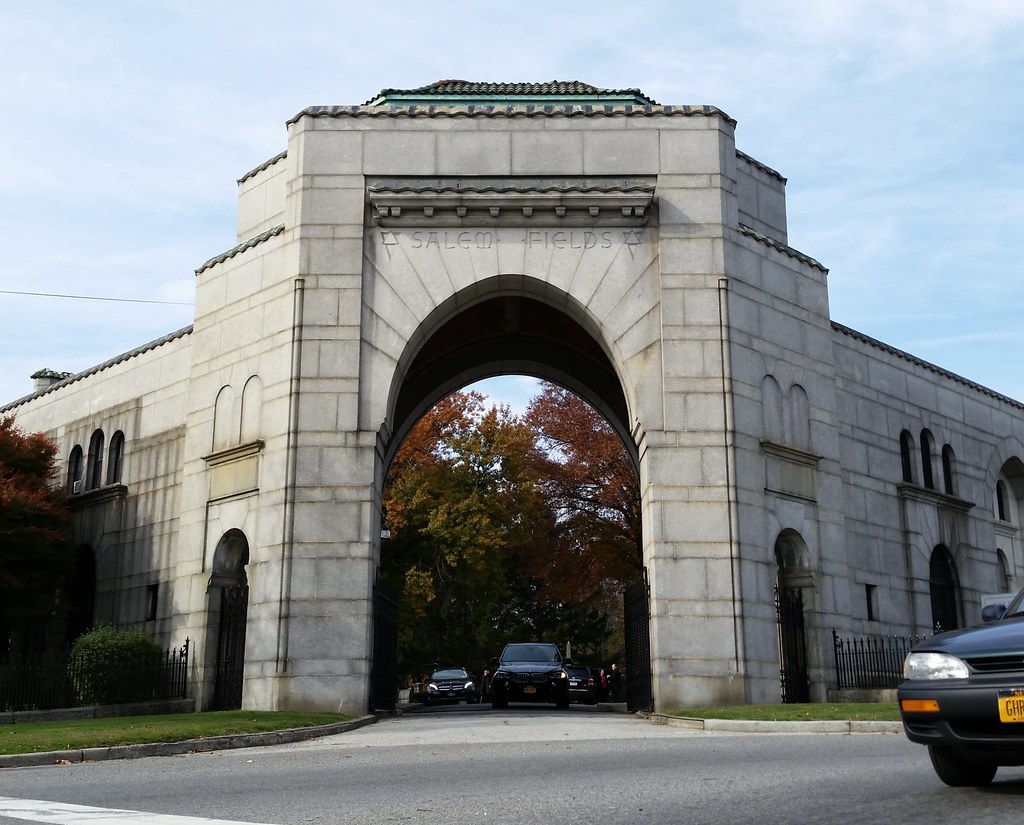
Salem Fields Cemetery, along with neighboring Cypress Hills National Cemetery, belongs to a huge cluster of 17 contiguous cemeteries located along the middle of the border between Brooklyn and Queens.
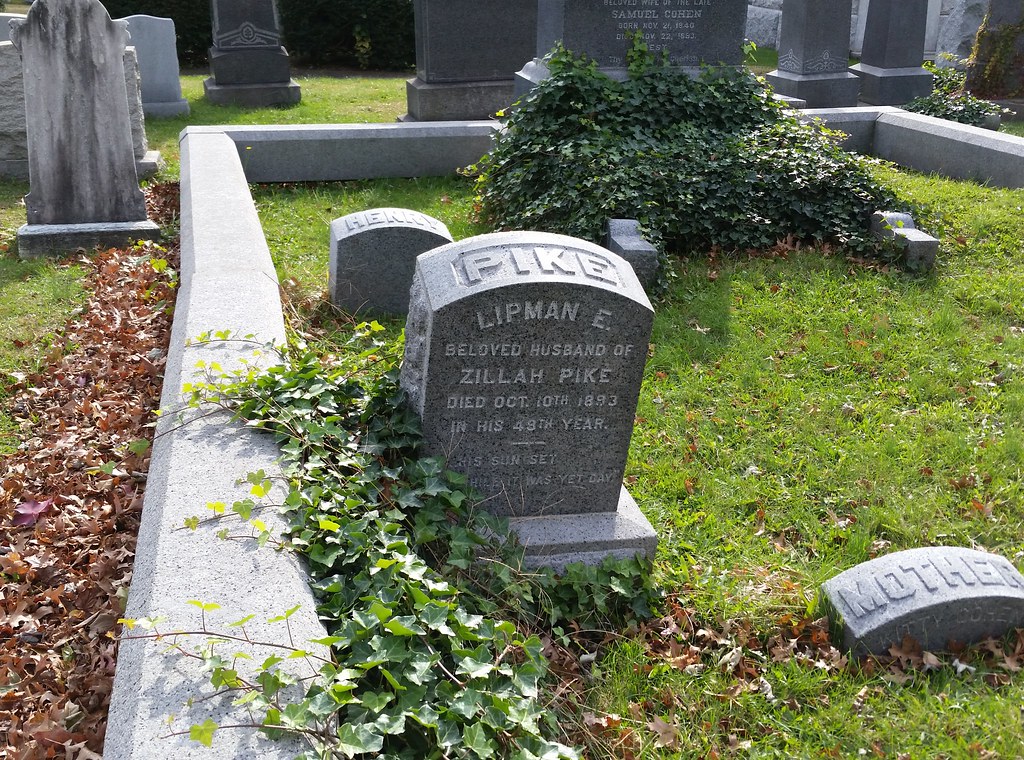
Lip Pike was the first Jewish baseball star. He led the National Association (the first professional baseball league and the predecessor of the National League) in home runs in its first three seasons, 1871-73.
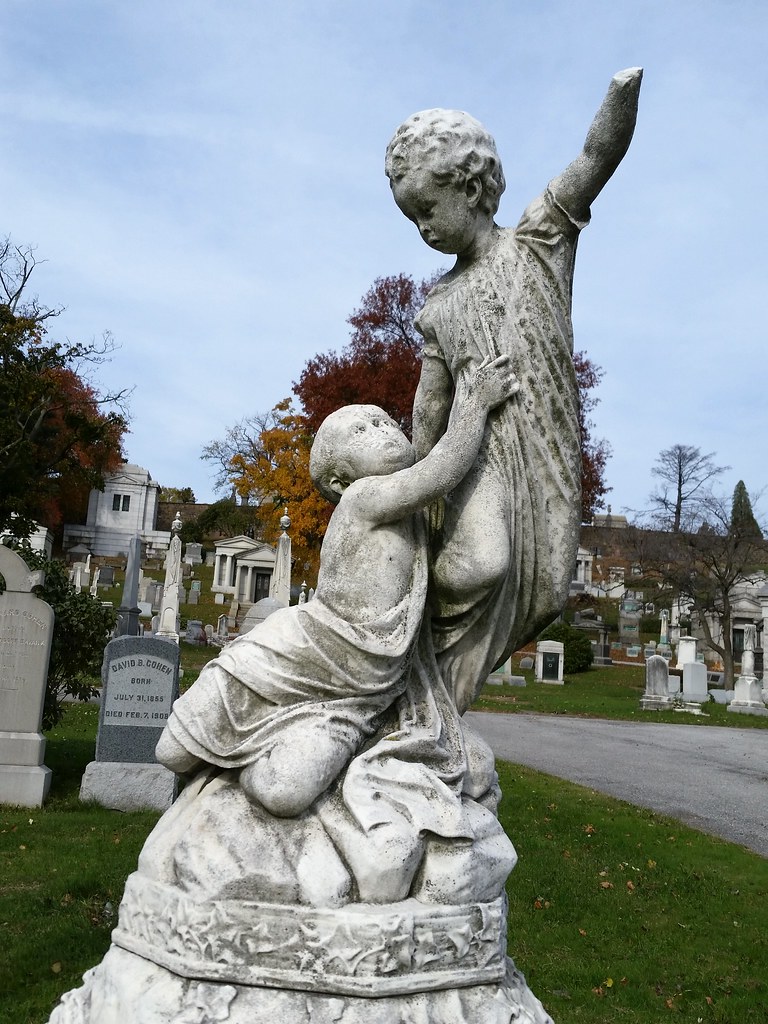
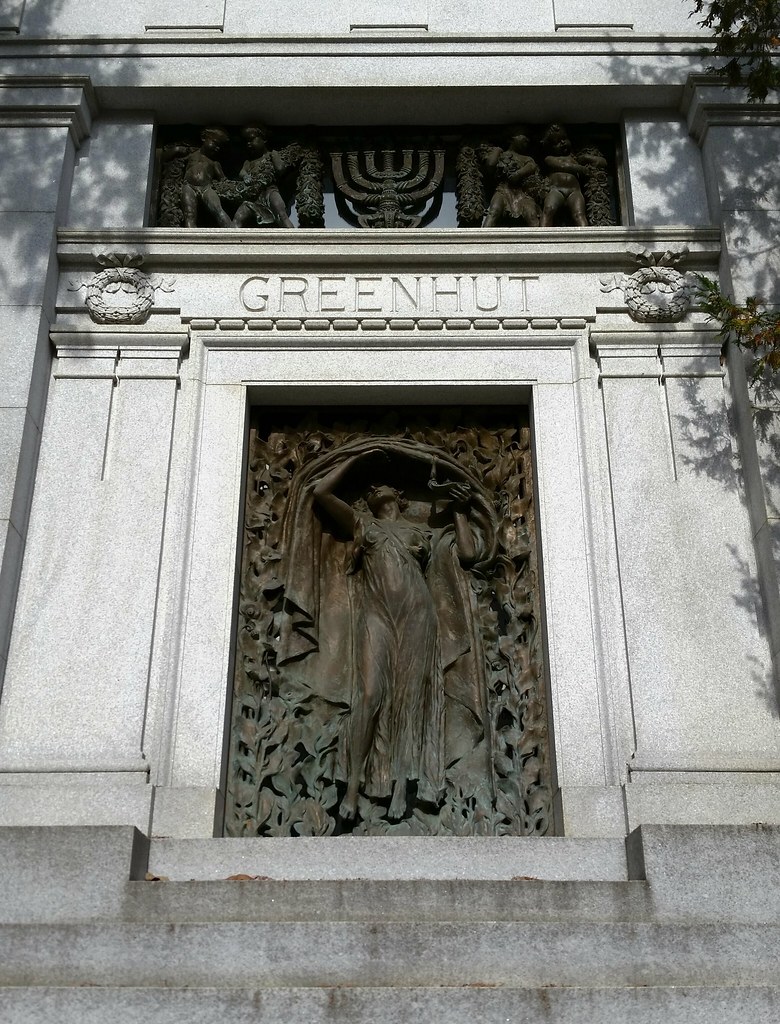
Austrian-born Joseph B. Greenhut was the second man in Chicago to enlist for service in the Civil War following President Lincoln's call for volunteers in 1861, and he rose to the rank of captain before resigning his commission in 1864. He became quite wealthy after the war, establishing the world's largest distillery in Peoria, Illinois (the "Whiskey Capital of the World") and later acquiring control of a major department store company in Manhattan. A 1912 history of Peoria attributed his success in business to his "marked ability to coordinate interests and to combine seemingly diverse factions into a harmonious whole. It is said that difficulties vanish before him as mist before the morning sun." In 1909, he purchased Shadow Lawn, a magnificent New Jersey estate (photos) that was used by President Wilson as his Summer White House (video) for the last two months of his 1916 re-election campaign.
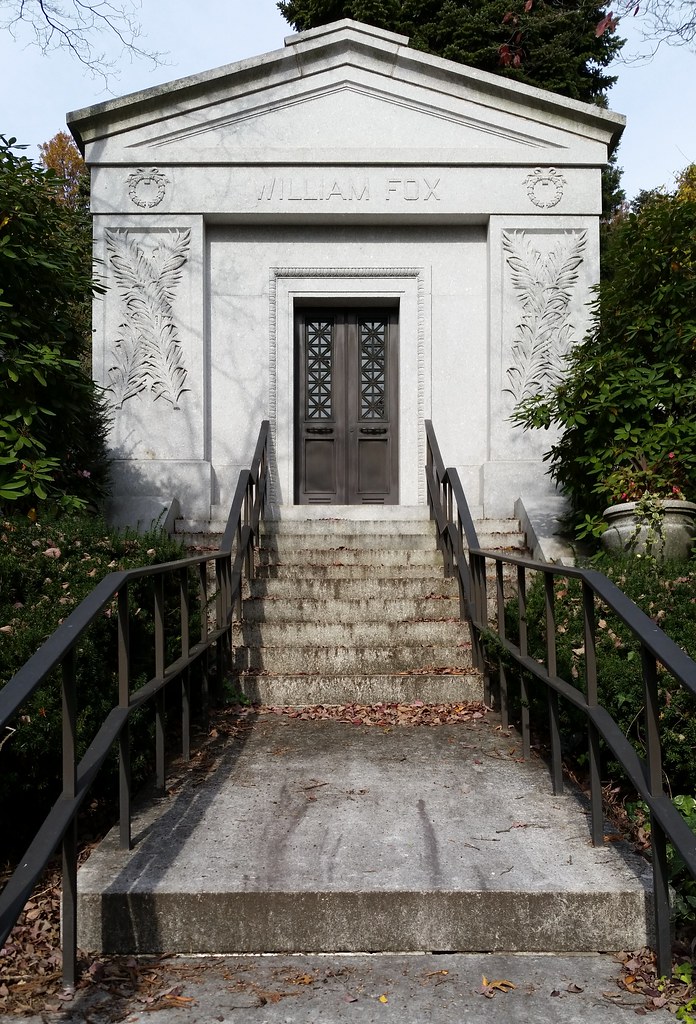
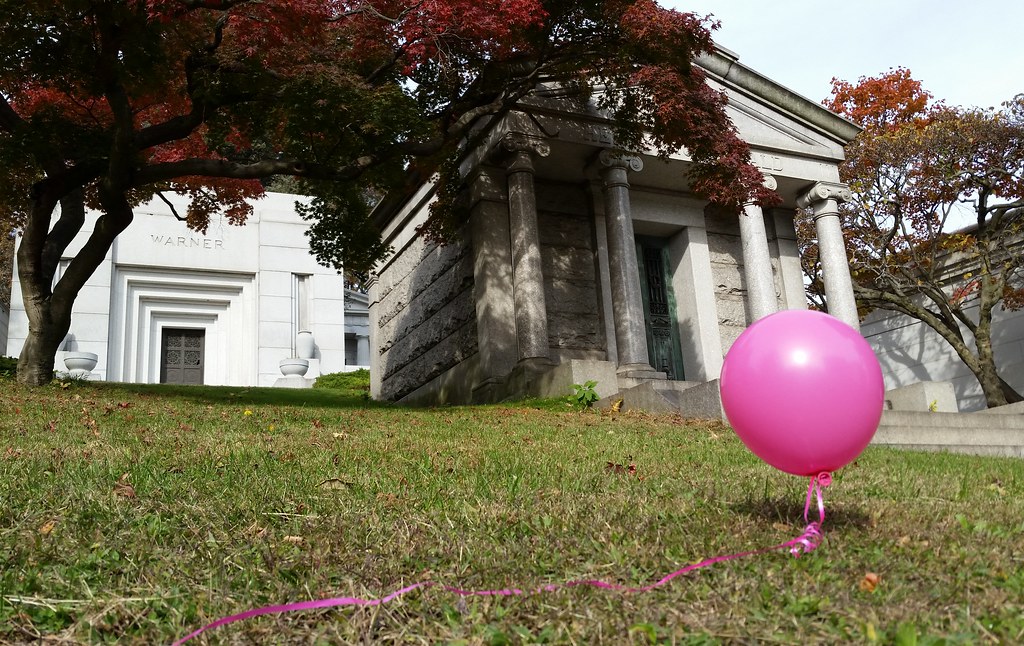
Here in mausoleum-packed Salem Fields Cemetery, cut off from the free-ranging air currents that afforded swift passage across the wide-open plains of Cypress Hills National Cemetery, our itinerant balloon friend has become rather sluggish.
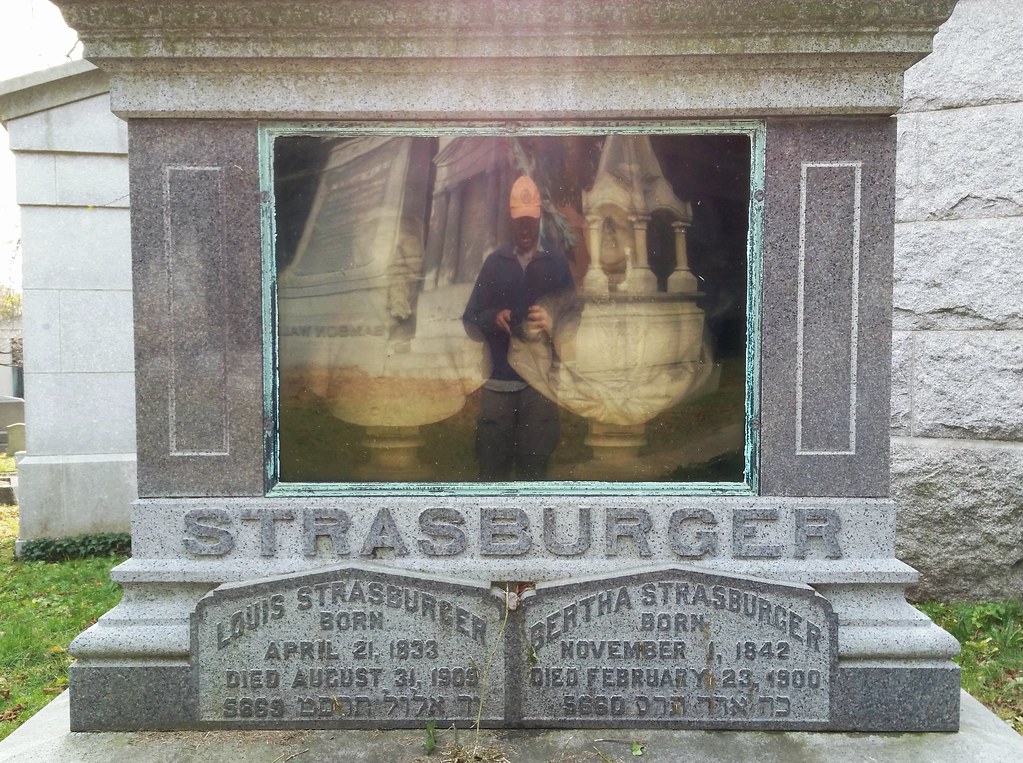
It's tough to see with the reflection, but here's a closer look at the encased busts of Louis and Bertha.
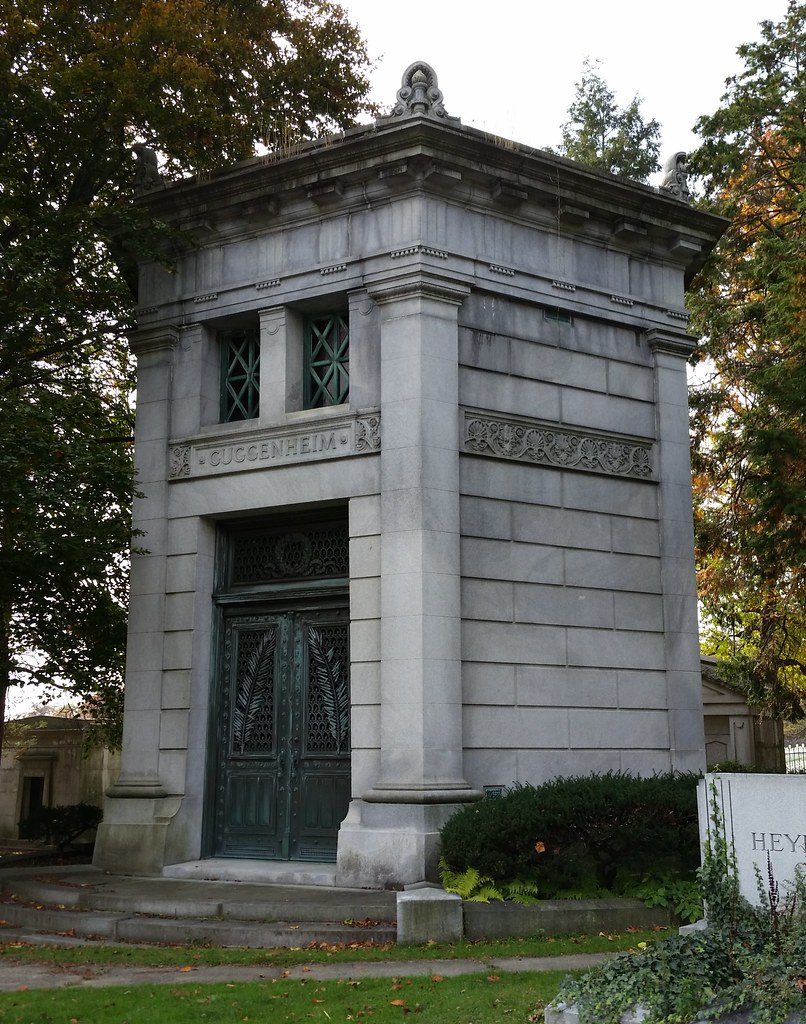
In 1847, Meyer Guggenheim was a 19-year-old immigrant peddler fresh off the boat from Switzerland. By the time he died in 1905, he had become the head of one of the wealthiest families in the United States, having built an enormously profitable mining and smelting empire that he passed down to his sons. (His facial hair, while not quite in the same league as Peter Cooper's or Henry MacCracken's, also deserves a mention here.) His descendants later turned to philanthropy and became prominent patrons of the arts and sciences, the famous spiraling Guggenheim Museum on Fifth Avenue being just one of the many outlets for their fortune.
The family's mausoleum here in Salem Fields Cemetery is often compared to the ancient Tower of the Winds in Athens, but a cursory visual comparison of the six-sided mausoleum and the eight-sided tower reveals that they have very little in common other than a similar general shape.
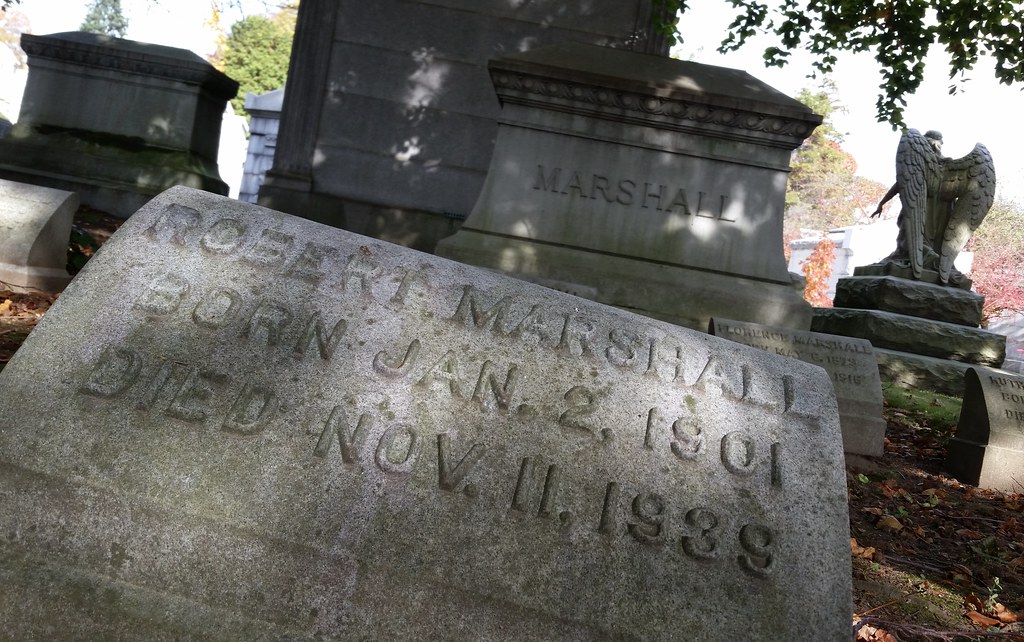
Bob Marshall was a dedicated wilderness advocate whom we first learned about back in Montana, where a sign hanging outside his namesake preserve tells of his famous answer to the question of how much wilderness America really needs: "How many Brahms symphonies do we need?"
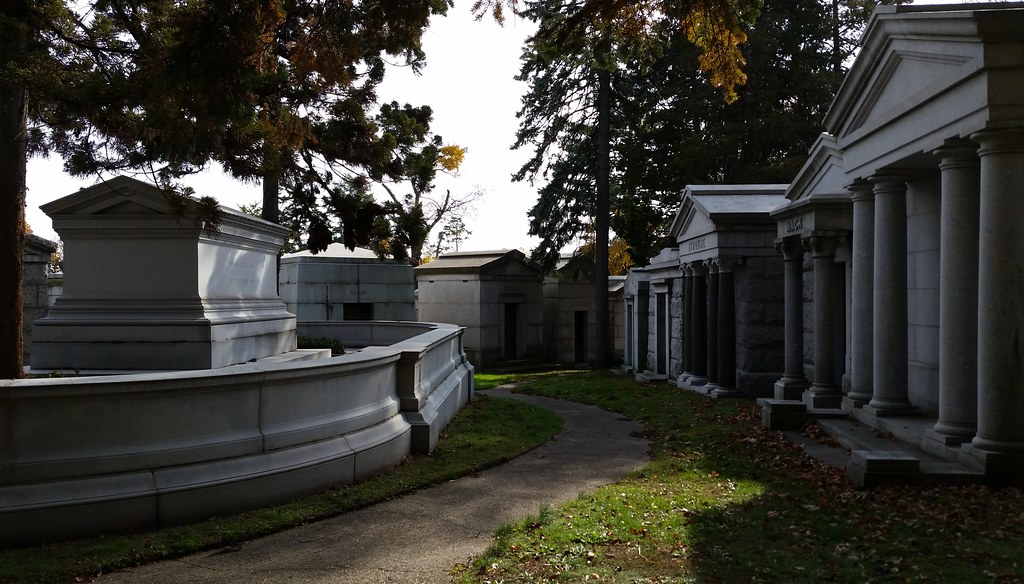
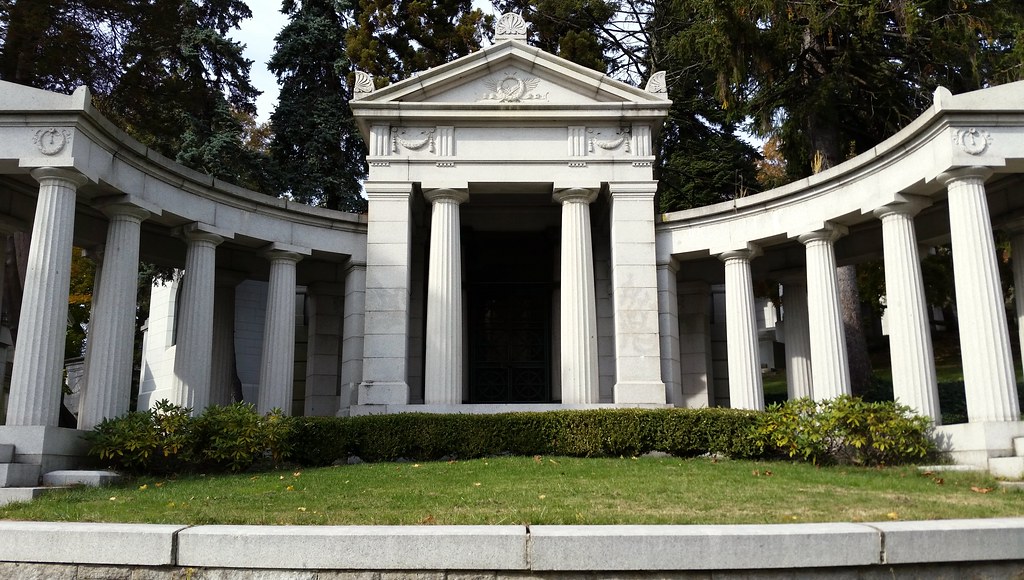
Among New York City's many grand cemeteries, Salem Fields is not particularly well known. But its western section is positively lousy with mausoleums — jam-packed to a degree I've never seen before.
At left, the tomb of Benjamin Altman, founder of the B. Altman & Co. department store and the charitable Altman Foundation, is reportedly a simplified version of the Alexander Sarcophagus (not to be confused with the tomb of Alexander the Great, despite what the previously linked article says).

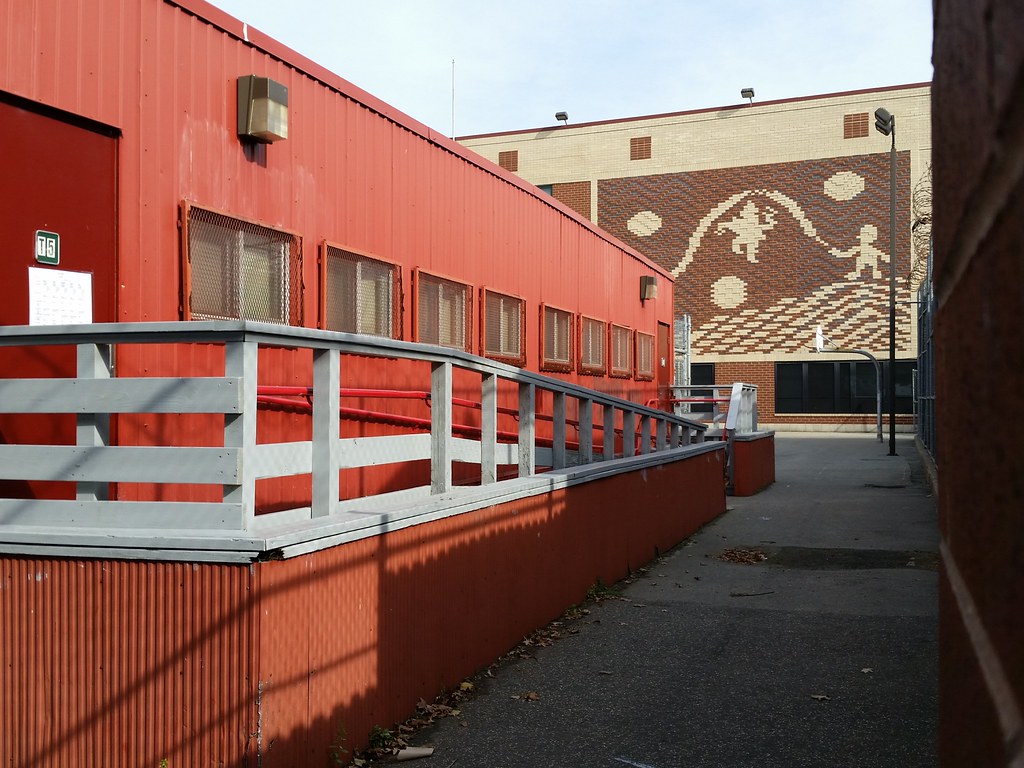
This oddball artwork can be found on the wall (or, rather, is part of the wall) of Brooklyn's PS 7. Here's a look at the left side of it.
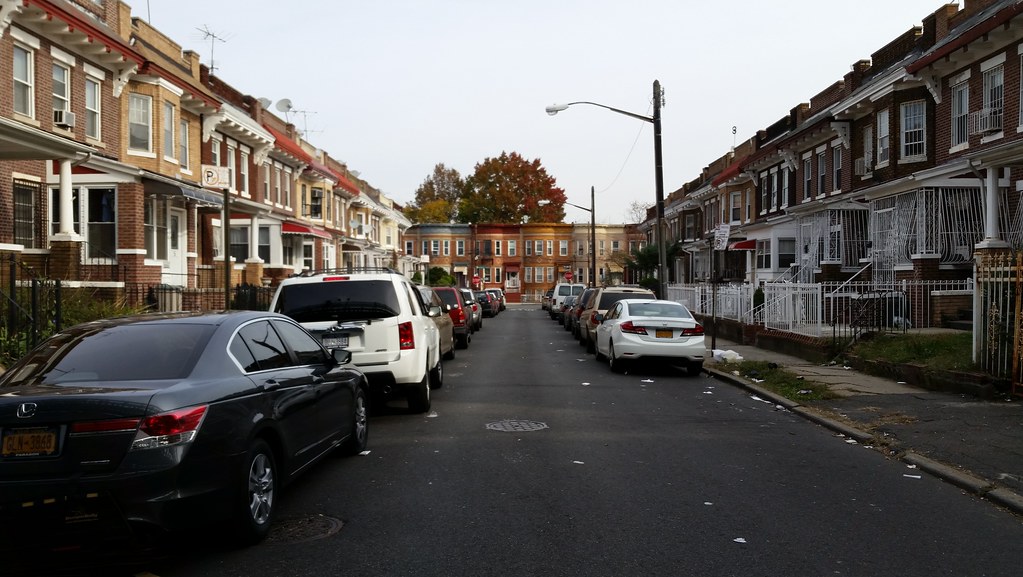
This block-long street and its neighbor to the north, Adler Place (originally called Adelphi Place), were built on the former site of Adelphi Oval, which existed from about 1907 to 1916 as the athletic field of the Adelphi Academy and Adelphi College.
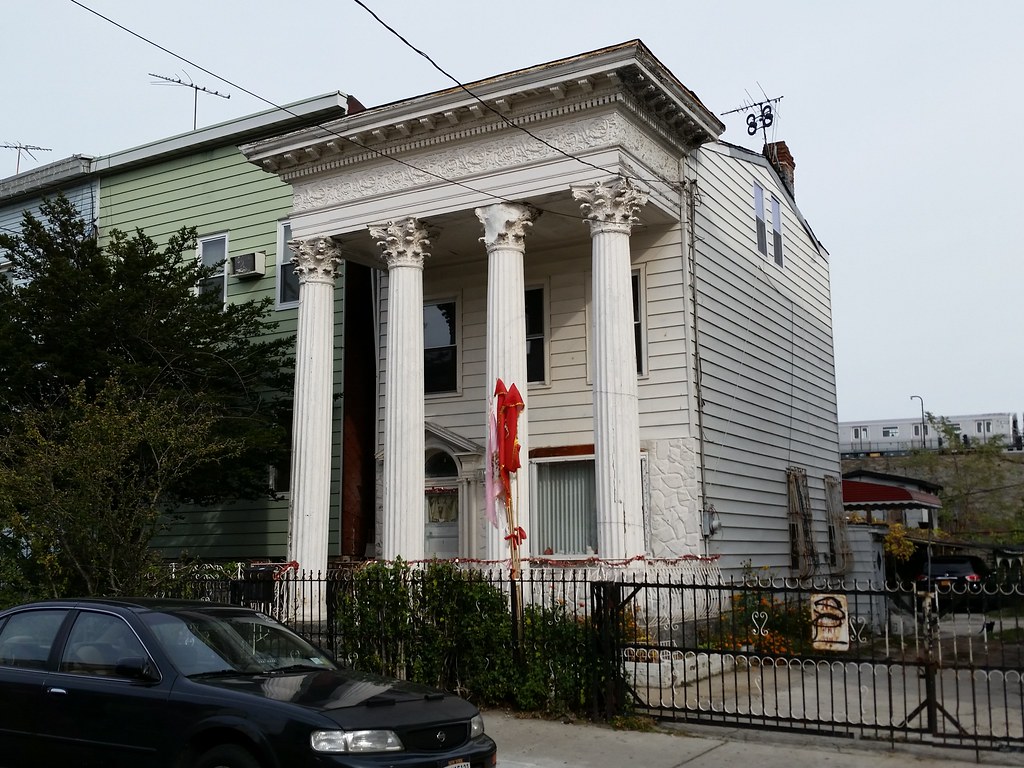
Rick Gomes of the East New York Project believes that this house at 107 Pine Street was built between 1886 and 1893, but that its columns were added at a later date, sometime before 1918, possibly by a carpenter who purchased the house in 1904. He also notes that there's a similarly unimposing house with almost identical columns tacked onto it located just over half a mile from here at 81 Essex Street.
Just across the street from 107 Pine is the old social/worship hall of Blessed Sacrament Parish, built in 1911-12. I wonder if the construction of its impressive columns had any influence on the aforementioned carpenter, or if his columns were already standing then.
In the background at right, you can see a J train on the Jamaica Line.