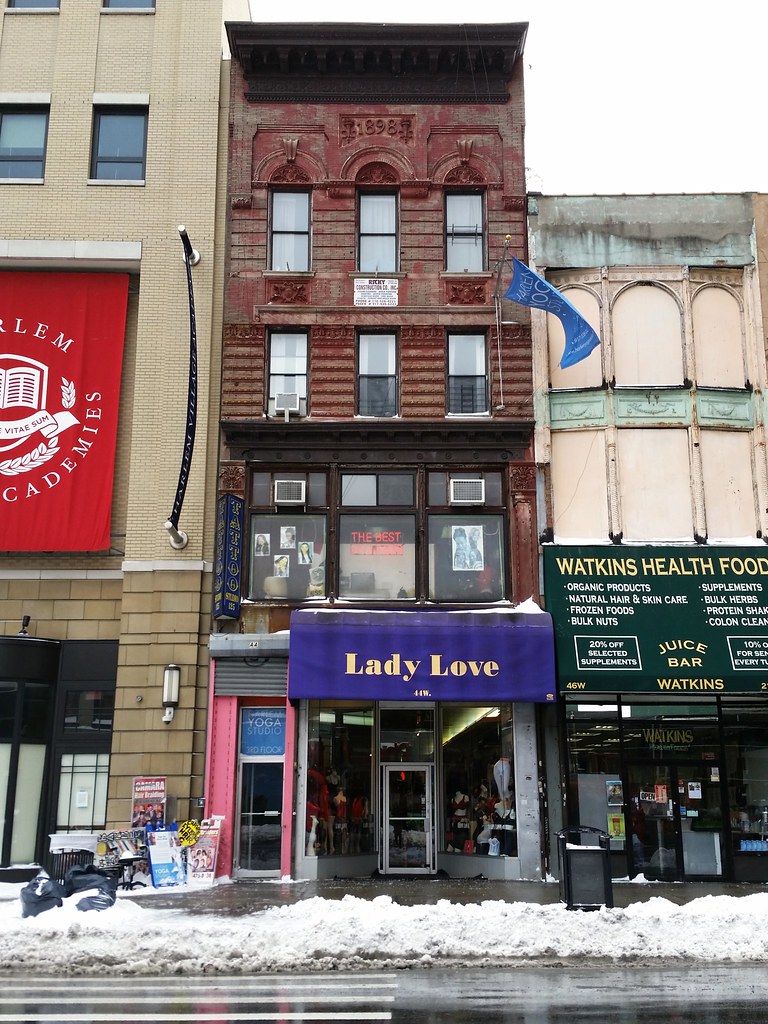
This is the relatively unimpressive aftermath of Winter Storm Juno, the "blizzard that wasn't" (in the city, at least). The predictions of the storm's fury were so dire — The Onion's headline was "NYC Mayor: 'Reconcile Yourselves With Your God, For All Will Perish In The Tempest' " — that, for the first time ever, the subway system was shut down because of (anticipated) snow.
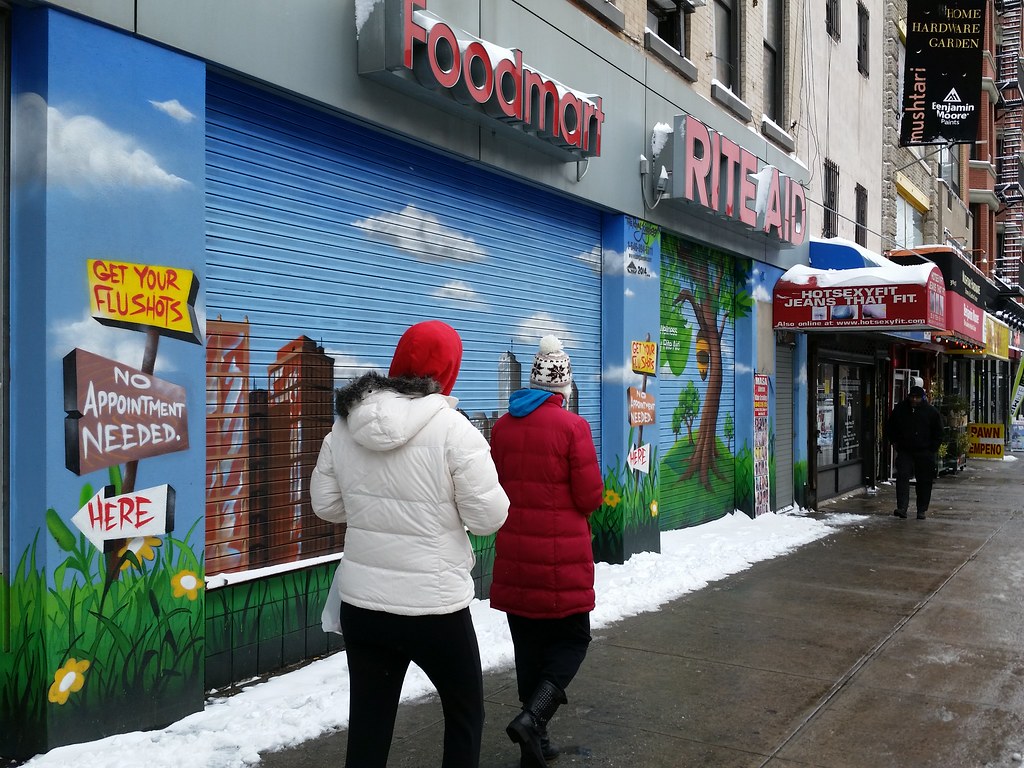
At this point, it's an established fact that the Royal Kingbee's territory has expanded well beyond the borders of the Bronx in the last couple of years, largely onto the walls of Rite Aids in Manhattan and Brooklyn. (He also established an early outpost at an East Village hair salon at least as far back as May 2009.) Here we have even more evidence of his growing pharmaceutical empire.
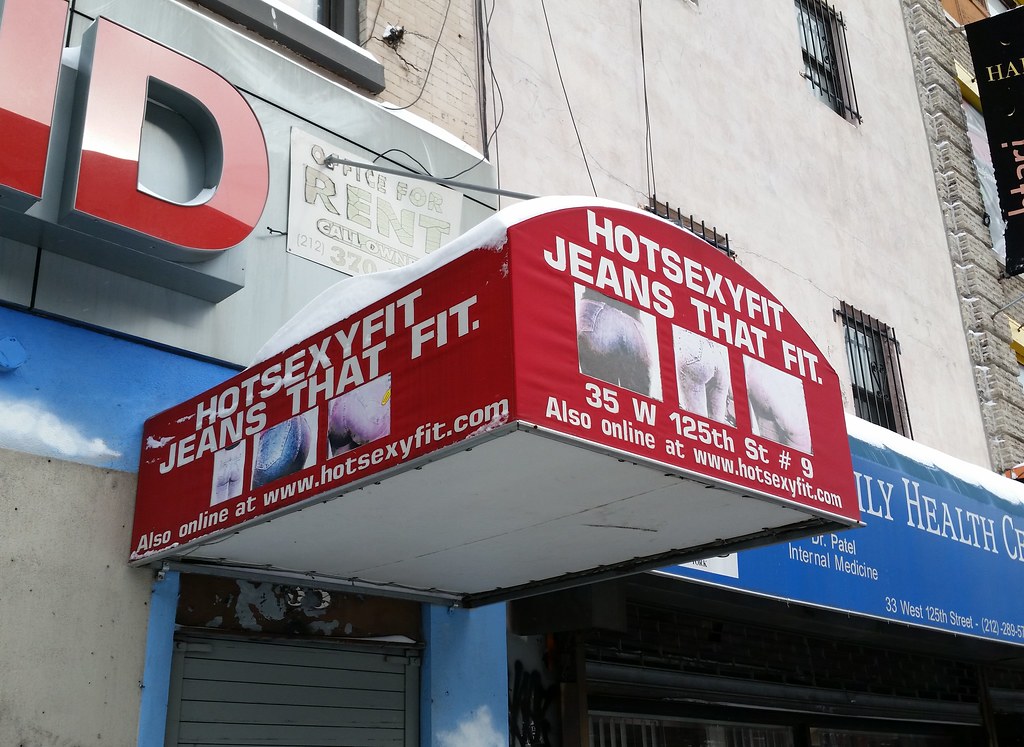
Faded tushies sharing space with the Rite Aid. Check out the video on their website for an insightful meditation on humanity's eternal question: "How does my butt look?"
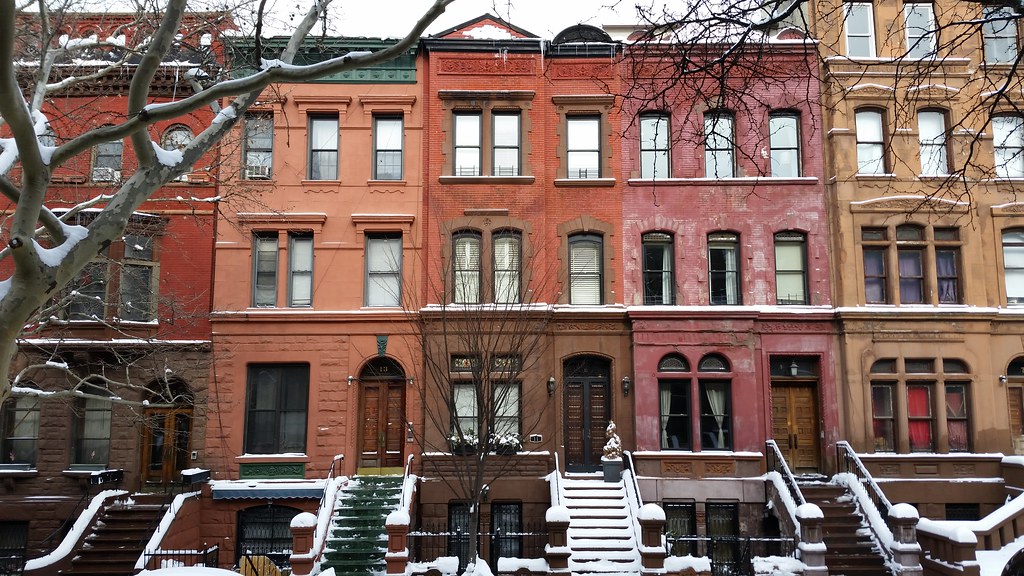
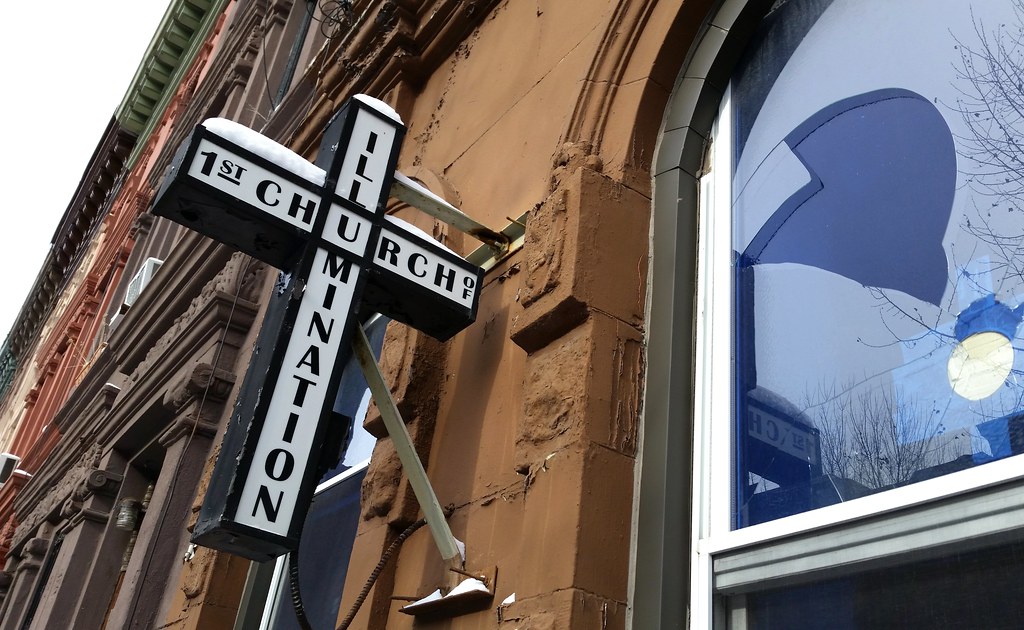
The First Church of Illumination "began in 1922 as a chapel for the Rosicrucians".
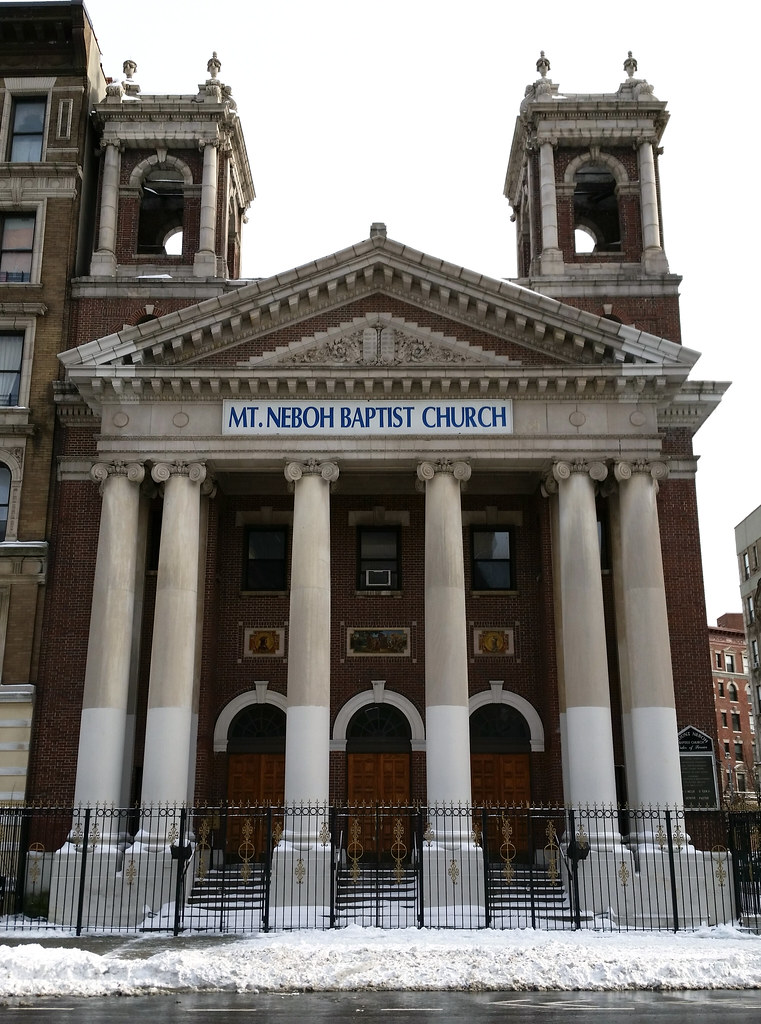
Mount Neboh Baptist Church, formerly the Roman Catholic Church of Our Lady of the Miraculous Medal and originally the synagogue of Congregation Ansche Chesed, is perhaps the only house of worship in the city to have served as a full-time home to Jews, Catholics, and Protestants.
(I would argue that the other church mentioned here as having served all three faiths, St. Ann's Armenian Catholic Cathedral, doesn't really count. For one thing, it no longer exists: its sanctuary was demolished in 2005, leaving only the facade standing. But even before that, the original sanctuary used by the Protestants and the Jews was itself demolished and replaced with a new one by the Catholics, so the three faiths never actually worshiped under the same roof.)
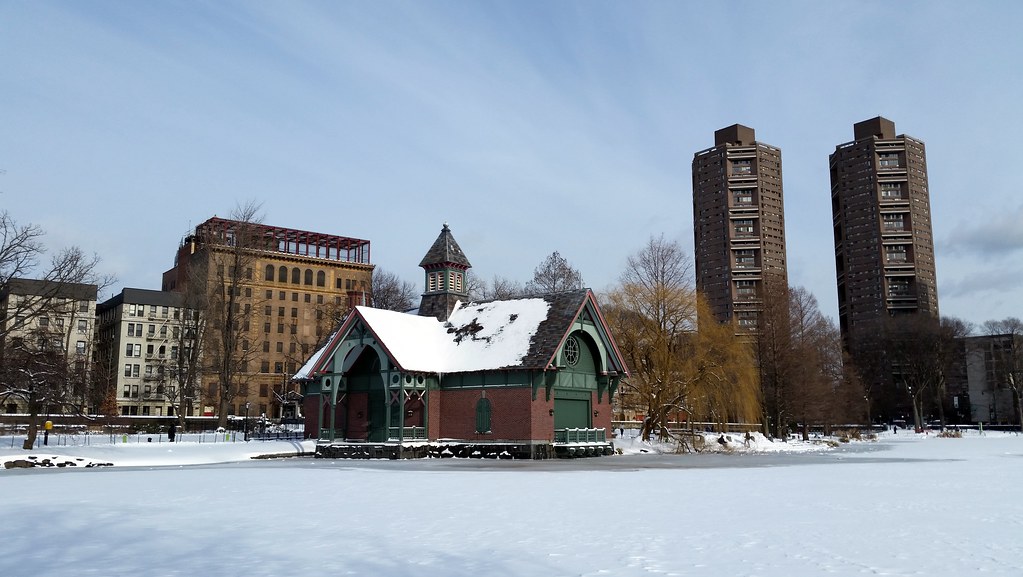
At center is the Charles A. Dana Discovery Center, Central Park's newest building, completed in 1993 here on the shore of the Harlem Meer. To its left is the Lincoln Correctional Facility and to its right are the twin towers of Schomburg Plaza.
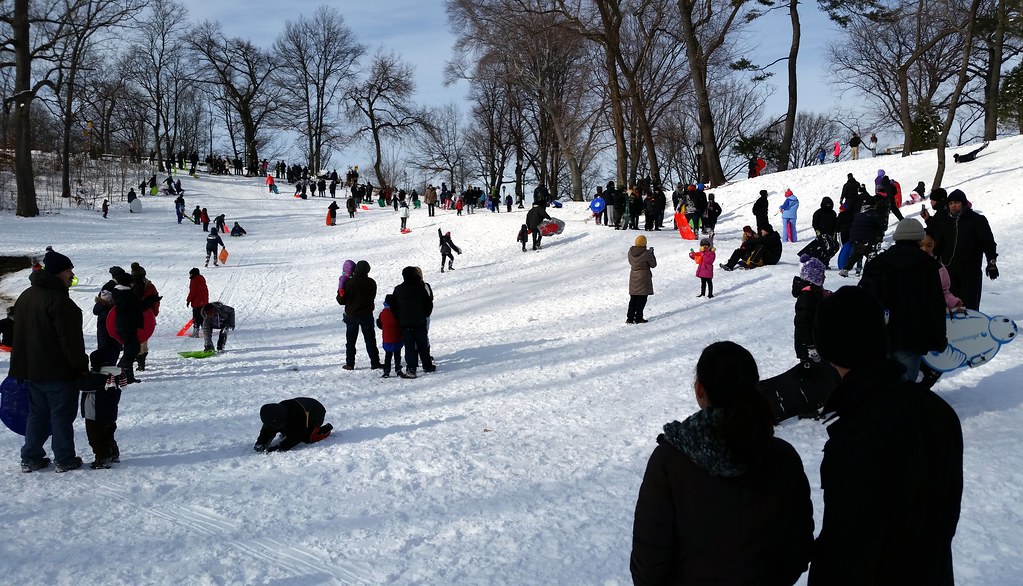
Thanks to the predicted apocalyptic wrath of Winter Storm Juno, schools were closed today and many people stayed home from work. When the storm turned out to be far less severe than expected, there were suddenly a lot of people with some rare weekday free time looking to take advantage of the season's first substantial snowfall. A sizable contingent of them flocked, sled in hand, to this spot in Central Park, just northwest of the Conservatory Garden. In addition to the crowd you see in the background of this shot, there were also groups gathered out of frame to the left and right, and kids were chaotically bombing downhill from all three directions, often inadvertently colliding in the center at surprisingly high speeds. No one seemed to mind getting clobbered though; I guess everyone was bundled up in enough layers to absorb most of the impact.
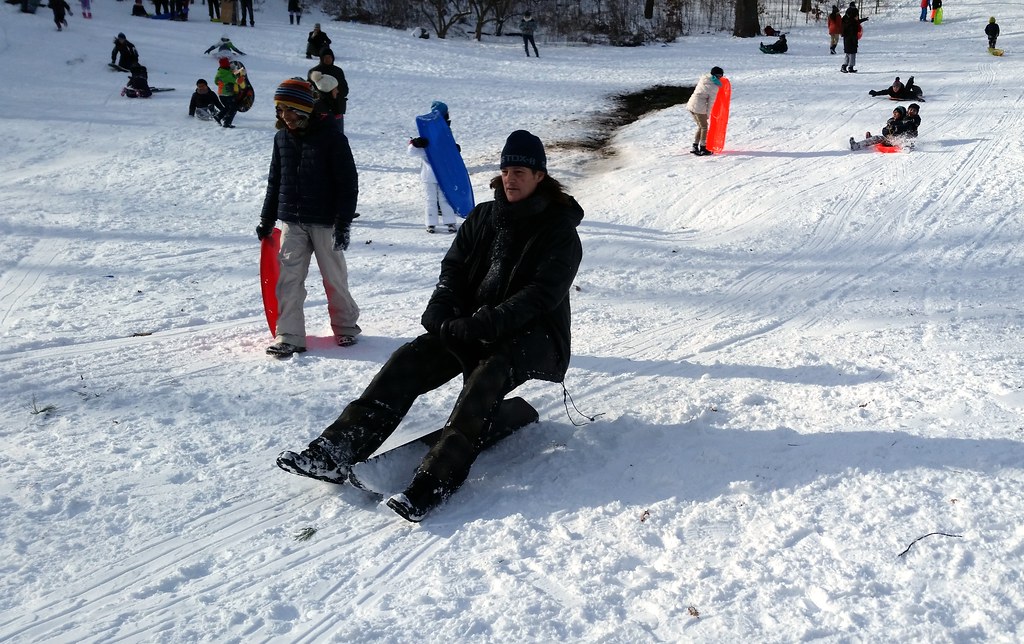
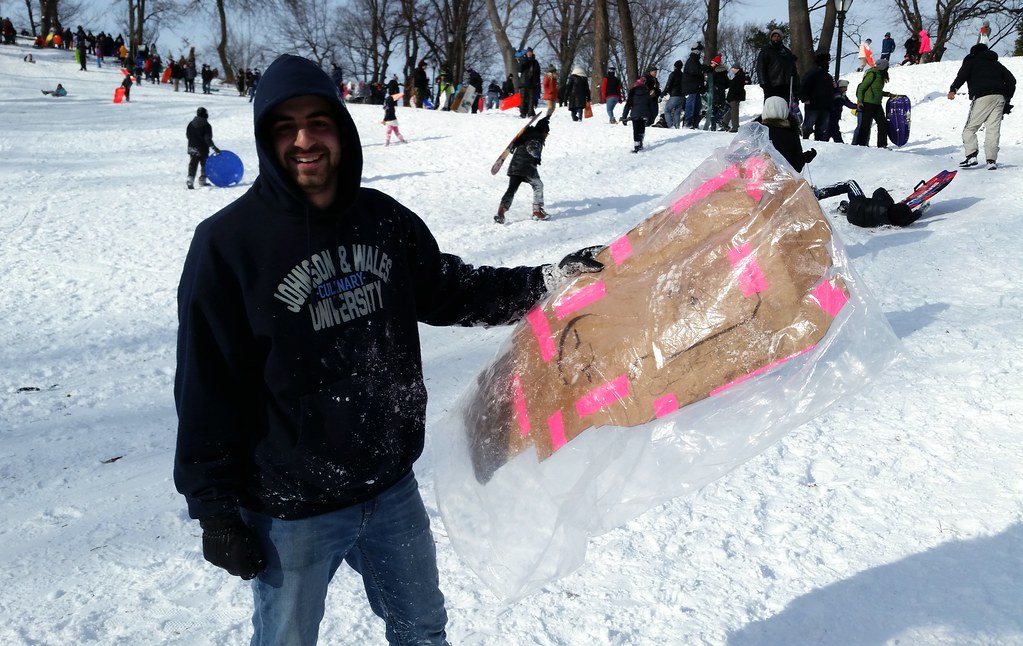
Named after Central Park's co-designer Frederick Law Olmsted (closer look), this minimalist sled is the ninth annual snow buggy created by this guy and his friends.

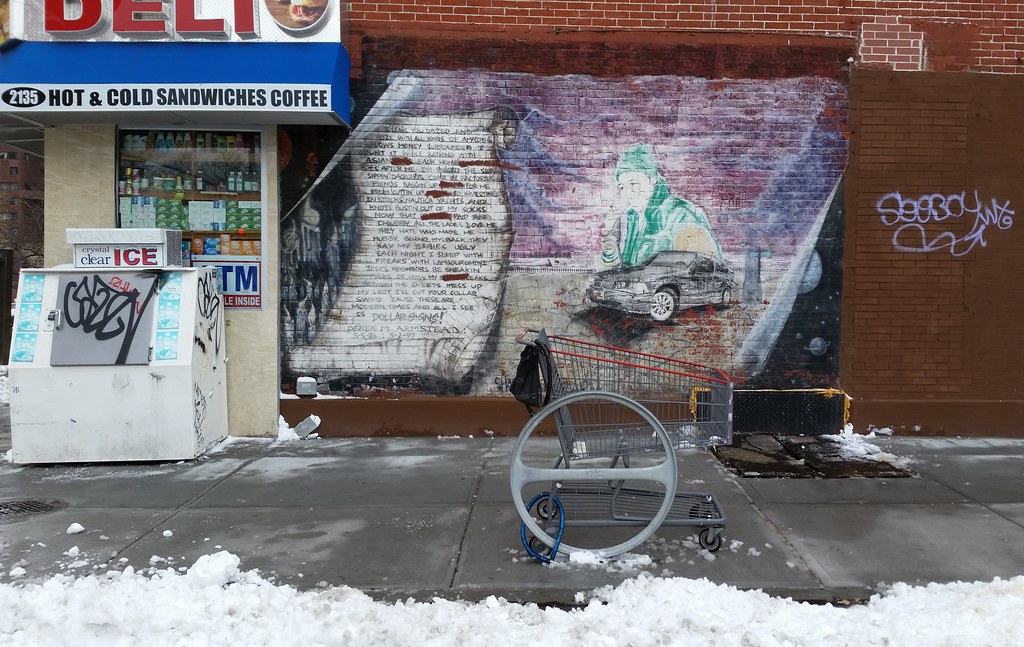
This is a tribute to Derek M. Armstead, a.k.a. Bloodshed, a local Harlem rapper who died in a car accident (driving the BMW pictured above) in 1997. Bloodshed performed in a group called Children of the Corn alongside his cousin Cam'ron (whom we've previously seen in the Clipse video featuring the former Obama Fried Chicken restaurant in East Flatbush/Brownsville), Ma$e, Big L, and McGruff. The lyrics on the left side of the mural, Bloodshed's contribution to a Children of the Corn song entitled American Dream (audio, lyrics), seem to have been excised of some objectionable content (close-up).
Note also the (presumably) stolen shopping cart locked to the bike rack.
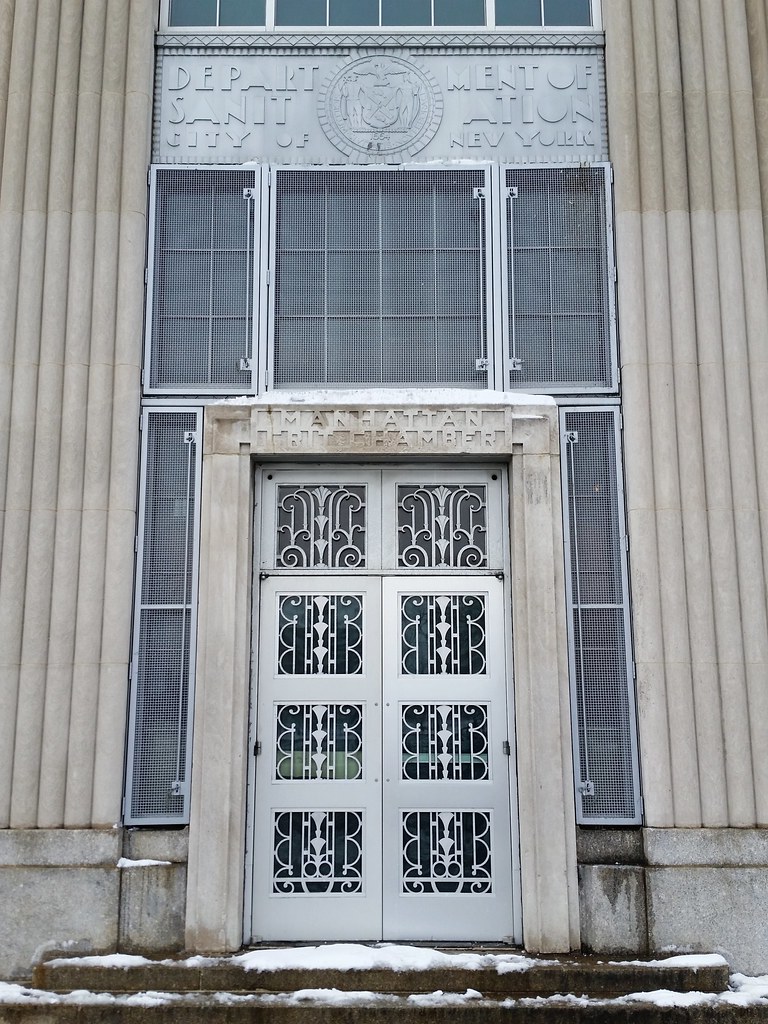
This is the Manhattan Grit Chamber (whose Hurricane Sandy high-water mark we saw on a previous visit), sibling of the Bronx Grit Chamber. From the NY Times:
The best places to see the celebrated products of New York — its Broadway talent, its skyscraper architecture — are well known.A guy who works here was standing outside when I walked by. He told me nothing too crazy has washed in lately, other than the 50 bucks he found not long ago.
But the best place to see Manhattan's byproducts — what is stuffed down its sinks, flushed down its toilets and washed from its gutters — cannot be found in tour guides. There is perhaps no better vantage point than the Manhattan Grit Chamber, which strains solids from much of the borough's sewage as it flows underground to the Wards Island Wastewater Treatment Plant. . . .
"We get a lot of turtles and fish. . . . We've had a canoe come in here; it got caught on the screen. We've had pieces of telephone poles, Christmas trees. Oh, you name it — mattresses, dead dogs. We got a live dog once."
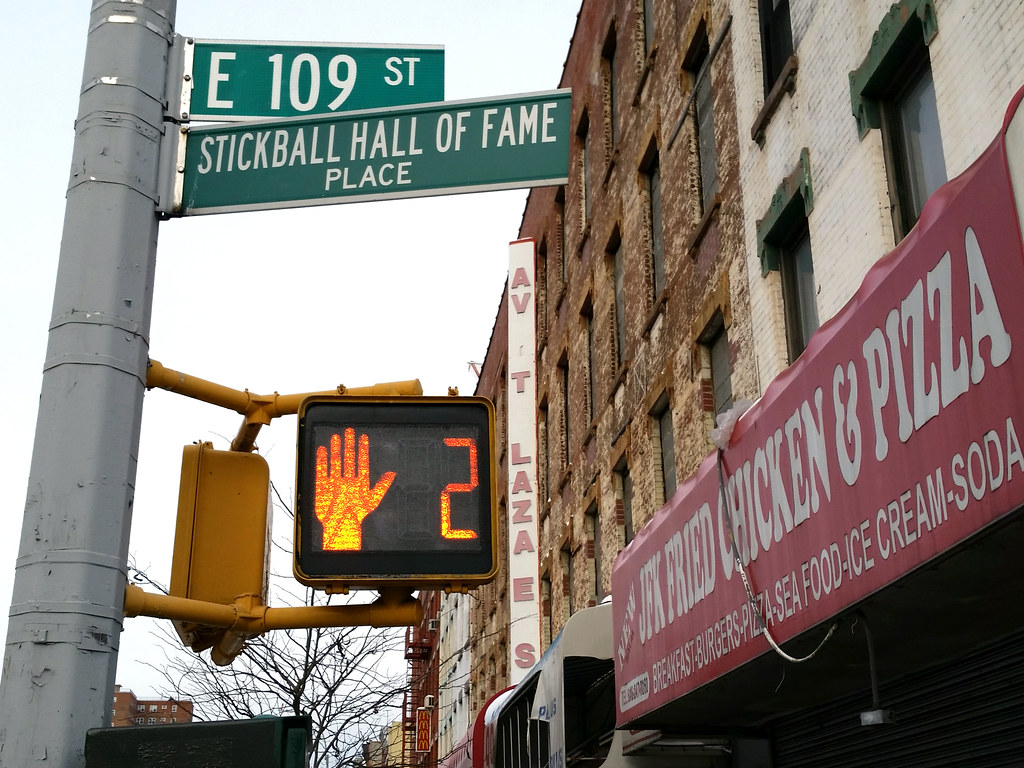
The wide block of 109th Street between 2nd and 3rd Avenues serves as the playing field for the East Harlem Stickball League. In 2005, the block was named in honor of the Stickball Hall of Fame, which has since found a permanent home on 123rd Street. This is now the second street we've seen named after stickball; the first was Stickball Boulevard in the Bronx.
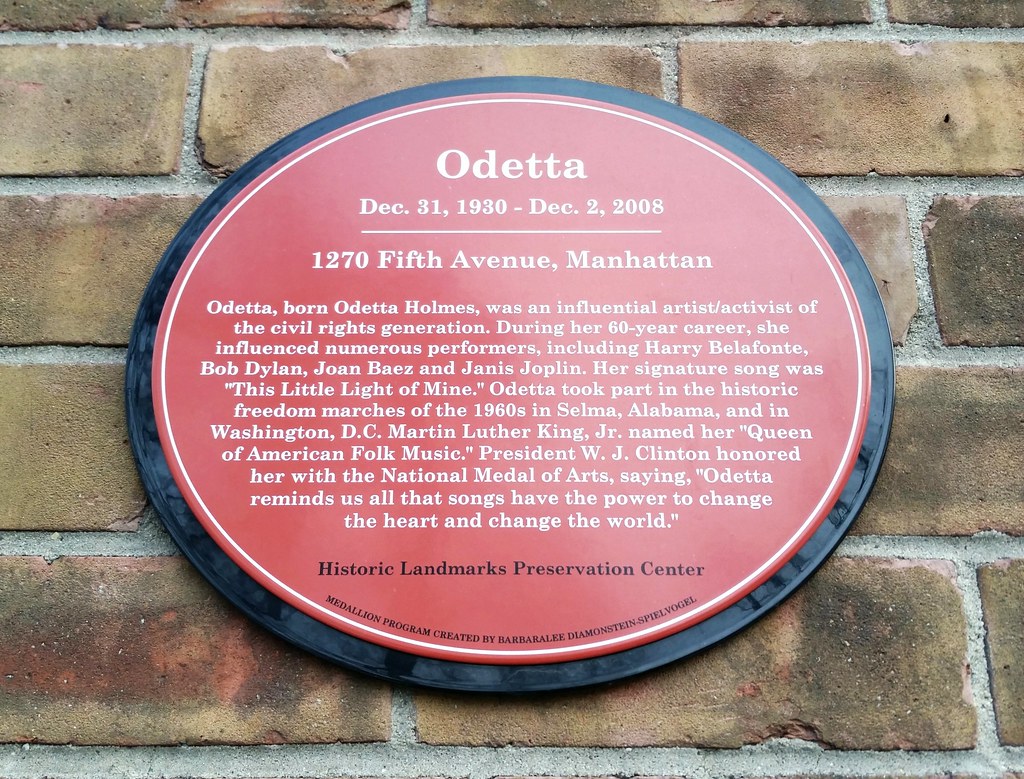
This building was the longtime home of Odetta, "the singer whose resonant voice wove together the strongest songs of American folk music and the civil rights movement", according to the NY Times.
Bob Dylan: "The first thing that turned me on to folk singing was Odetta. I heard a record of hers in a record store, back when you could listen to records right there in the store. That was in '58 or something like that. Right then and there, I went out and traded my electric guitar and amplifier for an acoustical guitar, a flat-top Gibson."
Maya Angelou: "If only one could be sure that every 50 years a voice and a soul like Odetta's would come along, the centuries would pass so quickly and painlessly we would hardly recognize time."

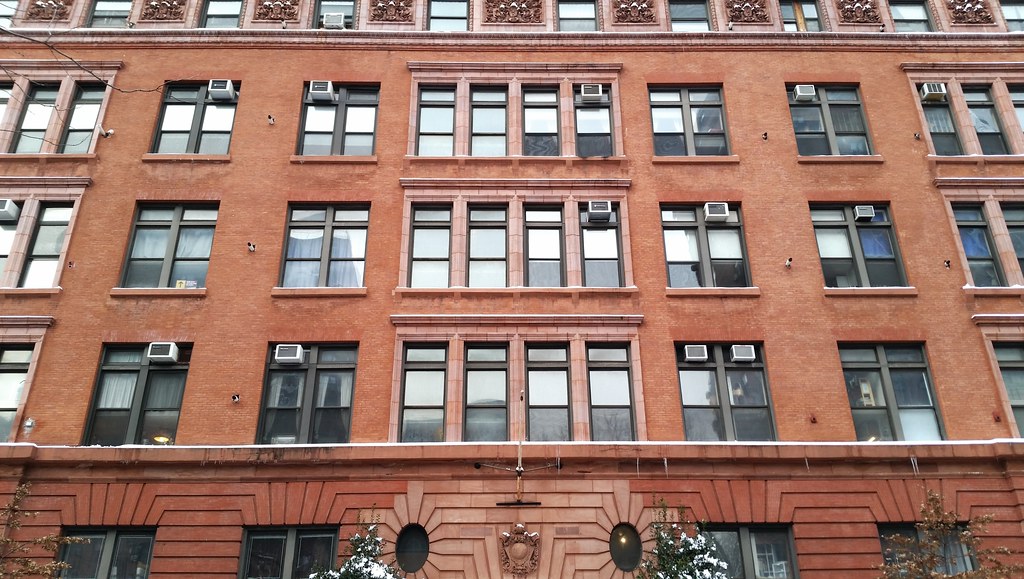
This former public school was converted into loft condominiums (photos) around 1986 and is also home to the Poet's Den Gallery and the Poet's Den Theater.
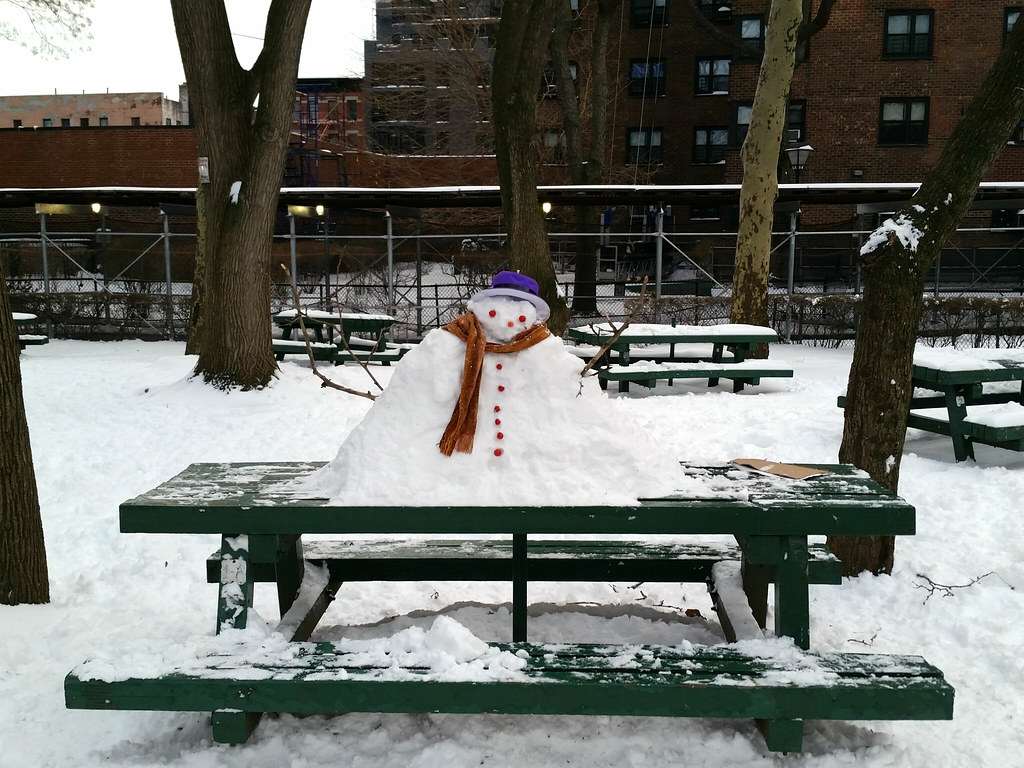
Featuring a baby carrot nose and grape tomato eyes and buttons
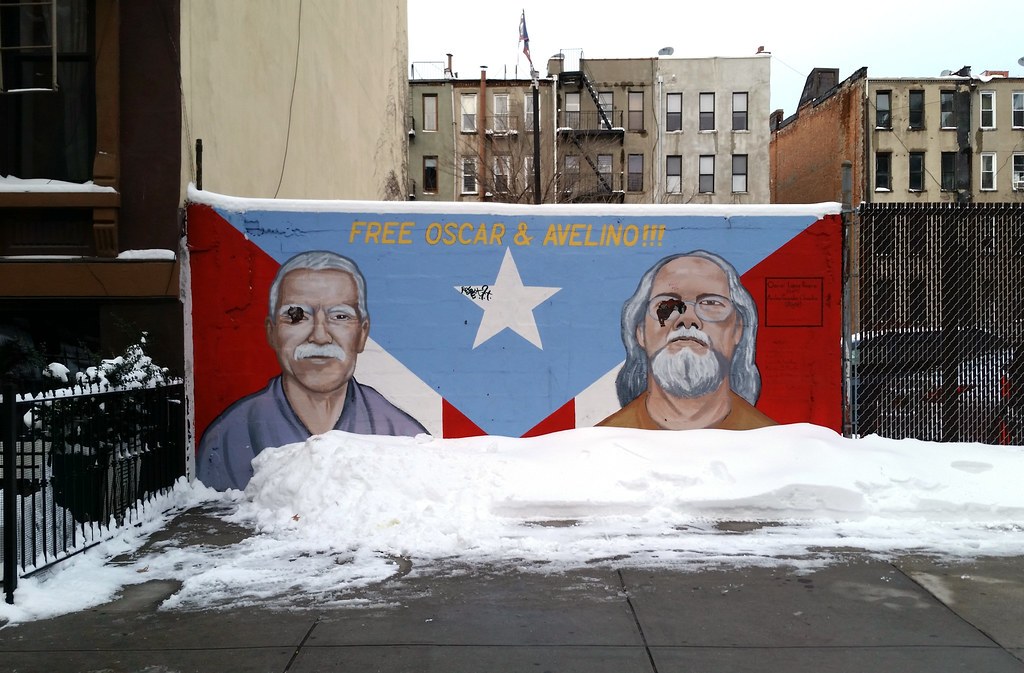
Avelino has been freed since this mural was painted in 2010, but Oscar has not.
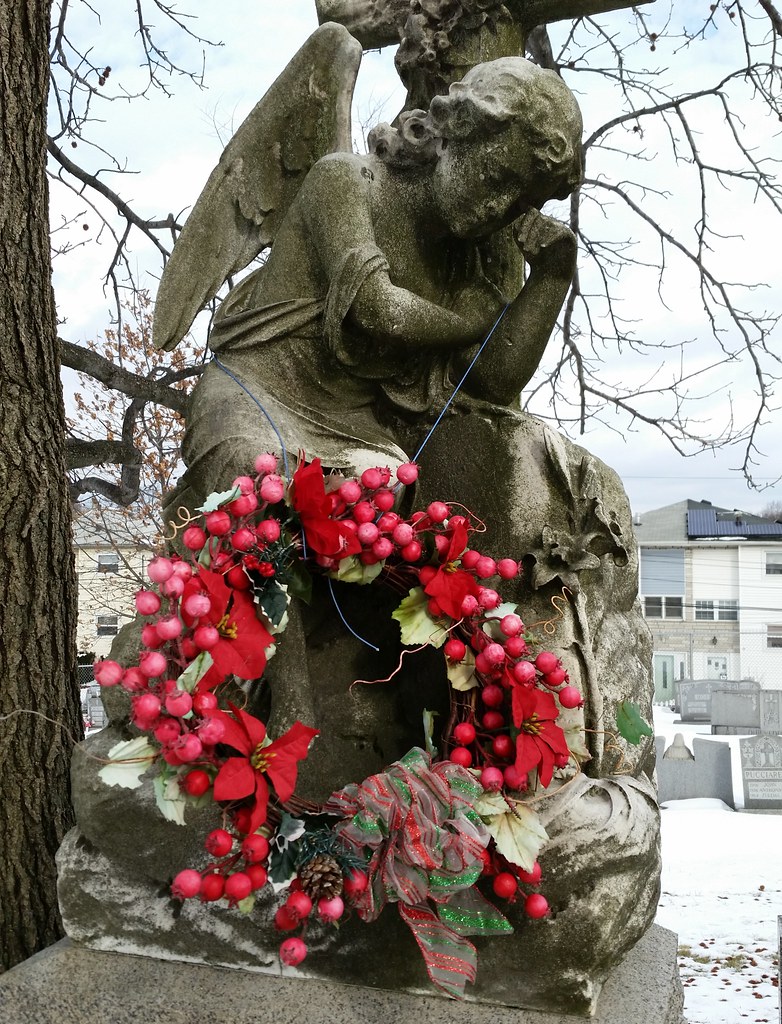
at St. Mary's Cemetery (and a rooftop solar array in the background)
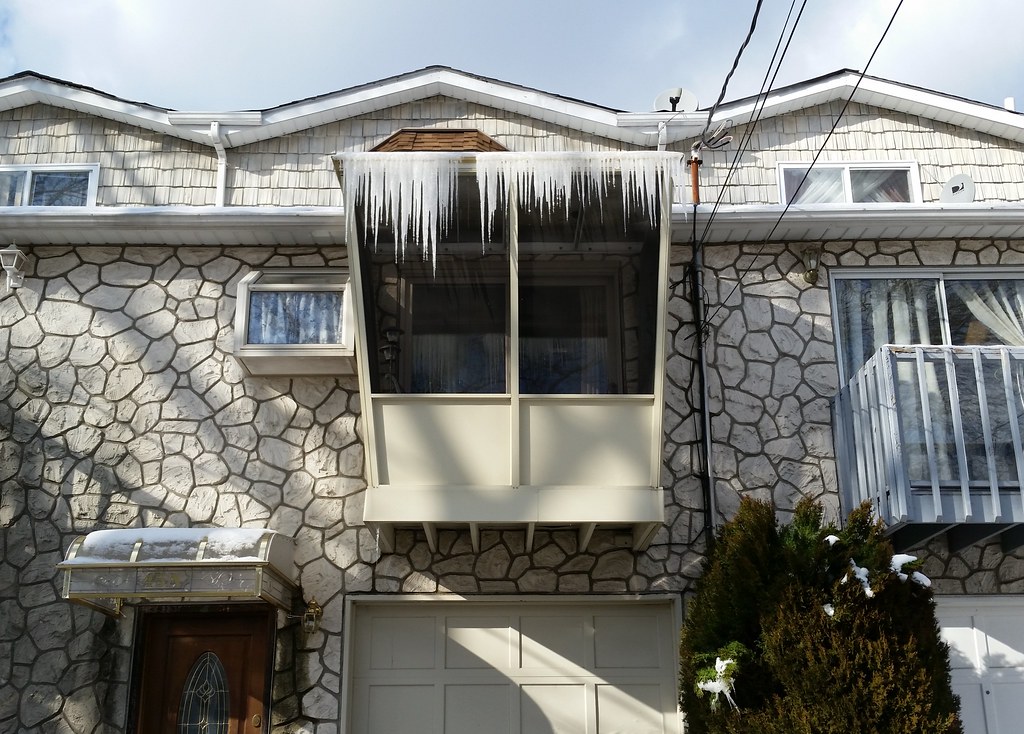
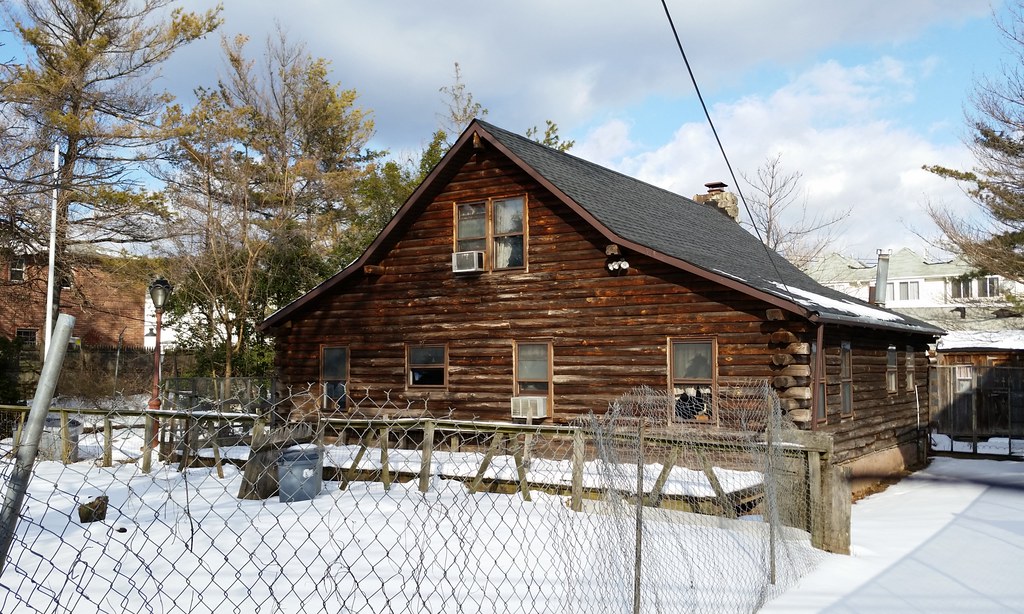
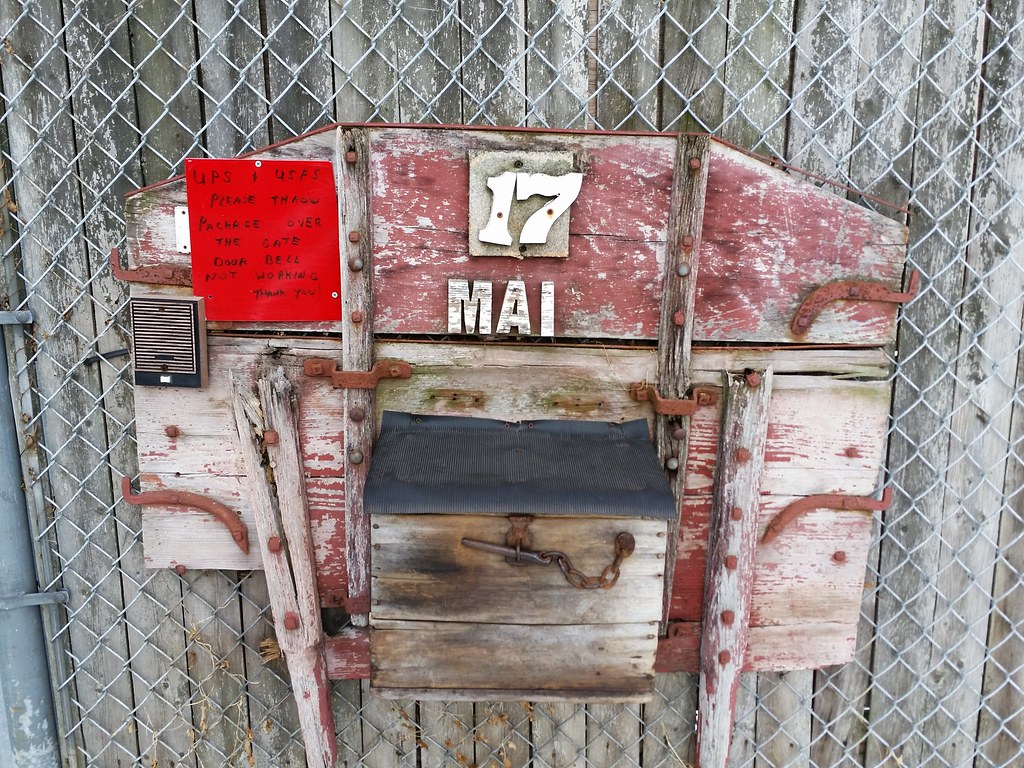
Looks like Canarsie's log cabin isn't the only one in the city after all!
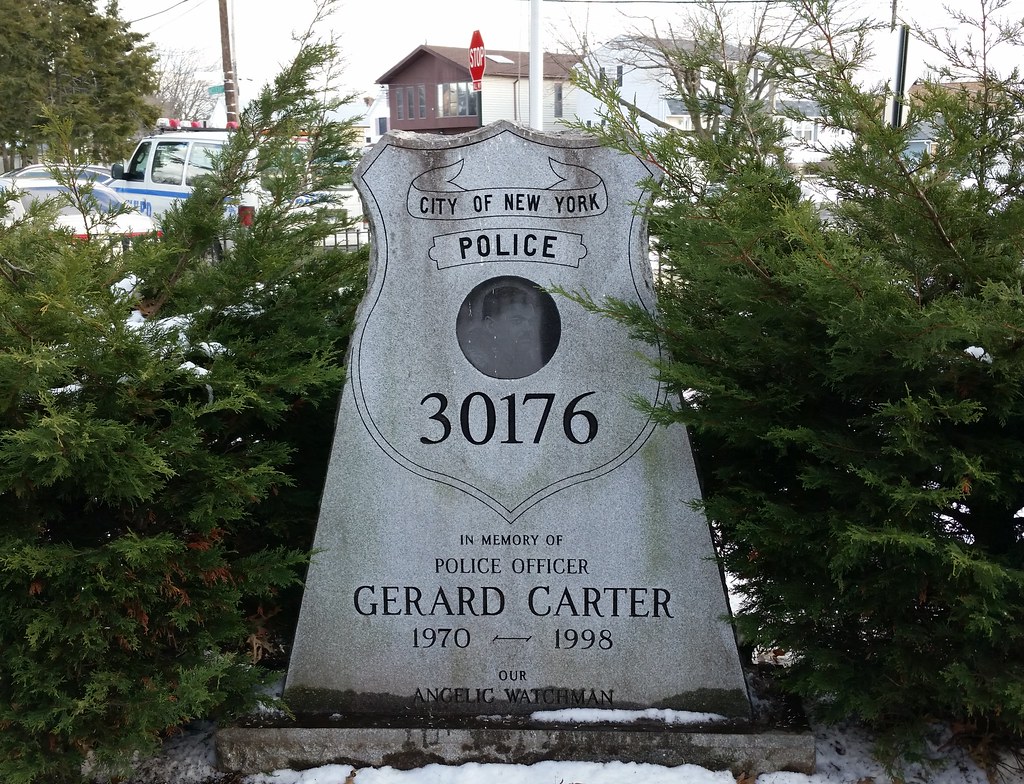
While patrolling the West Brighton Houses on July 26, 1998, Police Officer Gerard Carter and his partner spotted a 17-year-old who was wanted for murder. As the officers approached in their van, the young man pulled out a gun and fatally shot Officer Carter in the head. The memorial above stands on the grounds of the South Beach Houses (a few miles from the site of the shooting), where the NYPD's now-defunct Staten Island Housing Unit was formerly headquartered.
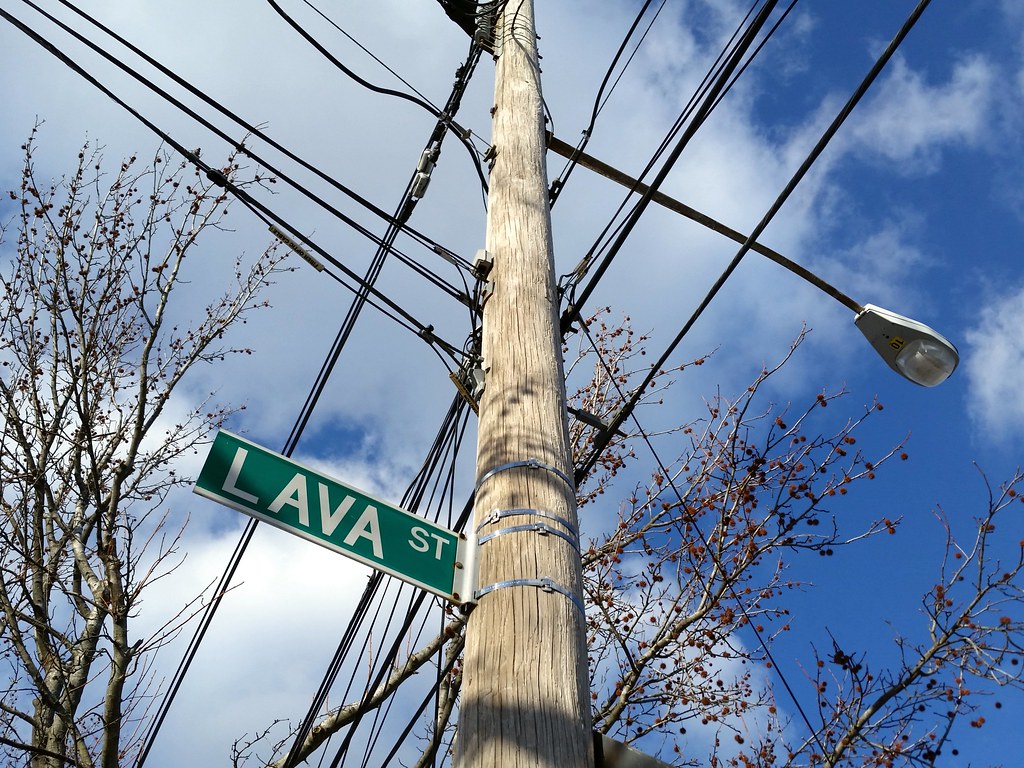
If this dead-end street extended 100 feet farther to the west (map), New York City would have another classic intersection to add to its collection: Lava and Vulcan.
Actually, the intersection does exist on paper, if not in reality. Even though the western portion of Lava Street is physically nonexistent, a look at the city's tax map reveals that Lava Street, as a legal entity, does indeed connect through to Vulcan Street.

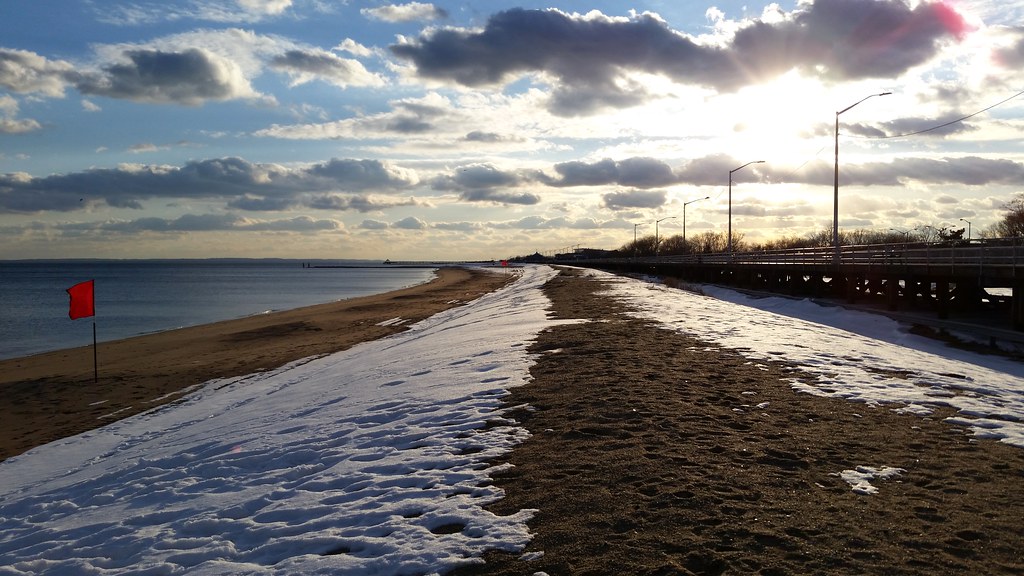
The northeastern extremity of Staten Island's FDR Boardwalk
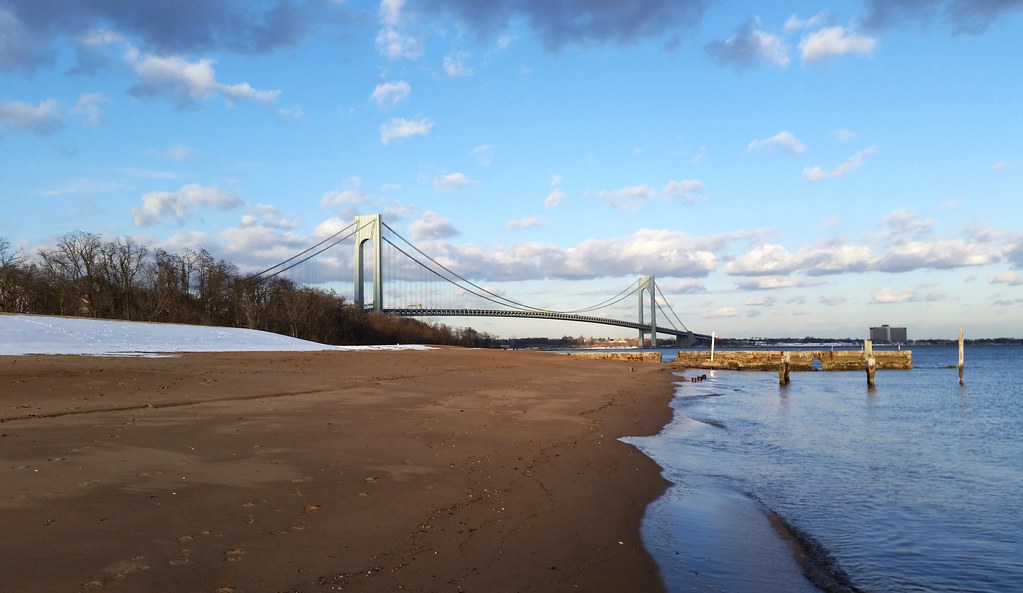
at the Verrazano-Narrows Bridge, with the longest bridge span in the Americas
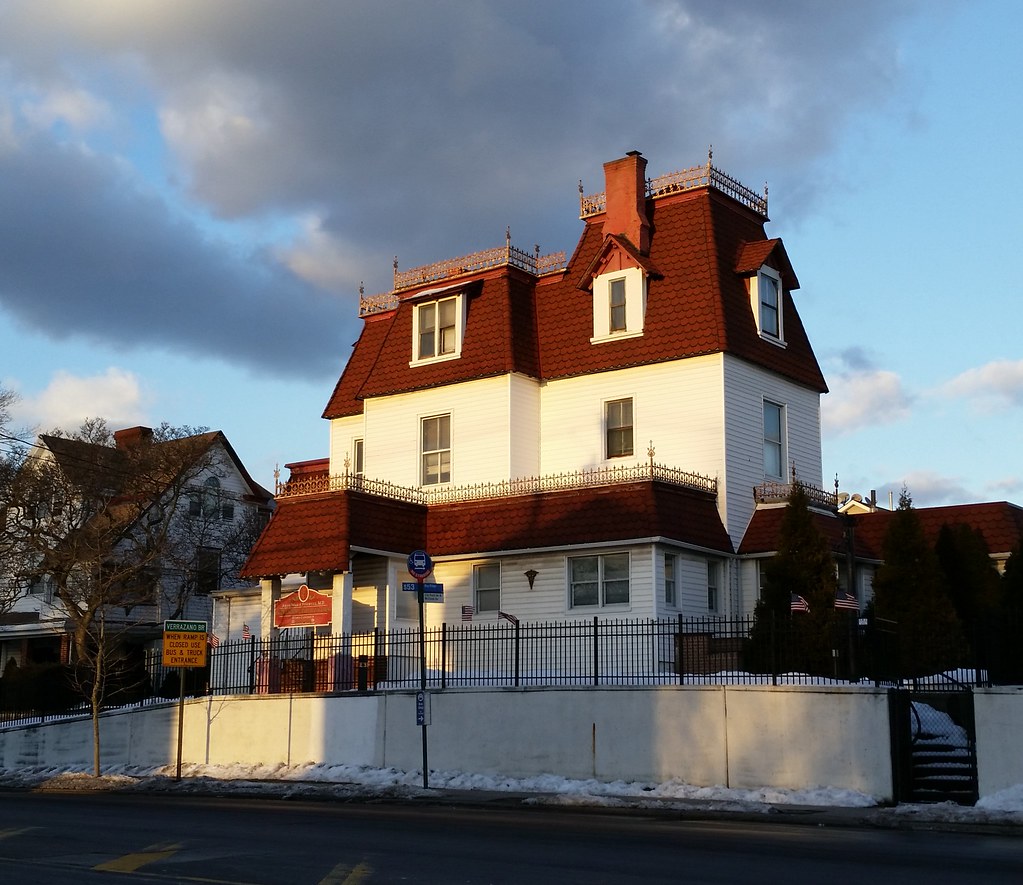
Built in 1868-69, this house currently serves as the office of an "interventional pain management" specialist. It was originally the home of the famed architect Henry Hobson Richardson and is one of only two remaining buildings in the city that he designed.
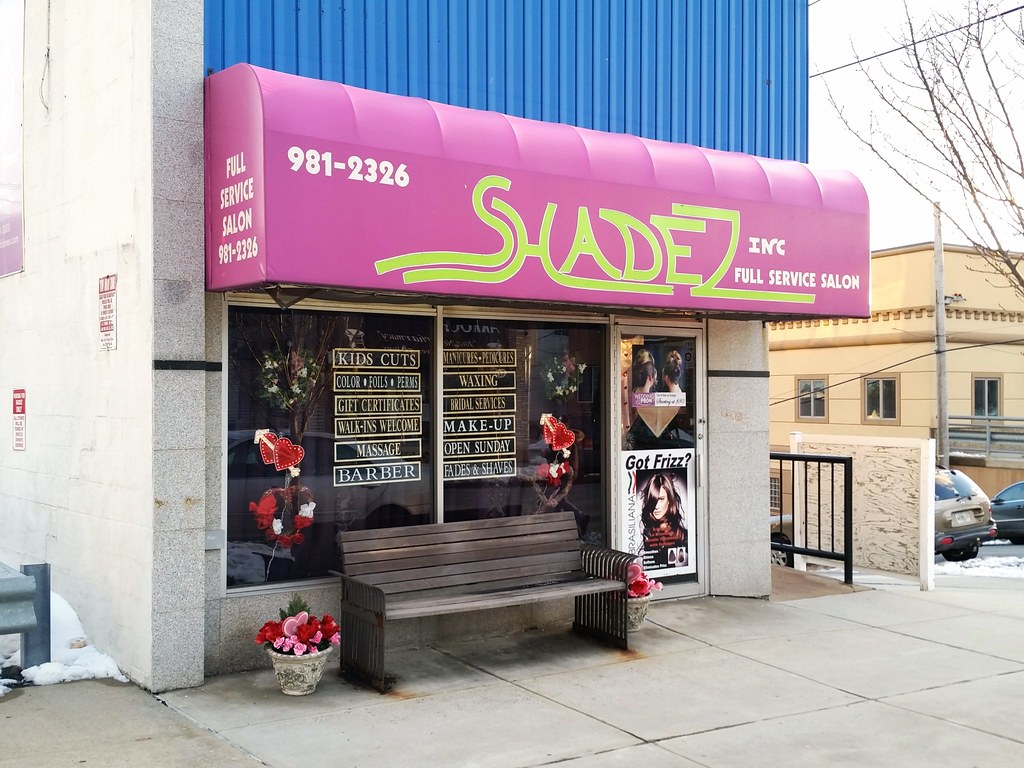

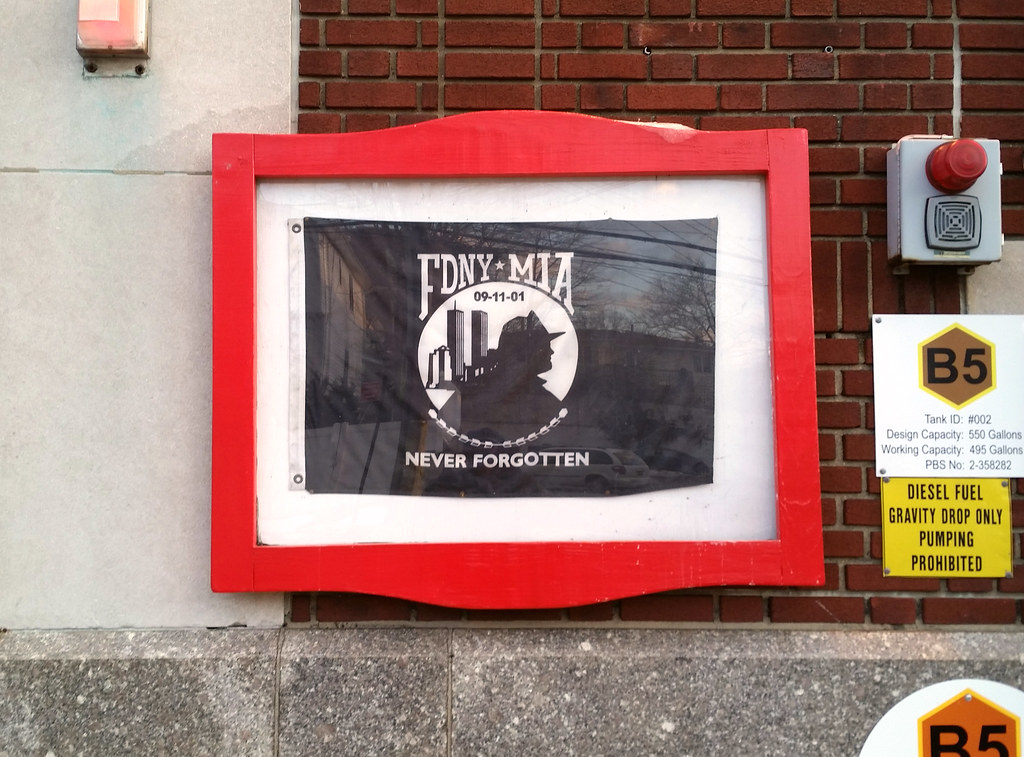

I had to head into Midtown to run a couple of errands today. I took this shot on the way to the subway in Astoria.
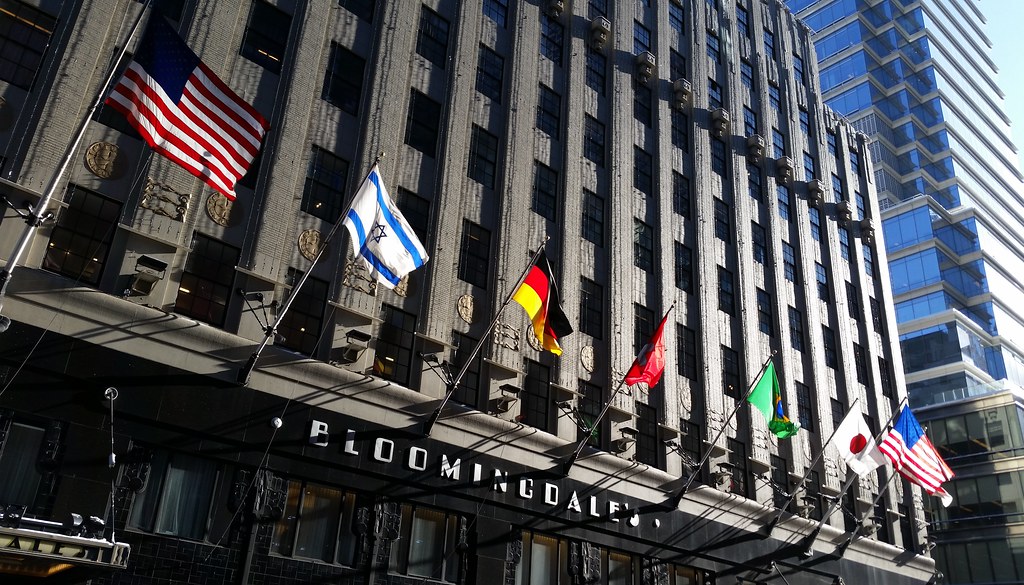
at Bloomingdale's. How do they decide which flags to fly? Here's an explanation from 1995.
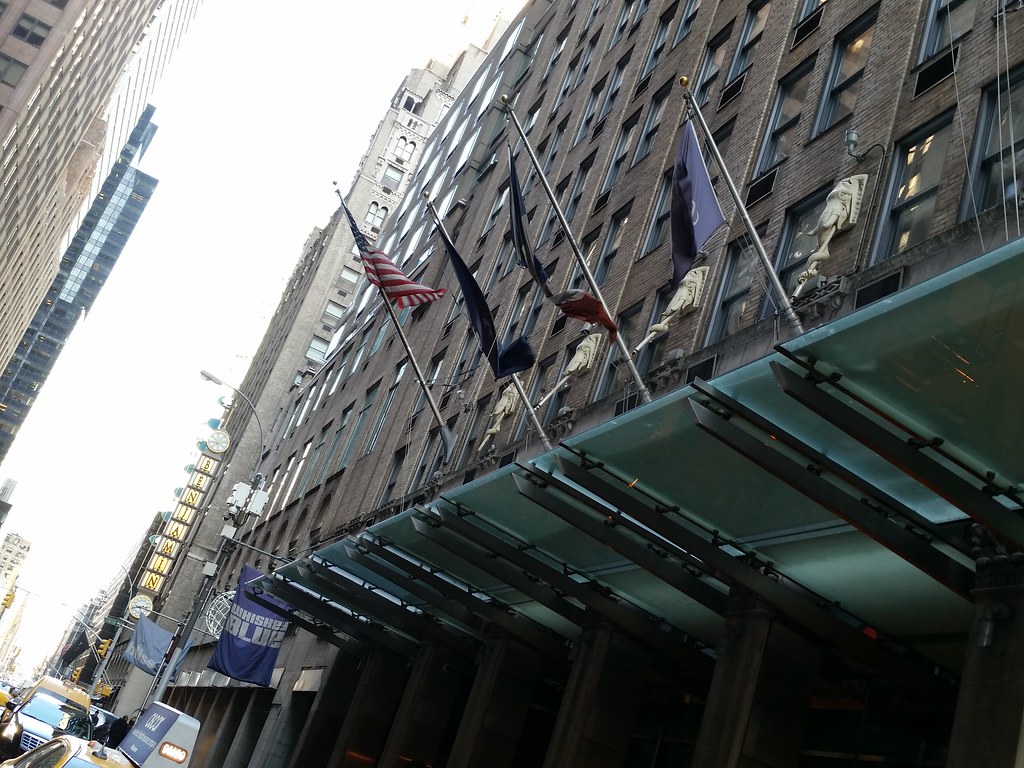
Zoom in to see the mighty beasts "curl[ing] their trunks around the struts of the marquee, seemingly preventing it from falling on arriving guests." Actually, the elephants' trunks are no longer connected to the marquee, but you can see that they once were. Three of the elephants are currently holding up flagpoles, while the fourth has cast off all of its worldly burdens and is just lazing about.
Now a W Hotel, this Emery Roth-designed structure was originally the Montclair Hotel. The elephents aren't the building's only playful detail. Atop some of the lower-floor windows, hunched-over little men appear to be bearing the immense weight of the edifice on their seemingly undersized backs.
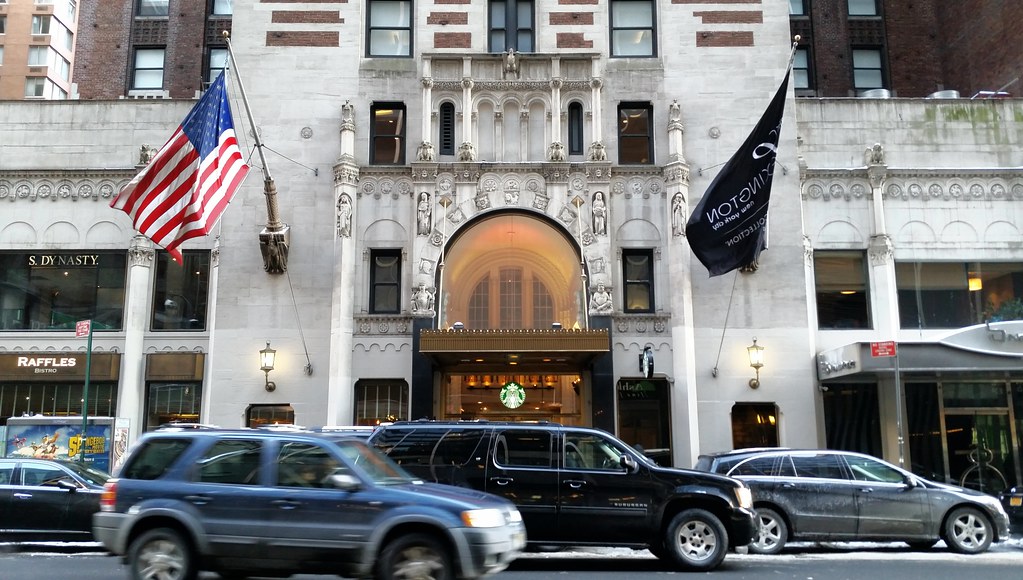
If you've got $1500 or so to blow, you can spend a night here at the former Hotel Lexington (closer look) in the Centerfield Suite, where Marilyn Monroe and Joe DiMaggio lived for some time during their brief marriage.
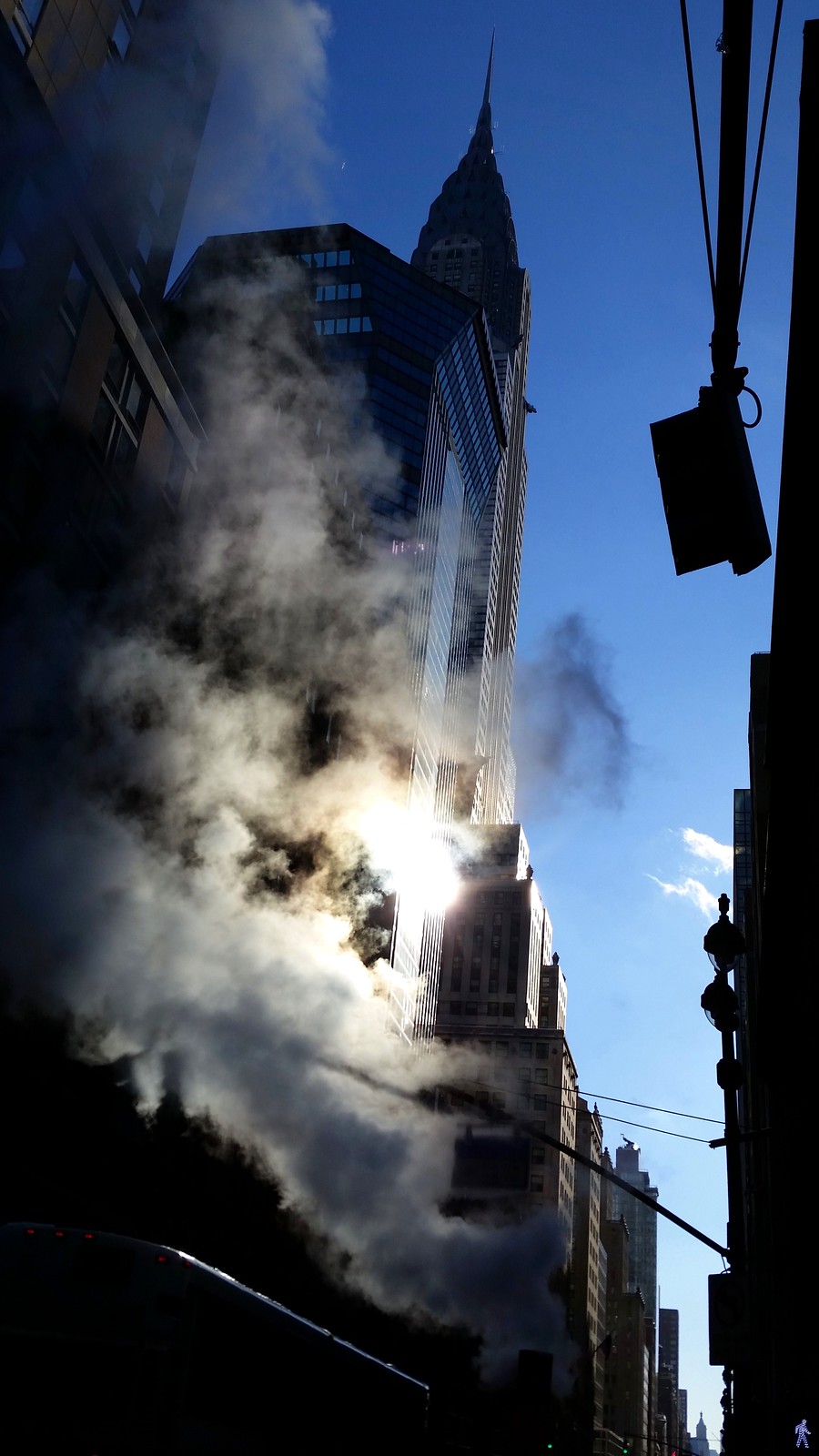
The Chrysler Building towers over a Lexington Avenue obscured by the steam from a Con Ed street "chimney".
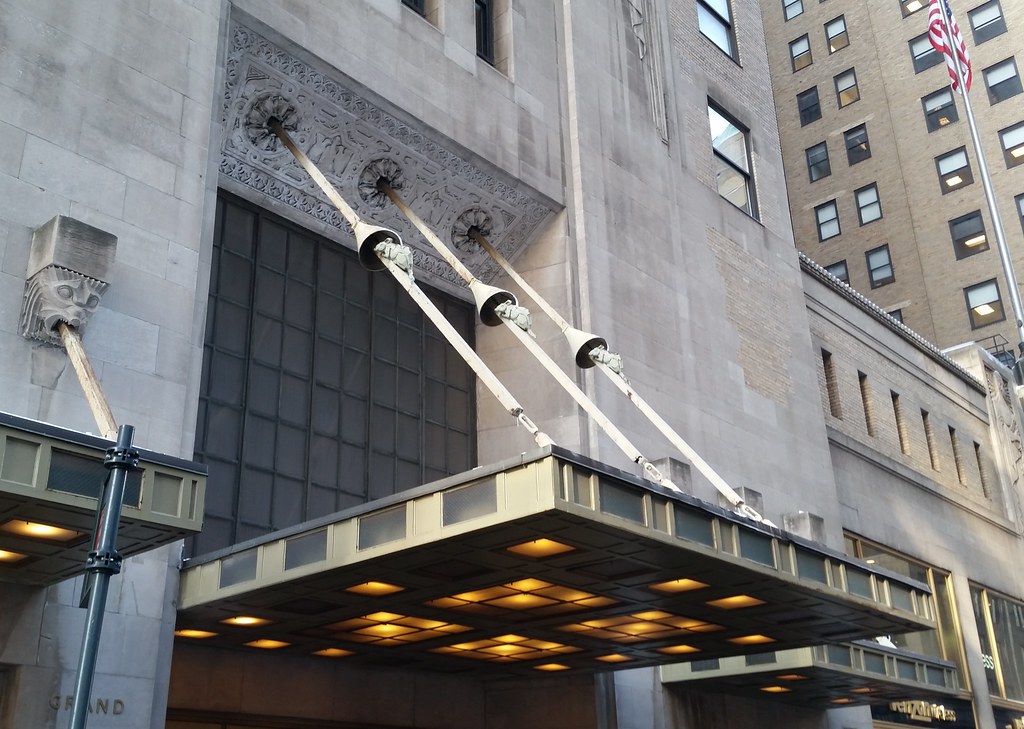
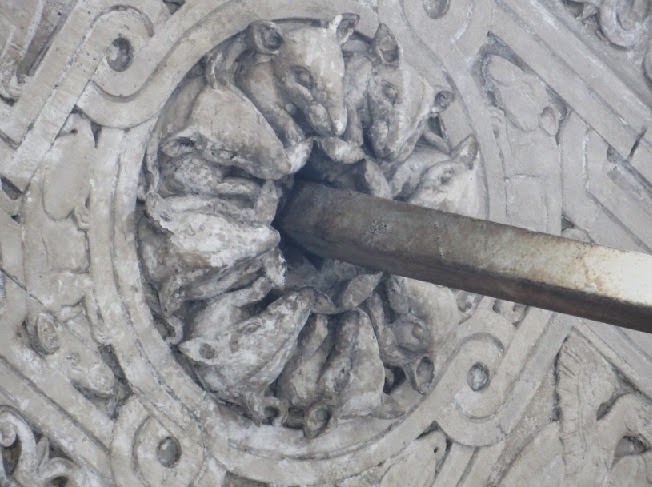
If you look up above the Lexington Avenue entrance to the Graybar Passage (the pedestrian connection to Grand Central Terminal that cuts through the Graybar Building), you'll find a surprising sculptural sight on the cables supporting the canopy: rats! The unwanted little varmints are trying to sneak into the building by climbing up the cables, but they're unable to get around a set of conical baffles similar to the devices used to prevent rats from scurrying up hawsers (mooring lines) onto docked ships. But lest you think the humans have outsmarted the crafty rodents, take a closer look and you'll see many more rats already aboard the Graybar, clustered around the hawseholes where the canopy cables are attached to the building.
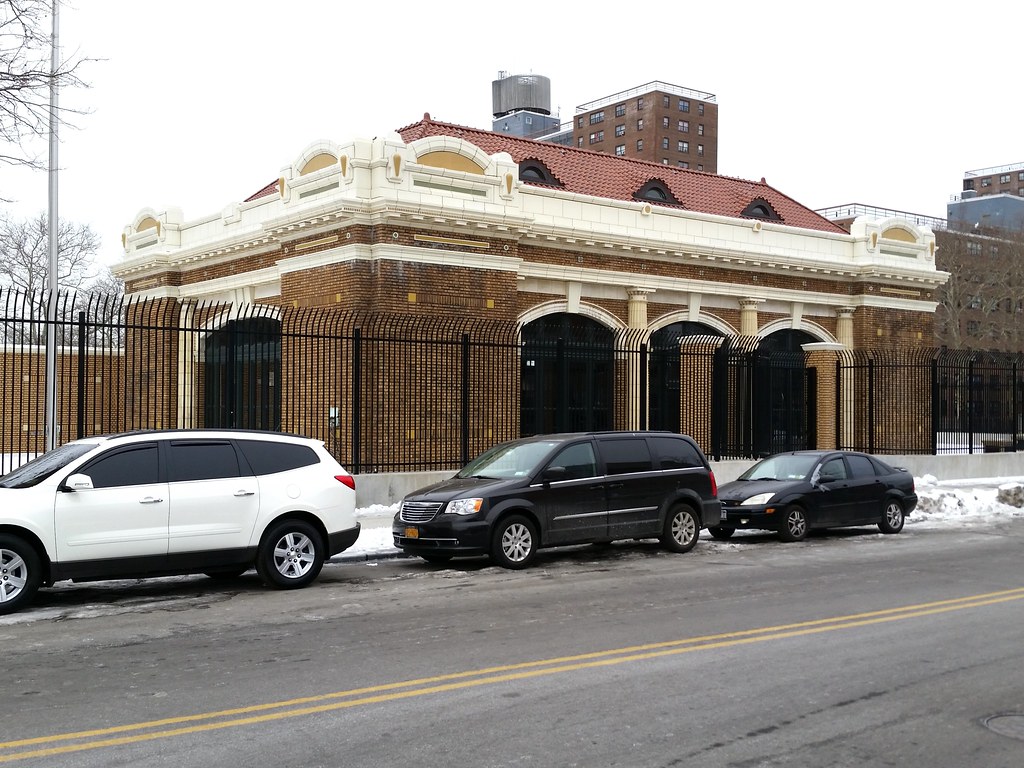
From the NY Times:
The jewel-like brick structure stands unmarked in a jumbled corner of Brooklyn, amid housing projects and plain rowhouses and elevated train tracks and the headquarters of the Aardvark Amusements carnival ride company.Read more here.
Soaring ornamented columns frame arched windows 15 feet high. Eye-pleasing rhythms in the Beaux-Arts style abound. A golden eagle gleams atop a flagpole.
For all the building’s splendor, though, many in the neighborhood have no idea what goes on inside.
“I would think a library, or hopefully some kind of center for youth?” guessed A. J. Malone, 24, who was walking by on a recent afternoon.
Taylor Jones, 23, admired the facade.
“I’m thinking it’s some kind of sort of mausoleum” for the Metropolitan Transportation Authority, he ventured. “It looks very secluded in there.”
It is a sewage pumping station.
Not just any sewage pumping station. It is the Avenue V pumping station in Gravesend, near Coney Island, the largest in New York City, a nearly 100-year-old testament to the majesty of public works that conveys the daily waste of 300,000 residents to a treatment plant in Bay Ridge.
(We've actually encountered a few good-looking sewer buildings now. You can see the others here.)
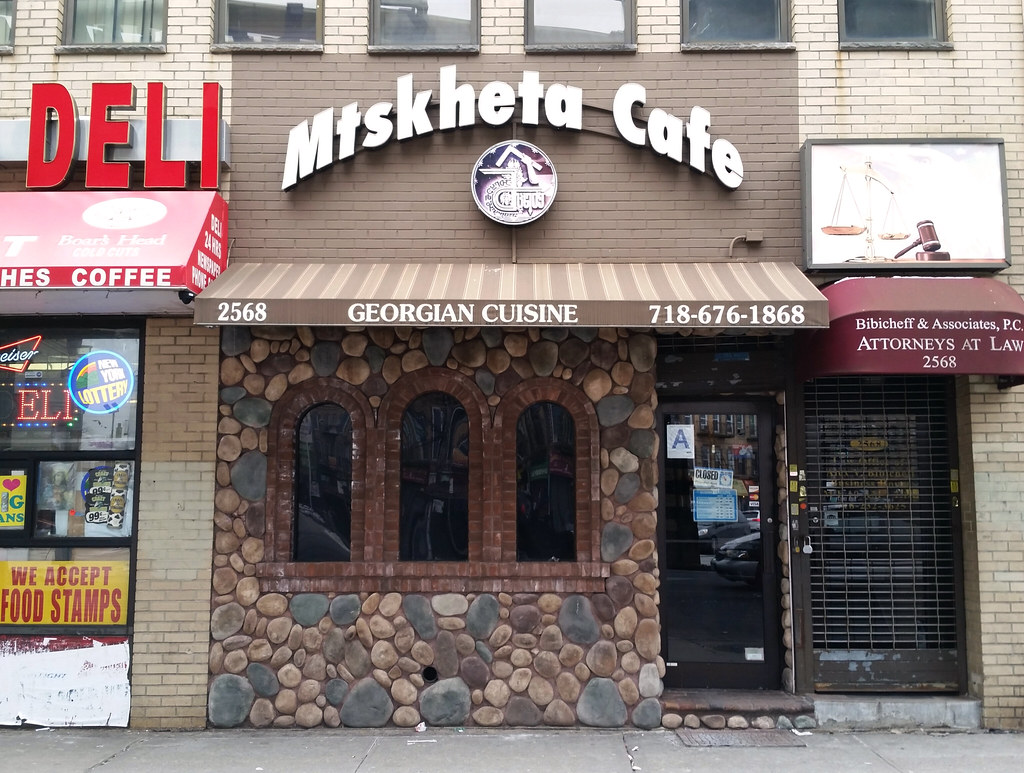
In addition to containing an excellent run of consonants in its name, Mtskheta is an ancient Georgian city whose historic Christian monuments are a UNESCO World Heritage site.
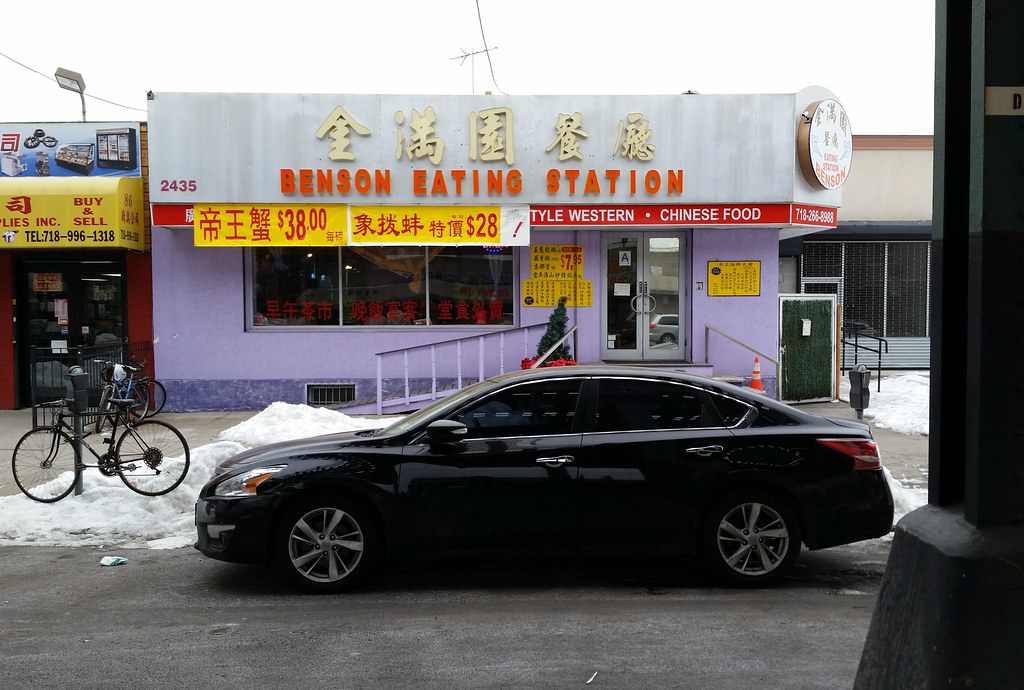
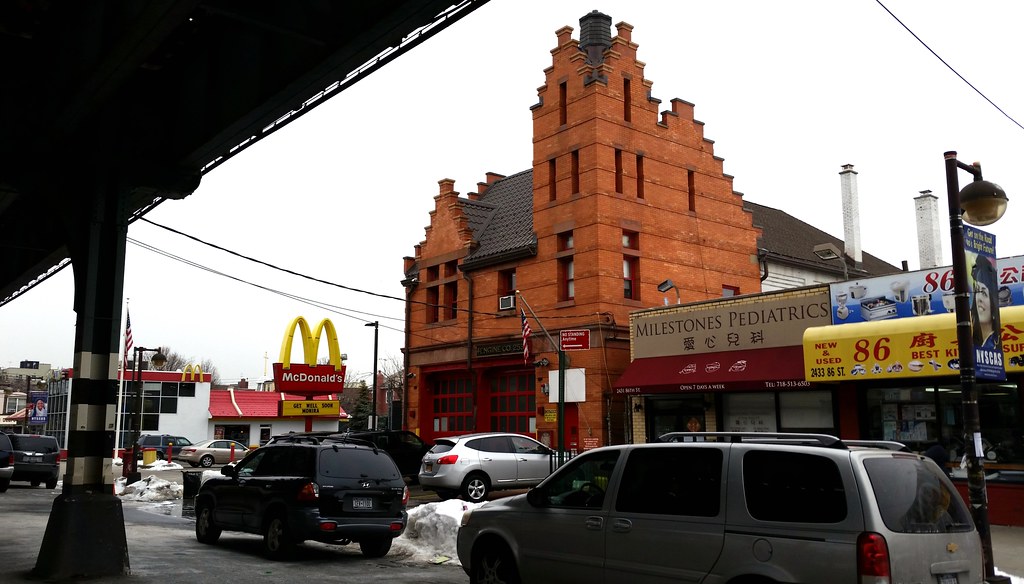
This Dutch Renaissance Revival firehouse was built in 1895-96 for the then-independent city of Brooklyn.
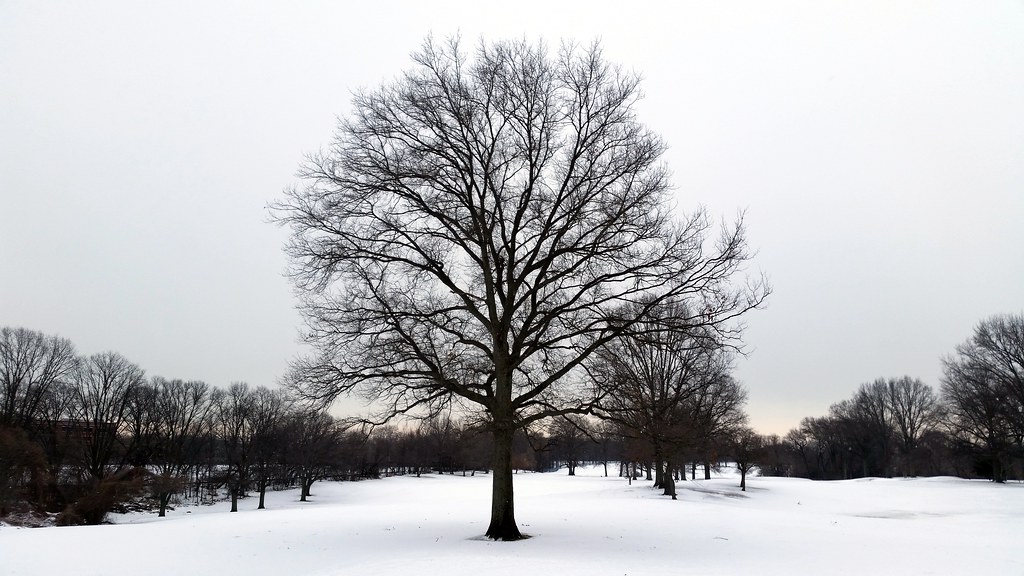
While stationed at neighboring Fort Hamilton in the early 1970s, Tiger Woods's father Earl played golf for the first time here at Dyker Beach, which is said to have been the world's busiest golf course in the mid-20th century.